
Marble quarries
Content
Most people think of beautiful white marble when they hear the name Carrara and that is not surprising. The high-quality marble has its origin in the Italian city and from here began its triumphal march around the world.
Wherever a building owner intends to adorn a house or home with high-quality white marble, or wherever artists wish to work creatively with this magnificent material, the choice usually falls on marble from this splendid city in the province of Massa-Carrara . Famous works of art history were also created from Carrara marble, such as Michelangelo's David in Florence and his Pietà in St. Peter's Basilica. Michelangelo himself visited Carrara several times to select his marble blocks.
However, many people are unaware that this name also refers to a beautiful city at the foot of the Apuan Alps in northern Tuscany, which is absolutely worth a visit.
Where is Carrara located?
The marble city that has much more to offer than marble

If you take a closer look at the Tuscan city and its culture, you quickly realize that it is an absolute failure to associate this place only with marble. The unique mountains that can be found here and are littered with white spots fascinate visitors to the city again and again and have inspired many an artist to create a new masterpiece.
In addition to this beautiful area, it is above all the pleasant climate and the cuisine that make many people visit Carrara again and again once they have been here. The city's residents are also considered extremely friendly and approachable, which makes a stay particularly pleasant, as you can come into contact with the locals very quickly.
The sights in Carrara
- You shouldn't miss these highlights
Even though the city only has around 60.000 inhabitants, its fantastic sights make the hearts of many tourists beat faster, and for good reason. We would now like to introduce you to some of these in more detail:
Cathedral Sant'Andrea Apostolo
The absolute highlight of Carrara is the Duomo Sant’Andrea Apostolo, built between the 12th and 15th centuries, and that is hardly surprising, as it is not only extremely elaborate in design but also combines Romanesque and Gothic architectural elements. The façade of white and grey marble and the finely crafted Gothic rose window are especially eye-catching.
The interior of the cathedral is somewhat plainer in design, but it still impresses with its unique look, in which marble naturally also dominates. In the cathedral square stands the Fontana del Gigante, a fountain from the 16th century that was never fully completed. The massive figure depicts the Genoese admiral Andrea Doria as the sea god Neptune – colloquially it is simply called “il Gigante”, the giant.
The Carrara Academy of Fine Arts
Another highlight in Carrara that you absolutely shouldn't miss when visiting this city is the Accademia di Belle Arti, the Academy of Fine Arts, located near Piazza Alberica. It is housed in the Palazzo Cybo Malaspina, which consists of a medieval castle and the later Renaissance palace of the Princes of Massa and Carrara.
Today the academy houses several lecture halls, a large library, and an extraordinary art collection, which includes numerous plaster models and original sculptures by art students.
The collection is worthwhile not only for art lovers – take your time to enjoy it.
The Casa Repetti
The Casa Repetti is a stone house that was likewise built entirely of Carrara marble and can be found on Via Santa Maria. This unique building, which spans three storeys and is equipped with three rows of windows as well as columns in the Genoese style, was probably built at the end of the 13th or the beginning of the 14th century.
The Casa Repetti is a stone house that was also built entirely from Carrara marble and can be found in Via Santa Maria. This unique building, which extends over three floors and has three rows of windows and columns in the Genoese style, was probably built at the end of the 13th and beginning of the 14th century.
The marble quarries of Carrara
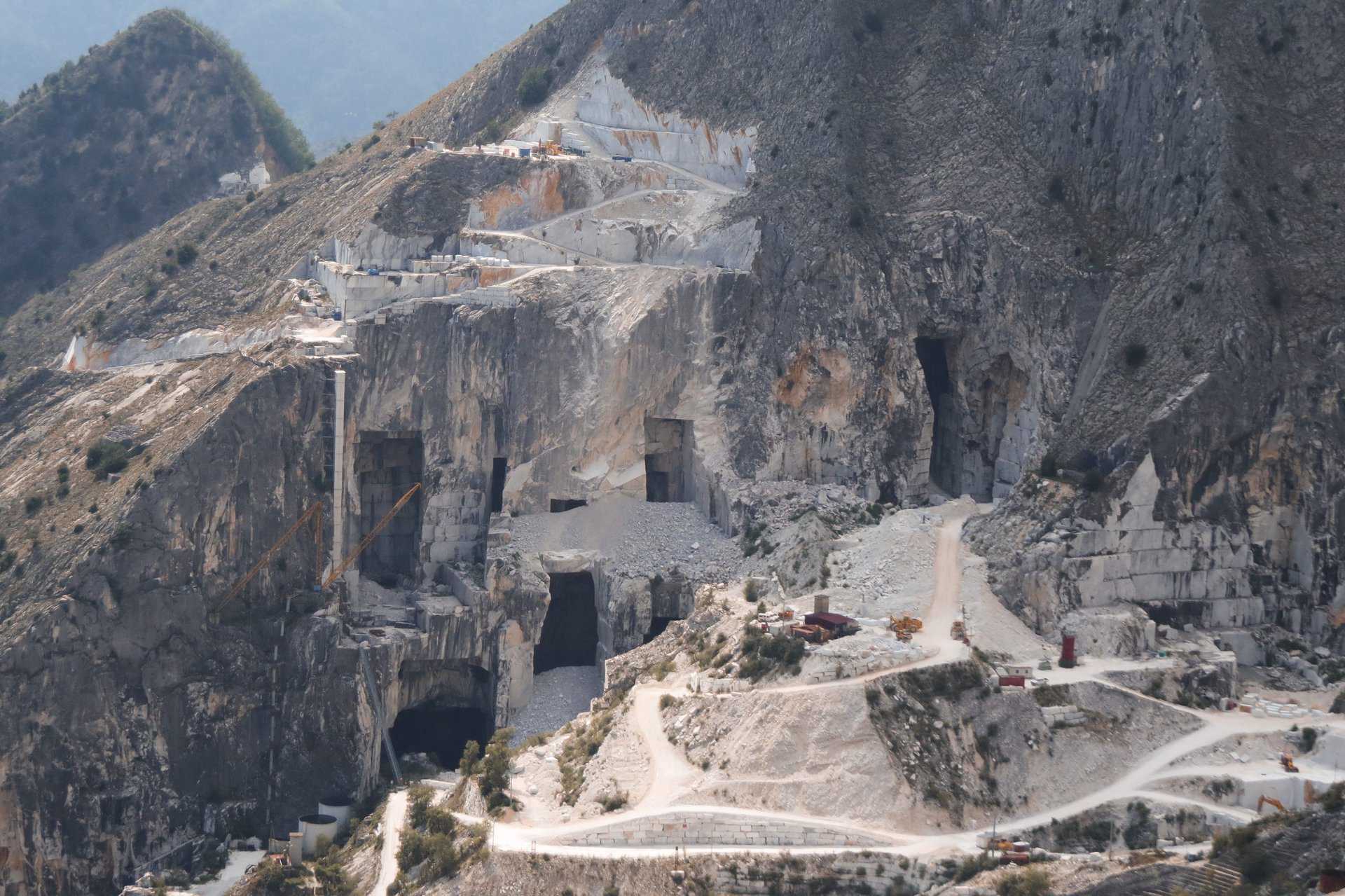
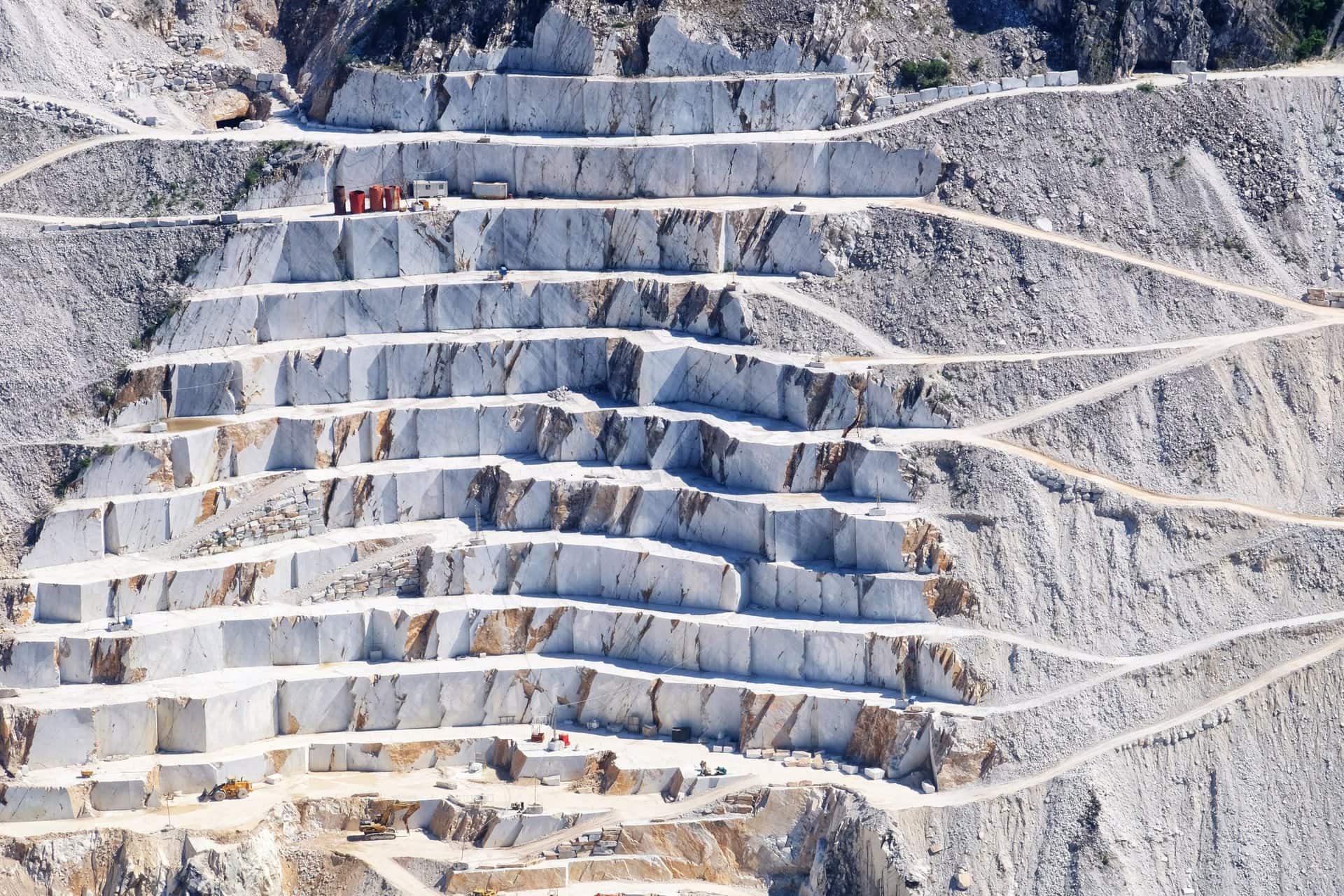
Once you're in Carrara, a visit to the quarries where the famous marble is extracted is a must. While everything was once done by hand, today you'll find large machines that hew the marble from the rock for further processing. Here you can book guided tours of the quarries, for example in the Fantiscritti area, sometimes even by jeep up to the extraction sites or into a quarry deep inside the mountain.
A side trip to the mountain village of Colonnata, nestled amidst the marble quarries, is also worthwhile. It's famous for Lardo di Colonnata, a seasoned cured pork fat traditionally aged in marble tubs. Enjoy it with a glass of wine – a truly memorable experience after a tour of the quarries.
And for those seeking refreshment after so much marble: the beach of Marina di Carrara is just a few kilometers away and has been awarded the Blue Flag (as of 2026). More information can be found under " Beaches of Tuscany".

Marble quarry near Carrara 
Marble quarry near Carrara
Visiting marble quarries: the possibilities
- Fantiscritti Quarry Museum – An open-air museum located directly in the Fantiscritti quarry area, featuring old tools, reconstructed workers' huts, and marble sculptures. Guided tours (approx. 45 minutes) are available daily from approximately 9 am to 17 pm. Address: Via Miseglia Fantiscritti 84.
- Quarry inside the mountain (MarmoTour) – The minibus takes you to the Cava di Ravaccione, about 400 meters into the mountain. The tour takes about 45 minutes; inside it's around 16°C, so a jacket is recommended even in the height of summer.
- Jeep tours Several tour operators offer off-road driving along gravel tracks to the active quarries in the Colonnata, Fantiscritti, and Torano basins. Spectacular views all the way to the sea, but not for those with a fear of heights.
Prices and times vary depending on the season – check them directly with the provider before your visit and book in advance during peak season. Sturdy footwear is recommended for all tours, as the marble dust will stain light-colored shoes white.
On the way to Fantiscritti, you will pass under the Ponti di Vara , the impressive viaducts of the former marble railway. Along the way, there are several stalls selling small pieces of marble and souvenirs.
You can also book jeep and 4×4 tours to the marble quarries – some with lardo tasting in Colonnata – as well as guided tours of the quarries and sculptors’ workshops via GetYourGuide (Carrara).
Carrara in one day: our suggestion
- Late morning: Quarry tour in Fantiscritti or Ravaccione – it's cooler and less crowded up there in the morning.
- Midday: Continue on to the mountain village of Colonnata, try Lardo di Colonnata on toasted bread.
- Afternoon: Carrara's old town: Cathedral of Sant'Andrea with rose window, Piazza Alberica, Casa Repetti and the sculptors' workshops in the alleys.
- Evening: Down to Marina di Carrara and the beach – for swimming or simply enjoying the sunset over the sea.
With children, the tour into the mountain interior is often the highlight; allow extra time for the winding mountain roads.
The weekly markets and festivals of Carrara
A wonderful pleasure that you definitely shouldn't miss when visiting the Tuscan city is a visit to the weekly market.
When is the weekly market in Carrara?
This takes place every Monday in Piazza Gramsci. However, if you don't go out on Monday, you have the opportunity again on Thursdays in the Marina di Carrara to indulge in the wonderfully colorful hustle and bustle and indulge yourself with culinary delights.
Another highlight is the Biennale Internazionale di Scultura, during which the city becomes the stage for exhibitions focusing on sculpture and marble. You can find the exact dates on the City of Carrara's website.
In addition, numerous sculptors open their studios in August and let enthusiastic visitors watch how the works of art are created step by step and how much craftsmanship is really behind them.
Find accommodation in Carrara
Frequently asked questions about Carrara
What is there to see in Carrara?
The marble quarries (e.g. Fantiscritti and Ravaccione), the mountain village of Colonnata, the Cathedral of Sant'Andrea with the Fontana del Gigante, the Accademia di Belle Arti in the Palazzo Cybo Malaspina and the beach of Marina di Carrara.
Is it possible to visit the marble quarries?
Yes. There are guided tours of the Cava Museo Fantiscritti, tours into a quarry inside the mountain (Ravaccione), and jeep tours to the active quarries. Reservations are highly recommended, especially during peak season.
How much time should I allow for Carrara?
A full day is sufficient for the quarry, Colonnata, and the old town. Those who also want to swim or do several tours should plan for two days.
When is the market in Carrara?
There is a weekly market in Carrara on Mondays and in Marina di Carrara on Thursdays.
What is Lardo di Colonnata?
A seasoned bacon from the mountain village of Colonnata, traditionally matured in marble vats. It is sliced paper-thin, often served on warm bread.
Conclusion
There are numerous reasons why you should visit the northern Tuscan city and the numerous sights, the friendly and warm nature of the residents and the artistic design of the old town are just a few of them.