


Pisa - More than just the Leaning Tower
Content
History and modernity are close together in Pisa and are often only separated by the Arno, which runs the last few kilometers to the Mediterranean.
The university town with 90.000 inhabitants is worth a visit because of its numerous art monuments from the Middle Ages and the Renaissance, which gather around the Piazza dei Miracoli. Among them are the Cathedral of Santa Maria Assunta with the famous crooked campanile, the baptistery and the Camposanto Monumentale. Pisa has a charming, well-preserved old town.

Leaning Tower 
Cathedral of Santa Maria Assunta
The center of the lively old town is the Piazza dei Cavalieri: Here you will find cozy cafés, pubs and small shops.
Square of Miracles

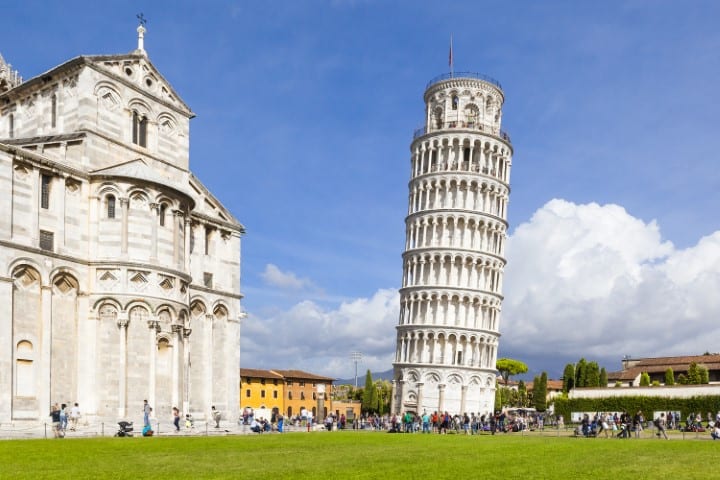
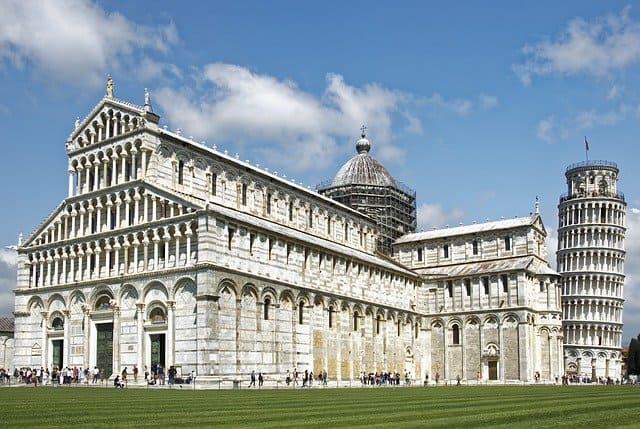
The Leaning Tower makes up only a quarter of the entire ensemble of the famous Piazza dei Miracoli. Because it is actually the campanile of the Pisan Cathedral, the facade of which is also decorated with numerous columns. The baptistery and the Campo Santo, the cemetery building, complete the complex, which is most imposing to the viewer from the aircraft when the pilot turns over the city to approach the airport.
The Piazza dei Miracoli was declared a World Heritage Site by UNESCO in 1987 and fascinates visitors with the imposing cathedral, the baptistery and the historic Camposanto cemetery.
Leaning Tower of Pisa

The world-famous Leaning Tower of Pisa is one of the most photographed objects in the world. Hardly any other architectural masterpiece of global renown has been preserved from decay, or rather from toppling over, with such elaborate measures. Even without mentioning the city, the world-famous Leaning Tower is always associated with Pisa. It is the source of the special charm emanating from this perfectly designed square, the Piazza dei Miracoli (Square of Miracles).
If you visit this world-famous tower, then stroll across the entire piazza with the cathedral, baptistery and the Camposanto cemetery.
Laying of the foundation stone in 1173.
The tower was intended to be a striking architectural feature of the square, standing as a freestanding campanile. The foundation stone was laid on August 9, 1173, but starting at the third floor, the structure began to sink alarmingly into the soft ground, forcing work to be halted for decades. It wasn't until around 200 years later, in 1372, that the tower, including its bell chamber, was completed – reaching a height of almost 56 meters and already exhibiting a clearly visible tilt.
Over the centuries, the tower's structural integrity has had to be repeatedly checked and corrected, most recently between 1990 and 2001. Today, visitors with a ticket for a specific time slot can climb the 251 steps to the top platform to experience the slightly unsettling feeling of its precarious tilt. Places are limited – during the season, you should reserve your ticket in advance online on the official website of the Opera della Primaziale Pisana. The ticket is only valid for the booked time slot; those arriving late will not be admitted. Children who will not be 8 years old by the end of the year are not permitted to climb the tower, and those under 18 must be accompanied by an adult (as of 2026).
Tickets & Tours
Tickets for climbing the tower are available from the official provider of the Opera della Primaziale Pisana. Those looking for tickets with an audio guide, combination tickets for the tower and the cathedral, or a day trip from Florence will find a selection at GetYourGuide (affiliate links):
- Leaning Tower of Pisa: Tickets and Tours – Tickets for the tower and cathedral, as well as guided tours.
- Tours and activities in Pisa – City tours, bike tours and excursions around Pisa.
Monumental Cemetery

Wer den Schiefen Turm von Pisa besucht, sollte das gesamte Gelände des UNESCO-Weltkulturerbes erkunden. Neben dem Dom lockt auch der Camposanto Monumentale, der monumentale Friedhof. Laut einer Überlieferung, soll die Anlage Erde aus dem Heiligen Land enthalten, die durch Kreuzfahrer nach Pisa gebracht wurde. Die Friedhofsanlage, die zwischen 1203 bis 1358 entstand, beherbergt im Inneren spätantike Sarkophage, die Angehörigen der herrschenden Adelsgeschlechter als Grabstätte dienten. Besonders die Grabmäler aus dem 18. Jahrhunderts beeindrucken die Besucher der Anlage. Besonders schön ist der Blick in den Innenhof des Camposanto, da dieser fast wie eine friedvolle Filmkulisse wirkt.
Baptistery

The Baptistery of Pisa is another of the impressive buildings on the UNESCO World Heritage List. This freestanding baptistery was built between 1152 and 1260. The floor plan of the circular building was modeled after the Anastasis Rotunda of the Holy Sepulchre in Jerusalem. Initially, the architecture was adapted to the style of the cathedral, but from the second floor onward, it switched to the Gothic style. It is the largest baptistery in Italy, standing approximately 55 meters tall with a circumference of 107 meters. Accordingly, the baptistery perfectly complements the overall complex surrounding the Leaning Tower of Pisa.
Widthre attractions in Pisa
Even if the leaning tower is the real reason for a city trip to Pisa, there are other sights in addition to the buildings on the Piazza dei Miracoli.
The Piazza dei Cavalieri with the Palazzo of the same name is located in the student district of Pisa and is actually only a stone's throw from the Leaning Tower. From the Ritterplatz you can also quickly reach the shopping mile with its cafés, restaurants and hotels and finally arrive at the Arno, a popular meeting point for the many students who study in Pisa and contribute significantly to the modern cityscape, because Pisa is a young city, as for the average age of the population.

The small, romantic church of Santa Maria della Spina is located directly on the Arno, the left nave forms a line with the sea wall. Hardly imposing from behind, its pretty facade suddenly appears in the rear-view mirror when driving down the Lungarno Gambacorti out of town.
South of the Arno lies the district that the people of Pisa call the Mezzogiorno. A stroll along the Corso Italia, the lively shopping street between the Arno and the train station, and through the narrow streets away from the tourist crowds is highly recommended. Because Pisa is home to around 40.000 students, you'll find many good and affordable trattorias and student pubs here – unlike around the Piazza dei Miracoli.
The city on the Arno is also home to one of the oldest botanical university gardens in Europe, the Orto Botanico, founded in 1544.
Marina di Pisa

Marina di Pisa is the name of the small place at the mouth of the Arno where the Pisans bathe in summer. Its small Art Nouveau houses are nice to look at. If you book a city trip to Pisa, the journey begins via a German airport and just one and a half hours later you can start exploring the city from Aeroporto Pisa / Toscana.
June in Pisa: Luminara, Regata and Gioco del Ponte
Wenn Sie Mitte Juni in Pisa sind, sollten Sie die Luminara di San Ranieri nicht versäumen, benannt nach dem Schutzpatron der Stadt. Am Abend des 16. Juni verwandelt sich Pisa in ein Lichtermeer: Zehntausende kleine Lichter zeichnen die Fassaden der Palazzi entlang der Arno-Ufer nach, auf dem Fluss treiben Kerzen. Der Brauch geht auf die festliche Beleuchtung bei Prozessionen zurück und gehört heute fest in den pisanischen Veranstaltungskalender.
Am 17. Juni, dem Festtag des Heiligen, folgt die Regata di San Ranieri, ein Ruderwettkampf der historischen Stadtviertel auf dem Arno. Und am letzten Samstag im Juni treten die beiden Stadthälften nördlich und südlich des Arno beim Gioco del Ponte gegeneinander an, einem historischen Kräftemessen in Renaissance-Kostümen auf der Ponte di Mezzo. Wer im Juni kommt, sollte also etwas mehr Zeit einplanen als nur für die Besichtigung des Schiefen Turms – Sie werden es nicht bereuen.

Ideal travel time for Pisa
In the high season, the Domplatz is besieged by tour groups from all over the world. If you don't have a fixed time, it's better to choose spring or autumn for the visit. And take some time to visit the city of Pisa itself too.
First class hotels in Pisa
Eine der ersten Adressen in Pisas Altstadt ist das exklusive Hotel Relais Dell’Orologio. Erbaut im 14. Jahrhundert, liegt das Hotelgebäude nur etwa 200 Meter von der Piazza dei Miracoli entfernt. 600 m vom Bahnhof Pisa Centrale entfernt liegt das Five Roses Bed & Breakfast. Das traditionell eingerichtete Hotel strahlt eine freundliche familiäre Atmosphäre aus, außerdem lassen sich von hier aus alle Sehenswürdigkeiten Pisas problemlos zu Fuß erreichen.
One of the top addresses in Pisa's old town is the exclusive Hotel Relais Dell'Orologio. Built in the 14th century, the hotel building is just 121 meters from the Piazza dei Miracoli. Five Roses Bed & Breakfast is 90 meters from Pisa Centrale Train Station. The traditionally furnished hotel exudes a friendly, family atmosphere, and all of Pisa's sights can be easily reached on foot from here.
You can find more hotels, B&Bs and holiday apartments in Pisa at Booking.com.
Find accommodation in Pisa
Mark Twain at Pisa
The famous American writer Mark Twain also stayed in Pisa between 1878 and 1879. In his travel memories he describes his experiences in his typical style. Reading invites you to follow his traces.


