Napoleon Bonaparte on the island of Elba
Content
Napoleon Bonaparte lived on Elba for just under ten months: He reached Portoferraio on May 3, 1814, and officially disembarked on May 4. On February 26, 1815, he fled the island and returned to France for the Hundred Days. His two residences—the Palazzina dei Mulini in Portoferraio and the Villa San Martino—are now museums and the island's most important Napoleonic sites.
Napoleon on Elba – At a glance
- Arrivals: 3 May 1814 on the British frigate HMS Undaunted; official landing on 4 May 1814 in Portoferraio.
- Check out: February 26, 1815 with approximately 1.000 men; landing in France on March 1, 1815.
- Status: Sovereign of the Principality of Elba according to the Treaty of Fontainebleau (April 1814).
- Museums: Palazzina dei Mulini (city residence) and Villa San Martino (country estate), each €5 entrance fee (as of 2026).
- Further clues: Teatro dei Vigilanti in Portoferraio, Madonna del Monte hermitage near Marciana.
How did Napoleon get to Elba?
After the Allied capture of Paris, Napoleon abdicated in April 1814. In the Treaty of Fontainebleau, he received the island of Elba as a sovereign principality, retained the title of Emperor, and was to receive an annual pension. He stated that he chose Elba because of its friendly inhabitants and mild climate.
Arrival in Portoferraio
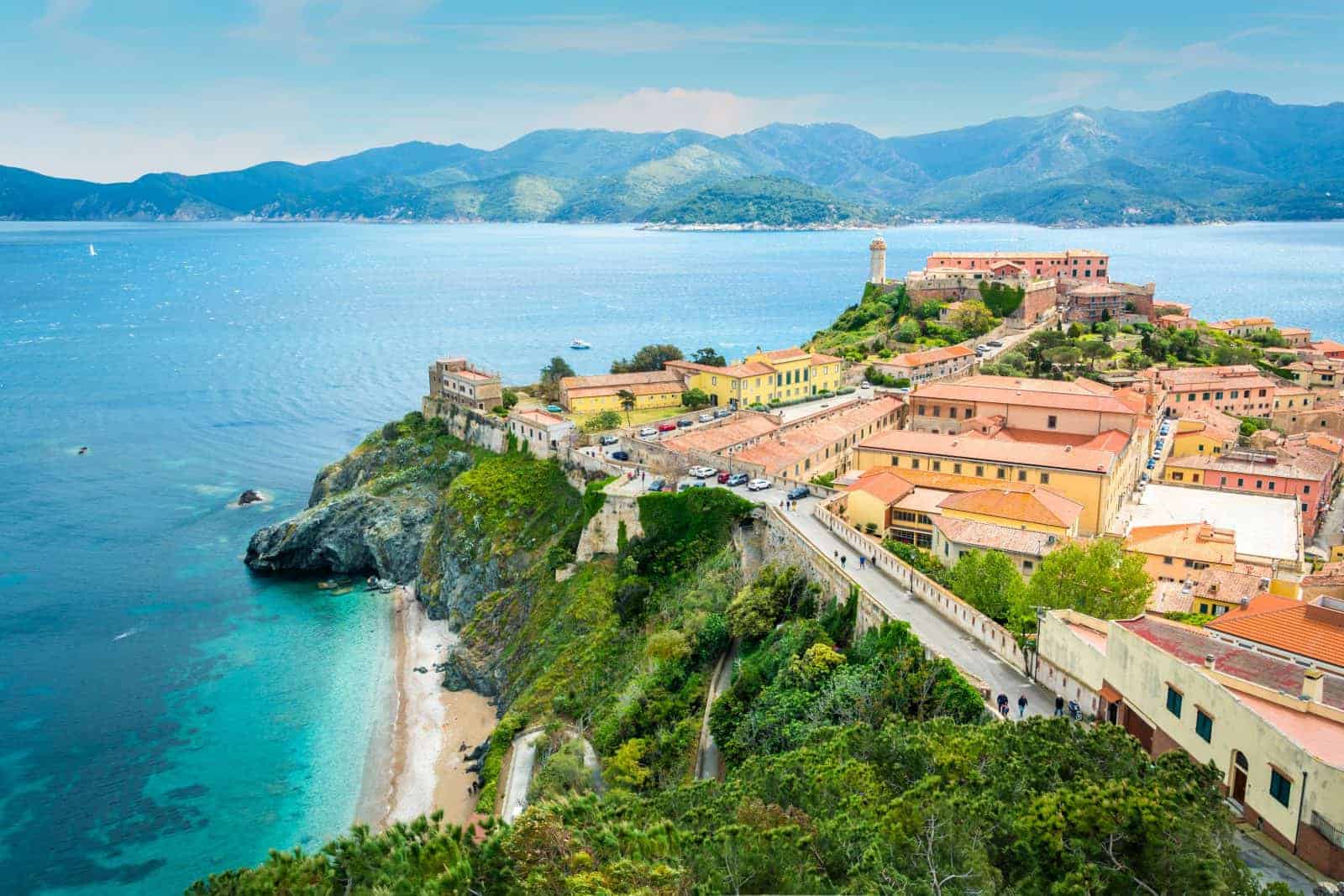
On May 3, 1814, the British frigate "Undaunted," carrying Napoleon, entered the bay of Portoferraio. On May 4, around 15:30 p.m., he officially disembarked at the Elba pier. The mayor presented him with the keys to the city, followed by a Te Deum in the parish church, now the cathedral. Napoleon initially resided in the town hall. His new flag, white with a red diagonal stripe and three golden bees, was already flying upon his arrival – it remains the flag of Elba to this day.
Napoleon's Life on Elba
Napoleon ruled the small island with great zeal. He had roads built, promoted iron ore mining and viticulture, and oversaw agriculture, administration, and hygiene in Portoferraio. During his time on Elba, he was visited by his mother Letizia and his sister Pauline. His Polish mistress, Maria Walewska, also briefly visited the island with their son; the meeting took place at the secluded hermitage of Madonna del Monte above Marciana.
The escape on February 26, 1815
Napoleon closely followed the political situation in Europe. His promised pension failed to materialize, and he feared being sent to an even more remote location. On the evening of February 26, 1815—during a masked ball during Carnival—he secretly left Elba with the brig "Inconstant" and approximately 1.000 soldiers. On March 1, he landed at Golfe-Juan on the French coast and entered Paris shortly thereafter. The "Hundred Days" ended with the defeat at Waterloo on June 18, 1815. Napoleon was exiled to St. Helena in the South Atlantic, where he died in 1821.
Napoleonic sites on Elba
Palazzina dei Mulini (Villa dei Mulini)

The city residence is situated above the old town of Portoferraio, between the Stella and Falcone fortresses, overlooking the sea. Napoleon had the former military building converted; on display are period furniture, works of art, his library, and the garden overlooking the sea. Following restoration work on the gardens (funded by EU grants), the museum reopened on June 20, 2026.
Villa San Martino
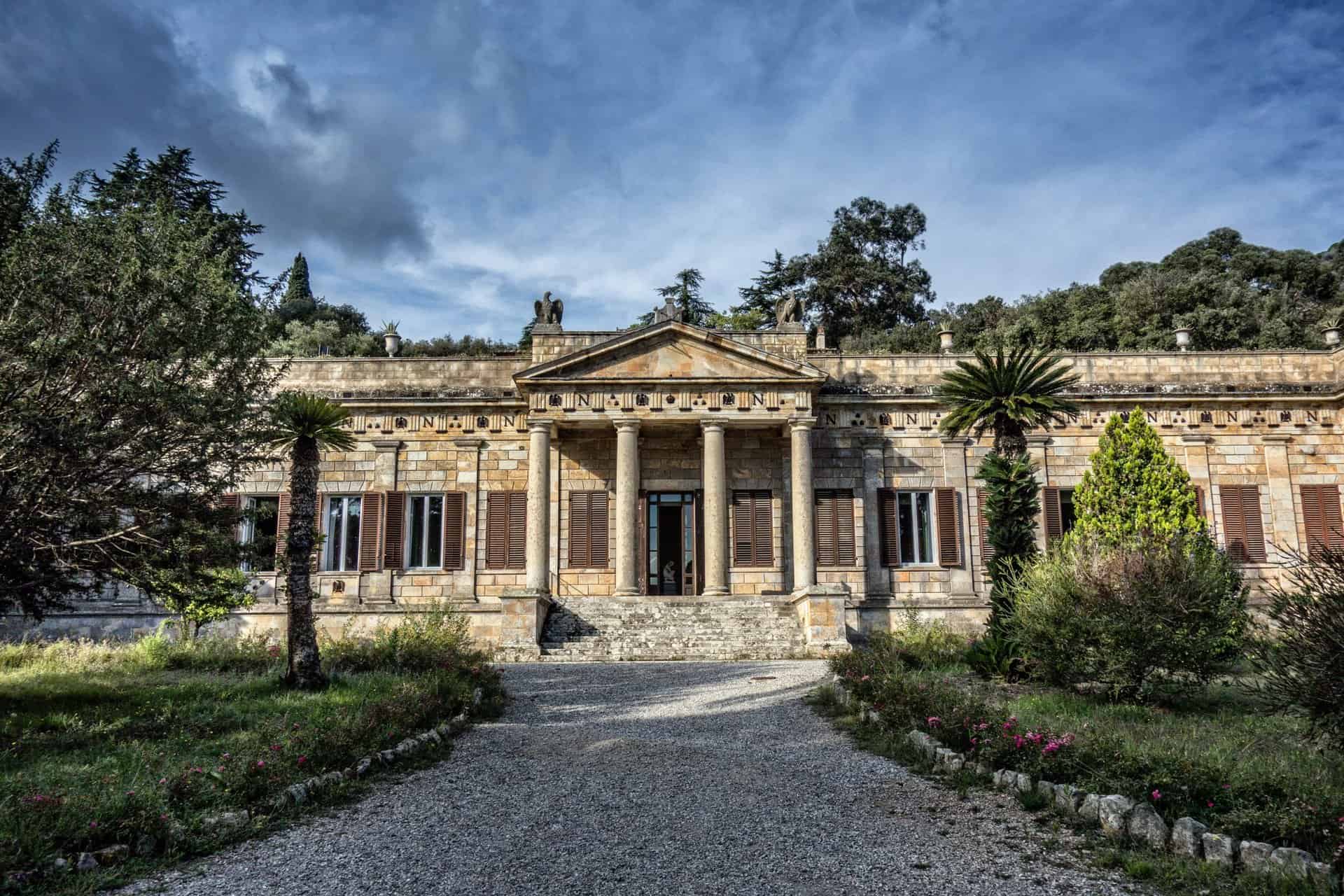
The country estate lies a few kilometers outside Portoferraio in the San Martino valley, towards Procchio. Napoleon had a simple country house expanded into a summer residence. Particularly worth seeing are the "Egyptian Hall" with its murals commemorating the Egyptian campaign, and the magnificent Demidoff Gallery, which the Russian collector Anatoly Demidoff had built in front of the villa in 1856. The park is currently temporarily closed for restoration work (as of November 2026).
| Museum | Opening hours 2026 | Admission |
|---|---|---|
| Palazzina dei Mulini | Mon, Thurs 14–18:30 pm; Wed, Fri, Sat, Sun/Public Holiday 9–13:30 pm; Tues closed | €5 (€2 reduced price) |
| Villa San Martino | Tue, Thu, Sat, Sun/holidays 9–13:30; Wed, Fri 13:30–17:30; Mon closed | €5 (€2 reduced price) |
Tips for visiting the museum
- No combined ticket: The official website does not mention a combined ticket – you pay €5 (€2 for concessions) at each villa. According to the museum, only cash payments are accepted at the Palazzina dei Mulini.
- Free Sunday: On the first Sunday of the month, admission to Italy's state museums is free ("Domenica al museo") – this also applies to both Napoleon villas.
- Morning or afternoon: The two houses have had staggered opening hours since June 20, 2026: On Wednesdays, Thursdays, and Fridays, one villa opens in the morning, the other in the afternoon – making it easy to combine visits on these days. On weekends, both are only open in the morning.
- Reservation: Not necessary, but possible by phone (Mulini +39 0565 915846, San Martino +39 0565 914688). Because the information regarding Mondays at Villa San Martino is not consistent, a quick call beforehand is recommended.
Further traces of Napoleon
- Theater of the Vigilanti In Portoferraio: Napoleon had the theater set up in a former church.
- Museo Napoleonico della Misericordia in Portoferraio: Among other things, you can see a bronze cast of Napoleon's head and hand, a copy of his sarcophagus in the Invalides in Paris and the Elba flag with the three bees.
- Madonna of the Mountain Near Marciana: pilgrimage church and hermitage, meeting point with Maria Walewska; accessible on foot from Marciana.
- Portoferraio: In the old town, squares, memorial plaques, and the Medici fortifications recall the time of the principality. Forte Falcone and the city's other sights can be found at the Sights on Elba.
Gedenktag am 5. Mai
Napoleon died on St. Helena on May 5, 1821. Since then, a mass for the emperor has been celebrated in Portoferraio every year on May 5 – a tradition dating back to a bequest by Prince Anatolij Demidoff in 1852. Around the anniversary of his landing in early May, additional events take place in some years, such as a meeting of the European Napoleon route "Destination Napoléon" on Elba in 2025. For current dates, please contact the tourist information office in Portoferraio.
Timeline: Napoleon's time on Elba
| Date | Event |
|---|---|
| April 11, 1814 | Treaty of Fontainebleau: Napoleon receives Elba as a sovereign principality. |
| April 28, 1814 | Departure from Saint-Raphaël (southern France) on the British frigate HMS Undaunted. |
| 3 May 1814 | Arrival in the bay of Portoferraio. |
| 4 May 1814 | Official landing in Portoferraio, handover of the city keys and Te Deum in the cathedral. |
| 31 May 1814 | Sister Pauline stopped on Elba for two days; from November 1, 1814, she lived on the island. |
| August 2, 1814 | Mother Letizia meets Livorno . |
| 1-3 September 1814 | Visit from Maria Walewska with their son; departure via Porto Longone (today Porto Azzurro). |
| February 26, 1815 | Around 21 p.m., Napoleon secretly left Elba with the brig "Inconstant". |
| March 1, 1815 | Landing at Golfe-Juan, beginning of the Hundred Days' reign. |
| June 9, 1815 | Final Act of the Congress of Vienna: Elba falls to the Grand Duchy of Tuscany. |
| June 18, 1815 | Defeat at Waterloo, followed by exile to St. Helena. |
| 5 May 1821 | Napoleon dies on St. Helena. |
Napoleon's Life – Briefly Explained
- 1769: Born in Ajaccio, Corsica – within sight of Elba.
- 1799: Coup d'état, Napoleon becomes First Consul.
- December 2, 1804: Imperial coronation in Notre-Dame; he placed the crown on his own head in the presence of the Pope.
- April 1814: Abdication and Treaty of Fontainebleau.
- 1815: One Hundred Days, Waterloo, exile to St. Helena; he died there in 1821.
Plan a Napoleon excursion
Both museums are located in the municipality of Portoferraio, where most ferries arrive – you can find information about the crossing on our travel to Elba page . We present Portoferraio and the other island towns in our section on the most beautiful places on Elba . After visiting the museums, the white pebble beaches around Portoferraio beckon – you can find out more in our section on the most beautiful beaches of Elba . Our Elba page provides an overview of the island.
Find accommodation on Elba
Frequently asked questions about Napoleon on Elba
How long was Napoleon on Elba?
Nearly ten months: from May 3, 1814 (arrival in the bay of Portoferraio, landing on May 4) until his escape on February 26, 1815.
Where did Napoleon stay on Elba?
In the Palazzina dei Mulini in Portoferraio (city residence) and in the Villa San Martino (summer and country residence). Both are now state museums.
Why was Napoleon exiled to Elba?
After his abdication in April 1814, he received Elba as a separate principality in the Treaty of Fontainebleau. He was formally its ruler, but was not allowed to leave the island.
How did Napoleon escape from Elba?
On the evening of February 26, 1815, he secretly left the island with the brig Inconstant and about 1.000 men. On March 1, he landed at Golfe-Juan in France.
When are the Napoleon museums on Elba open?
Palazzina dei Mulini (since its reopening on June 20, 2026): Mon and Thurs 14–18:30 pm, Wed, Fri, Sat, Sun 9 am–13:30 pm, closed on Tuesdays. Villa San Martino: Tues, Thurs, Sat, Sun 9 am–13:30 pm, Wed and Fri 13:30–17:30 pm, closed on Mondays; the villa's park is temporarily closed for restoration (as of November 2026).
How much does it cost to enter the Napoleon museums?
In 2026, admission to the Palazzina dei Mulini and the Villa San Martino will cost €5 each, with a reduced price of €2. A combined ticket is not officially offered; admission is free on the first Sunday of the month.
Was passiert am 5. Mai auf Elba?
On the anniversary of Napoleon's death, a mass is celebrated in Portoferraio every year for the Emperor, founded in 1852 by Prince Anatolij Demidoff.