Fabbriche di Careggine – the Atlantis of Tuscany
Content
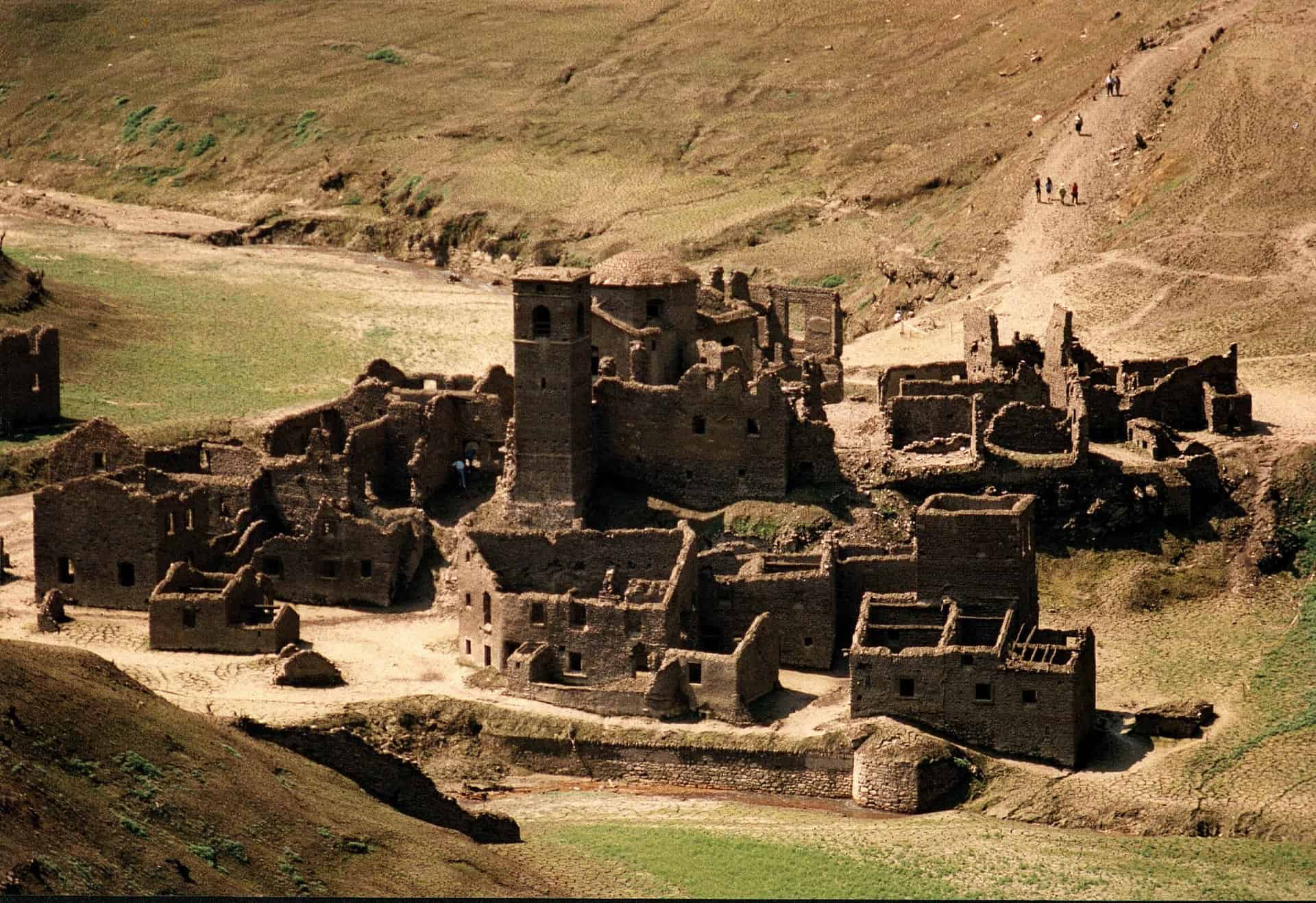
Fabbriche di Careggine is a medieval village in the Garfagnana region that has lain at the bottom of the Lago di Vagli reservoir since its construction. Only when the lake is drained for maintenance do the houses, church, and bridge reappear – most recently in 1994. According to current reports, the next draining is planned for the summer of 2027, but this has not yet been officially confirmed.
Fabbriche di Careggine at a glance
- Location: Lake Vagli, municipality of Vagli Sotto, Garfagnana (province of Lucca), on the edge of the Apuan Alps.
- Sunken since: Construction of the dam 1947–1953.
- Currently visible: during the emptyings in 1958, 1974, 1983 and 1994.
- Next emptying: Planned by the municipality for summer 2027 (as of March 2026), but postponed several times.
- Possible at any time: View of the lake, walk through Vagli Sotto, hikes in the Apuan Alps.

History of the sunken village
Fabbriche di Careggine wurde im 13. Jahrhundert von Schmieden aus Brescia gegründet, die sich hier zur Eisenverarbeitung niederließen – daher der Name „Fabbriche“ (Werkstätten). Zwischen 1947 und 1953 baute die Gesellschaft Selt-Valdarno (heute Enel) einen 92 Meter hohen Staudamm am Fluss Edron. Die 146 Bewohner wurden nach Vagli Sotto umgesiedelt, ihr Dorf verschwand im Stausee. Seitdem trägt es den Spitznamen „Atlantis der Toskana“. Mehr zur Region im Beitrag zur Provinz Lucca.
When will the village reappear?
The water is only drained for major dam work – this happened in 1958, 1974, 1983, and most recently in 1994. A draining initially announced for 2023, then later for 2024, has been postponed several times, partly due to the pandemic and the drought of 2022. In March 2026, Italian media reported that the draining was planned for the summer of 2027. The mayor of Vagli Sotto confirmed the plan; however, the operator, Enel, stated that the necessary work could technically be carried out underwater. Whether and when the lake will actually be drained remains uncertain – check the latest announcements from the municipality of Vagli Sotto (as of October 2026) before traveling.
What you see during an emptying process
When the lakebed is exposed, visitors can walk among the remains of the houses, see the Romanesque church of San Teodoro with its bell tower, the cemetery, and the old three-arched stone bridge that once spanned the Edron River. The municipality anticipates hundreds of thousands of visitors by 2027; additional parking spaces and access roads are planned to accommodate this influx.
Visit Lago di Vagli – even without emptying the toilet
Things to do at the lake
- Vagli Sotto: The village is situated on a peninsula in the lake; the most beautiful view across the water can be enjoyed from the shore.
- Vagli Park: In summer there is a suspension bridge and a zipline at the lake (seasonal operation, information available from the operator on site).
- Hiking: The lake lies on the edge of the Apuan Alps – ideal for day trips.
- Other excursions: the old town of Lucca and the thermal baths Bagni di Lucca.
Arrival and accommodation
Lake Vagli is located in northern Tuscany. From Lucca, drive through the Serchio Valley to Castelnuovo di Garfagnana and from there into the mountains to Vagli Sotto. The roads are winding and narrow – allow plenty of time for the journey. You can find accommodation in the main town of the Garfagnana region: Hotels in Castelnuovo di Garfagnana . Read more about the different regions in the article Landscapes of Tuscany.
Find accommodation in the Garfagnana
Frequently asked questions about Fabbriche di Careggine
When will Lago di Vagli be drained again?
According to media reports from March 2026, the emptying is planned for summer 2027. It has already been postponed several times and is not yet definitively confirmed.
When was Fabbriche di Careggine last seen?
The last time was in 1994. Before that, the reservoir was drained in 1958, 1974 and 1983.
Where is Fabbriche di Careggine?
At the bottom of Lago di Vagli near Vagli Sotto in the Garfagnana region, province of Lucca, in northern Tuscany.
Why is the place called "Atlantis of Tuscany"?
Because the medieval village has been underwater since the construction of the dam (1947–1953) and only reappears during rare drainings.
Is it still worth visiting if the lake is full?
Yes, if you like mountain scenery: Vagli Sotto, the lake, and the Apuan Alps make for a beautiful excursion even without emptying the pond. However, the village itself won't be visible.