


Whales and dolphins in the Mediterranean
Content
Yes, whales and dolphins live in the Mediterranean – and there are particularly many off the coast of Tuscany. The sea between Tuscany, Liguria, Corsica, and the Côte d'Azur is protected as the Pelagos Sanctuary ("Santuario dei Cetacei"). Eight species of whales and dolphins regularly inhabit this area, including the fin whale, sperm whale, bottlenose dolphin, and striped dolphin.
At a glance
- Arten im Mittelmeer: 11 Wal- und Delfinarten kommen regelmäßig vor, 9 davon gelten laut IUCN als gefährdet.
- Pelagos Nature Reserve: approximately 87.500 km², signed in Rome in 1999 by Italy, France and Monaco, in force since 2002.
- Best time to observe: From May to October, calm sea in the morning.
- Tours in Tuscany: e.g. Whale watching trips offered by the Tuscan Archipelago National Park from Marina di Campo (Elba); many trips also depart from Genoa.
- No guarantee: Sightings are likely, but never certain.
Whales and dolphins in the Mediterranean
Many are surprised: The Mediterranean is not an "empty" sea. According to the International Union for Conservation of Nature (IUCN), eleven species of whales and dolphins live there regularly – nine of which are considered endangered. The main causes are bycatch in fishing nets, underwater noise from ships, chemicals and plastic in the sea, and overfishing, which deprives the animals of food. According to recent counts, the fin whale population in the Mediterranean is now estimated at only around 1.800 animals.
These species can be seen off the coast of Tuscany.
Eight species regularly occur in the Pelagos protected area, which also includes the waters of Tuscany up to the southern border near Fosso Chiarone:
| Discover African | Typische Größe | Where/how to see |
|---|---|---|
| fin whale | up to about 20 m – second largest animal on Earth | on the open sea, especially in summer in search of food |
| sperm whale | Males up to about 18 m | over deep water and underwater canyons |
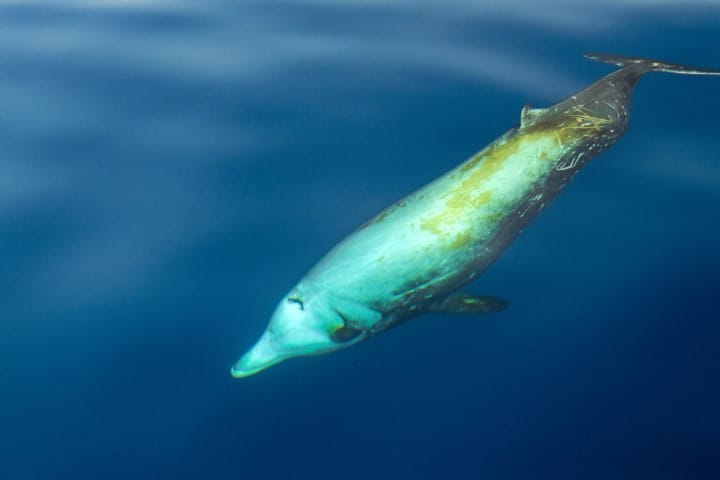
| Cuvier's beaked whale | approx. 5–7 m | very shy, deep-diving, rarely seen |
| Pilot whale (longfin) | approx. 4–6 m | in groups on the open sea |
| Risso's dolphin | approx. 3–4 m | above the continental slope |
| Bottlenose dolphin | approx. 2,5–3,5 m | near the coast, also around Elba and in front of Livorno |
| Striped dolphin | approx. 2 m | most common species, often found in large groups |
| Common dolphin | approx. 2–2,5 m | has become rare in the Pelagos area |
The very rare Mediterranean monk seal is also occasionally sighted. Loggerhead sea turtles (Caretta caretta) are also frequently seen, and are now even laying eggs on some Tuscan beaches.
The Pelagos Whale Sanctuary
The “Santuario Pelagos per i mammiferi marini” was agreed upon in Rome on November 25, 1999, by Italy, France, and Monaco, and entered into force in 2002. It is the first international marine protected area in the Mediterranean Sea to also include the high seas.
How big is the protected area?
Pelagos covers approximately 87.500 km² – more than twice the area of Switzerland. It stretches from the region around Toulon, across Corsica and northern Sardinia, to the border between Tuscany and Lazio (Fosso Chiarone). This means that the entire Ligurian Sea, the Tuscan coast, and all the islands of the Tuscan Archipelago lie within the protected area.
Why do so many whales live here?
Currents and wind bring nutrient-rich deep water to the surface here. This creates large quantities of plankton and krill – the main food source for fin whales. Pelagos is therefore considered the most important feeding ground for fin whales in the Mediterranean. You can read more about the sea off the coast in our article about the Tyrrhenian Sea.

Whale watching in Tuscany
Genuine whale and dolphin watching tours are offered along the Tuscan coast, especially around Elba. In Liguria, particularly from Genoa onwards, there is a wider selection.
Tours from Elba
The Tuscan Archipelago National Park organizes whale-watching excursions from Marina di Campo during the summer , accompanied by a marine biologist or park guides. According to the park, in 2025 there were 20 trips with 790 participants; over 130 dolphins (bottlenose and striped dolphins), two fin whales, and sea turtles were sighted. Dates and booking information are published by the park each spring on islepark.it . Several private operators on Elba also offer excursions. You can find information on how to get to the island in our travel guide to Elba.
A guided boat tour from Marina di Campo, where the return trip includes a lookout for the dolphins that live in the area, can also be found on GetYourGuide under Dolphin and Whale Watching in Tuscany . As with all tours, sightings are never guaranteed.
Tours from Genoa
From approximately May to October, boats from several operators depart from Porto Antico in Genoa (next to the aquarium). A tour lasts about 4,5 hours; according to genovaturismo.it, prices start at around €40 per person (as of 2025). Some operators offer a free or discounted repeat tour if no sightings are made.
Dolphins from Livorno and Viareggio
Bottlenose dolphins also live close to the coast near Livorno and Viareggio and are frequently sighted by excursion boats and sailboats. However, scheduled whale-watching tours are rare in this area – inquire at the harbor for current offers. You can find further ideas in our Tuscany boat tours and in the Livorno profile.

Our tip: observe gently.
We at Toskanatour recommend operators who adhere to rules for the protection of the animals: driving slowly, keeping a safe distance, not chasing the animals, and not swimming with them. In the Pelagos area, this is recognized by the "High Quality Whale Watching" (HQWW) seal of approval. A wonderful alternative is a trip with the fisherman Paolo Fanciulli ( Pescaturismo "Paolo il Pescatore" ) from Talamone: He is committed to sustainable fishing, shares a wealth of information about the ocean – and with a bit of luck, you might even encounter dolphins.
Who protects whales and dolphins in the Mediterranean?
Besides the three Pelagos Islands, research institutes and conservation organizations are working to protect the animals, such as the Swiss organization OceanCare , the German association Deepwave , and the international agreement ACCOBAMS, which protects whales and dolphins in the Mediterranean and Black Seas. Every tourist can help: don't throw trash into the sea, go slowly when boating, and keep your distance.
Frequently asked questions about whales and dolphins in Tuscany
Are there whales and dolphins in the Mediterranean Sea?
Yes. Eleven species of whales and dolphins regularly live in the Mediterranean, including the fin whale, sperm whale, bottlenose dolphin, and striped dolphin. Nine of these species are considered endangered according to the IUCN.
Where can you see dolphins in Tuscany?
The best way to see them is on boat trips around Elba and the islands of the Tuscan Archipelago. Bottlenose dolphins also live near the coast at Livorno and Viareggio. The national park offers guided whale-watching tours from Marina di Campo (Elba) during the summer.
What is the Pelagos Nature Reserve?
A marine protected area of approximately 87.500 km² for whales and dolphins located between Tuscany, Liguria, Corsica, northern Sardinia and the Côte d'Azur. It was agreed upon in 1999 by Italy, France and Monaco and has been in effect since 2002.
When is the best time for whale watching?
From May to October, when the sea is usually calm and fin whales are in the protected area foraging for food. The best time is in the morning when there is little wind.
Is there a guarantee of seeing whales?
No. The chances of seeing dolphins are good, whales are rarer. Some operators in Genoa offer a free or discounted second trip if no whales are sighted.


