


Volterra
Content
Volterra sits at an altitude of approximately 550 meters above the hills of the province of Pisa , about 50 km southeast of Pisa and roughly 75 km southwest of Florence. The town, with just under 10.000 inhabitants, was known as "Velathri," one of the twelve major Etruscan cities. Etruscan gates, a Roman theater, a medieval piazza, and its alabaster craftsmanship make it one of Tuscany's most fascinating destinations.
Volterra at a glance
- Highlights: Piazza dei Priori, Porta all'Arco, Museo Etrusco Guarnacci, Teatro Romano, Pinacoteca with Rosso Fiorentino's Descent from the Cross, the Le Balze demolitions
- Tickets: Volterra Card for 72 hours: €23, concessions €18, families €32 (as of 2026)
- Typical: Alabaster – workshops and shops throughout the old town
- Weekly market: Saturday morning
- Parking: The old town is a ZTL (Limited Traffic Zone) – use the parking lots around the city walls; motorhomes can use parking lot P3 Fonte di Docciola.
- Festival: Volterra AD 1398 on the second and third Sunday in August
Sights in Volterra
Priory Square

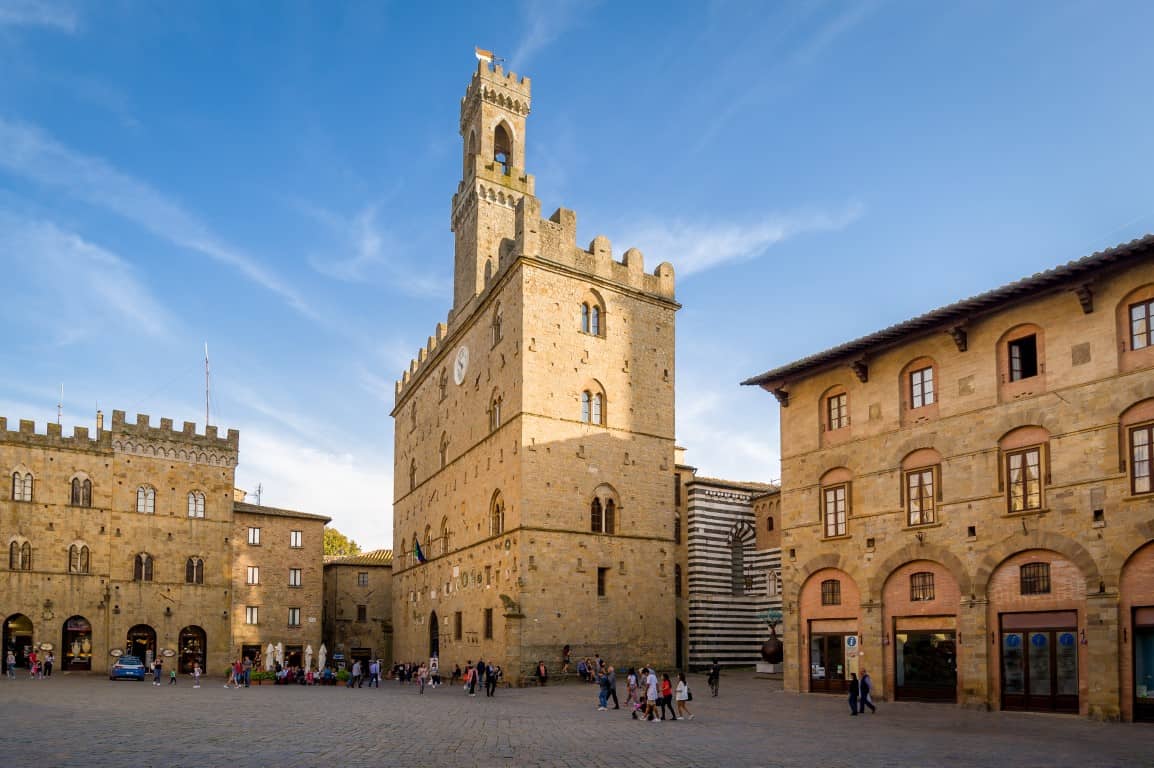
Der Palazzo dei Priori (13. Jahrhundert) gilt als ältestes erhaltenes Rathaus der Toskana. Sein Turm wurde nach einem Erdbeben im 19. Jahrhundert wiederhergestellt. Gegenüber steht der Palazzo Pretorio mit dem Torre del Porcellino – benannt nach der kleinen Wildschwein-Figur oben am Turm.
Dom Santa Maria Assunta und Baptisterium
Der romanische Dom stammt aus dem 12. Jahrhundert und wurde nach dem Konzil von Trient im späten 16. Jahrhundert umgestaltet; auffällig sind die vergoldete Kassettendecke und die mit Stuck verkleideten Säulen. Gegenüber steht das achteckige Baptisterium aus dem 13. Jahrhundert mit grün-weißer Marmorfassade und einem Taufbecken von Andrea Sansovino (1502).
Cathedral of Santa Maria Assunta and baptistery
The Romanesque cathedral dates from the 12th century and was remodeled after the Council of Trent in the late 16th century; its most striking features are the gilded coffered ceiling and the stucco-covered columns. Opposite stands the octagonal baptistery from the 13th century with its green and white marble facade and a baptismal font by Andrea Sansovino (1761).
Guarnacci Etruscan Museum
The museum dates back to a donation by the scholar Mario Guarnacci in 4 and is one of the oldest public museums in Europe. It displays hundreds of Etruscan cinerary urns made of alabaster and tuff. The most famous pieces are the slender bronze figure "Ombra della sera" (Evening Shadow), the terracotta "Urna degli Sposi" (Urn of the Spouses) depicting an elderly couple, and the funerary stele of Avile Tite.

Etruscan Walls and Porta all'Arco
Below the medieval wall at the Porta Fiorentina lies the Roman theater. Built under Emperor Augustus, it could seat approximately 2.000 spectators. Behind it are the remains of Roman baths. The site was only excavated starting in the 1950s. You can also get a good view, free of charge, from the Via Lungo le Mura.
Acropolis, Parco Archeologico and Fortezza Medicea
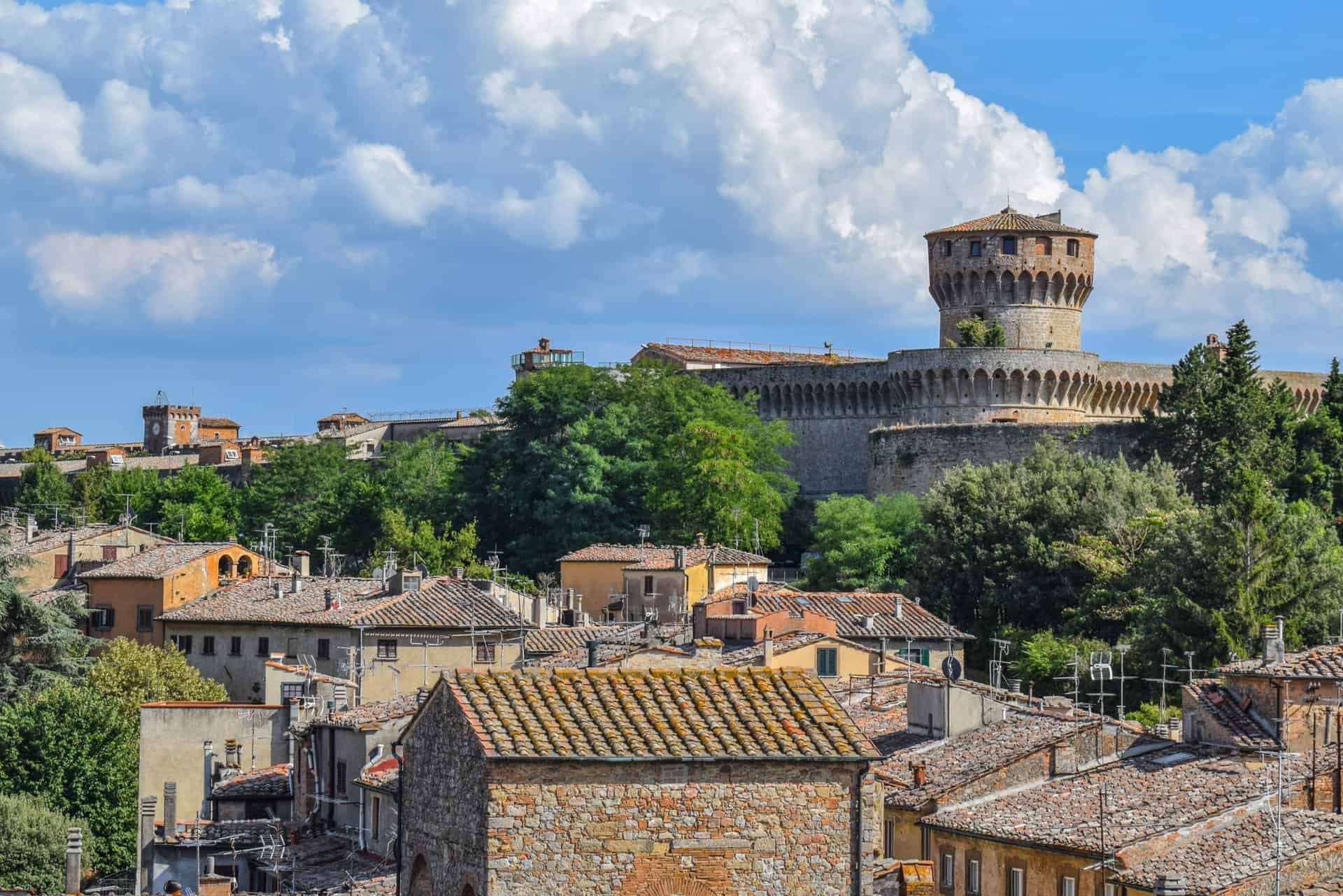
At the highest point lies the Enrico Fiumi Archaeological Park with the remains of the Etruscan acropolis, two temple foundations, and Roman cisterns. Next to it rises the imposing Medici Fortress: After its conquest by Florence in 1472 – for the nearby alum deposits – Lorenzo de' Medici had the fortress expanded to control the city. It still serves as a prison today and is therefore not open to the public.
Pinacoteca and Alabaster
The Pinacoteca Civica displays Rosso Fiorentino's "Descent from the Cross" (1521) as its centerpiece. Alabaster has been worked in Volterra for centuries; in many workshops in the old town, you can watch the artisans at work and purchase pieces.
Le Balze and the Badia
On the northwestern edge of the city, erosion and landslides have carved deep ravines into the hillside over centuries – the Balze. These have swallowed parts of the ancient necropolis and several buildings. Right on the edge stands the abandoned Camaldolese abbey (Badia), which can only be viewed from the outside. The view is particularly atmospheric in the late afternoon and at sunset.
Volterra Card, admission and opening hours
For those wishing to visit more than two museums, the Volterra Card is usually the more economical option. It is valid for 72 hours and includes the Museo Etrusco Guarnacci, Pinacoteca, Ecomuseo dell'Alabastro, Palazzo dei Priori, Acropolis with Roman Cistern, Teatro Romano, and the Museo Diocesano.
| Ticket | Price (as of 2026) |
|---|---|
| Volterra Card (72 hours) | 23 € |
| Volterra Card discounted (e.g., for young people aged 6 and over, students, and those aged 65 and over) | 18 € |
| Volterra Card Family (young people aged 6-18 with 1-2 adults, max. 5 people) | 32 € |
| Single ticket Museo Etrusco Guarnacci | 10 €, reduced 8 € |
| Children up to 6 years | Free |
Das Museo Guarnacci ist im Sommerhalbjahr (etwa März bis 1. November) täglich von 10 bis 18.30 Uhr geöffnet; im Winter dienstags geschlossen, montags und mittwochs bis freitags von 10 bis 16 Uhr, am Wochenende bis 18.30 Uhr. Die übrigen Stätten haben im Winter teils eingeschränkte Zeiten – aktuelle Angaben finden Sie unter museidivolterra.com und beim Tourismusbüro volterratur.it.
Walking tour: Volterra in half a day
- Roman theatre: View of the Roman Theatre from Via Lungo le Mura (free) or visit with a ticket.
- Piazza dei Priori: Palazzo dei Priori, opposite Palazzo Pretorio with Torre del Porcellino.
- Cathedral and Baptistery directly behind the Piazza.
- Via Porta all'Arco: Alabaster workshops and shops extend to the Etruscan Gate.
- Art gallery: Rosso Fiorentino's Descent from the Cross.
- Acropolis and Parco di Castello: Etruscan temple remains and city park below the Fortezza Medicea.
- Guarnacci Etruscan Museum: Ash urns and the "Ombra della sera".
- Le Balze: Finally, a view of the cliffs at sunset.
Practical tips for Volterra
Market and shop opening hours
The weekly market takes place on Saturday mornings. You can find more markets by day of the week in our overview of weekly markets in Tuscany.
Smaller shops in Tuscany are usually open from about 9 am to 13 pm and from 15 pm or 16 pm to 19:30 pm. In the touristy old town of Volterra, many alabaster and souvenir shops stay open later during the season and often on Sundays as well; in winter, the hours are shorter. You can find more information in our guide to shopping in Tuscany.
How to Arrive
By car, from Florence and Siena, take the Florence-Siena expressway to Colle di Val d'Elsa and continue on the SS 68. From the coast, take the SS 68 from Cecina, and from Pisa, take the SS 439 via Pontedera. Volterra does not have a train station in the town itself. To reach Volterra by train and bus, travel from Pisa or Florence to Pontedera and then by bus. From Florence and Siena, take the bus via Colle di Val d'Elsa, or from the coast, take the train to Saline di Volterra and then a bus up from there. The buses are operated by Autolinee Toscane ( at-bus.it ).
Parking
The old town is a traffic-calmed zone (ZTL) with camera surveillance – do not drive in. Park in the signposted, mostly paid parking areas around the walls, for example in the underground car park under Piazza Martiri della Libertà; from all parking areas it is only a few minutes' walk to the center, sometimes via stairs. Motorhomes can park at the municipal parking area P3 Fonte di Docciola (around 30 spaces, water and waste disposal facilities, maximum 24 hours, according to Campercontact €15 per 24 hours, as of 2026); from there a steep staircase leads up to the old town. You can find more parking spaces in the region under Motorhome Parking in Tuscany.
Twilight and Volterra
Fans of the Twilight Saga know Volterra as the Volturi's home from "New Moon." However, the scenes were mostly filmed in Montepulciano – but the town itself is worth a visit even without vampires.
Volterra AD 1398: Medieval Festival in August
Am zweiten und dritten Sonntag im August verwandelt sich die Altstadt in das Jahr 1398: Handwerker und Händler in historischen Gewändern, Umzüge, Fahnenschwinger und Armbrustschützen im Parco di Castello, bezahlt wird mit der Festmünze „Grosso“. 2026 fand das Fest am 9. und 16. August statt; nach dieser Regel fällt es 2027 auf den 8. und 15. August – die Bestätigung und das Programm finden Sie auf volterra1398.it. Weitere Feste finden Sie unter Feste und Prozessionen in der Toskana.
Excursions in the area
From Volterra you can reach San Gimignano in about 45 minutes, the glassmaking town of Colle di Val d'Elsa in about half an hour, and the coast near Cecina in about 45 minutes. Siena and Pisa are also good destinations for a day trip.
Tours & Accommodation
Wine tastings, cooking classes, and guided tours in and around Volterra can be found at GetYourGuide . Those wishing to stay overnight can find hotels and agriturismos at Booking.com.
Find accommodation in Volterra
Pictures of Volterra

Piazza dei Priori, Volterra 
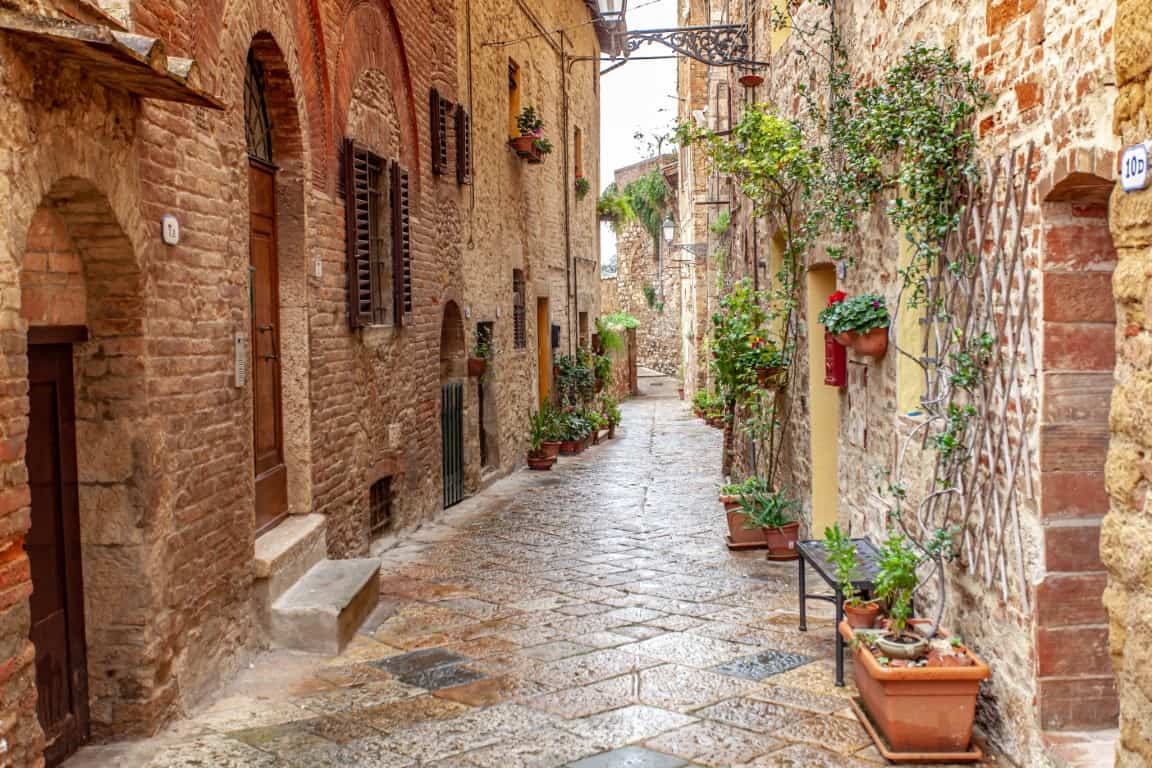
The alleys in Volterra 
View to Volterra 
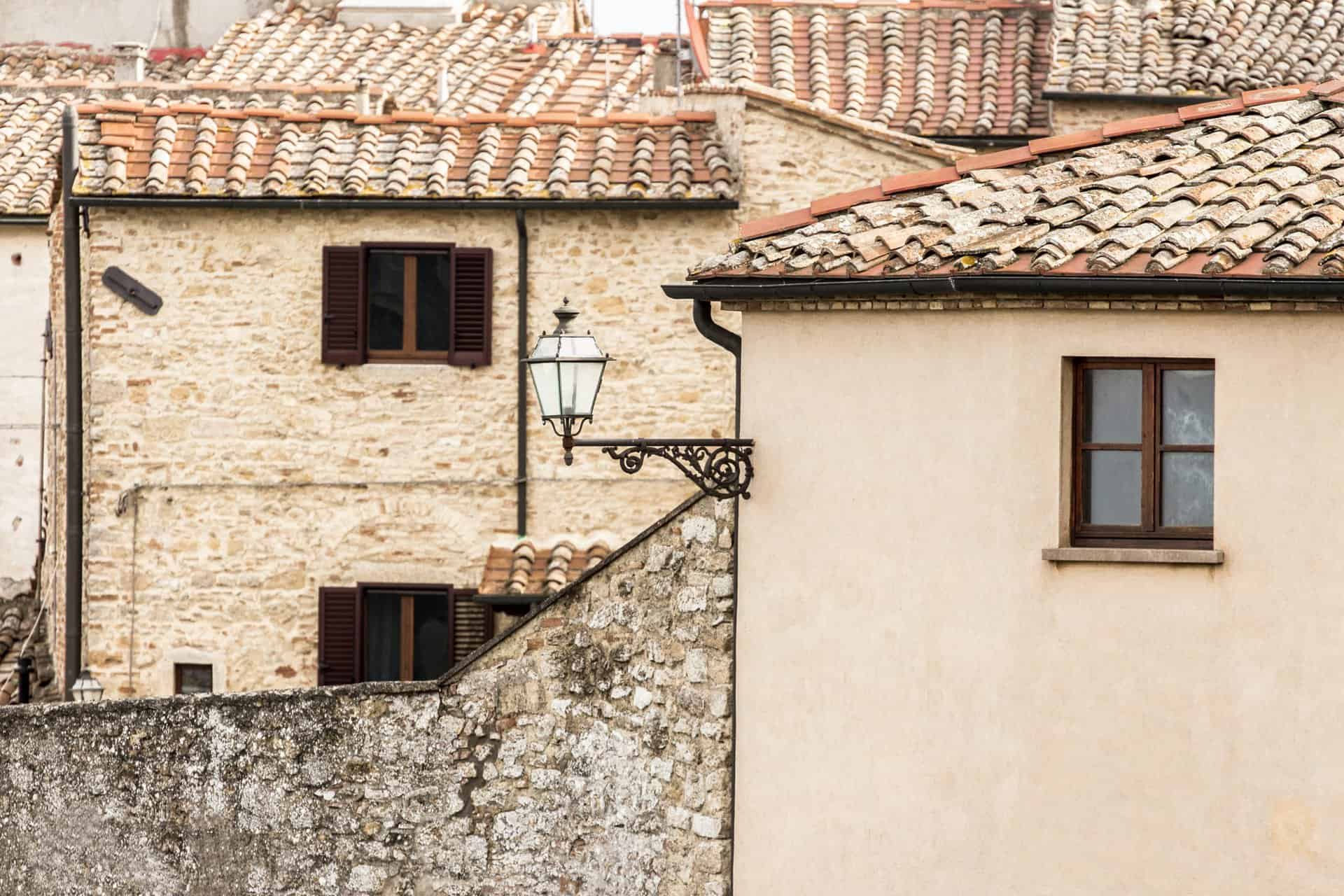
View over the houses of Volterra

Frequently Asked Questions about Volterra
How much does the Volterra Card cost?
The Volterra Card is valid for 72 hours and costs €23, €18 for concessions, and €32 for a family card (as of 2026). It includes admission to, among other attractions, the Guarnacci Museum, the Pinacoteca, the Palazzo dei Priori, the Acropolis, and the Roman Theatre. Children under 6 are free.
Where can you park in Volterra?
The old town is a ZTL (Limited Traffic Zone). Use the signposted parking areas around the city walls, most of which are subject to a fee. Motorhomes can park at parking area P3 Fonte di Docciola.
When is the market in Volterra?
The weekly market takes place every Saturday morning.
When is the medieval festival in Volterra AD 1398?
Am zweiten und dritten Sonntag im August – 2027 voraussichtlich am 8. und 15. August. Das bestätigte Programm steht auf volterra1398.it.
How do I get to Volterra without a car?
Take the train to Pontedera (from Pisa or Florence) and then continue by bus, or take a bus from Florence and Siena via Colle di Val d'Elsa. There is no train station in the town itself.
Was Twilight filmed in Volterra?
The story of "New Moon" takes place in Volterra, but the scenes were mostly filmed in Montepulciano.


