
The history of Tuscany
Content
The history of Tuscany stretches from the Etruscans through the Romans and the medieval city-states to the Medici, who made Florence the center of the Renaissance. Less well known: From 1737 to 1859, a cadet branch of the Habsburgs (Habsburg-Lorraine) ruled the Grand Duchy – and was the first country in the world to abolish the death penalty.
Tuscany history in brief
- Etrusker: Ab dem 9./8. Jh. v. Chr. Kernland der etruskischen Kultur („Etrurien“)
- Römer: Eroberung Etruriens zwischen dem 4. und 1. Jh. v. Chr.; in der Spätantike setzt sich der Name „Tuscia“ durch
- Etruscan: From the 9th/8th century BC onwards, the heartland of Etruscan culture ("Etruria")
- Doctors: Dominant in Florence from 1434, Grand Duchy of Tuscany in 1569
- Habsburg-Lorraine: 1737–1859; 1786 Abolition of the death penalty
- Italy: 1860 Annexation to Sardinia-Piedmont, from 1861 part of the Kingdom of Italy; Florence 1865–1871 capital
Antiquity: Etruscans and Romans
The land of the Etruscans
Lange vor den Römern war die heutige Toskana das Kernland der Etrusker, deren Kultur ab dem 9. und 8. Jahrhundert v. Chr. aufblühte. Ihre Städte – etwa Volterra, Populonia, Vetulonia, Chiusi, Cortona oder Arezzo – lagen meist auf Hügeln und waren durch Handel mit Metallen reich. Etruskische Mauern, Gräber und Museen gibt es bis heute: in Volterra, in der Nekropole von Populonia am Golf von Baratti bei Piombino oder im Archäologischen Museum von Grosseto.
Roman rule
Zwischen dem 4. und 1. Jahrhundert v. Chr. unterwarfen die Römer Etrurien schrittweise. Unter Kaiser Augustus wurde das Gebiet zur Region „Etruria“ (Regio VII); in der Spätantike setzte sich die Bezeichnung „Tuscia“ durch, von der sich der Name Toskana ableitet. Römische Spuren sind vielerorts erhalten, etwa das Amphitheater in Lucca, dessen Form bis heute die Piazza dell’Anfiteatro prägt. Auch einige Thermalquellen der Toskana nutzten schon die Römer.
Middle Ages and Renaissance
The city-states
After the fall of the Western Roman Empire, rulers changed frequently; in the High Middle Ages, the region belonged to the Margraviate of Tuscany, whose most famous ruler was Matilda of Tuscany (d. 1115). Afterwards, self-confident city-states rose to power: Pisa was a powerful maritime republic, while Siena and Florence rivaled for supremacy – in 1260, Siena defeated the Florentines at the Battle of Montaperti. In the long run, however, Florence prevailed: in 1406 it subjugated Pisa, and in 1555, with Spanish assistance, it conquered Siena. Lucca remained independent until 1847.
The Medici and the Grand Duchy
From 1434 onwards, the Medici banking family dominated politics in Florence . As patrons of artists such as Botticelli and Michelangelo, they transformed the city into a center of the Renaissance. In 1532, Florence became a duchy, and in 1569, the Pope elevated Cosimo I de' Medici to Grand Duke of Tuscany. With the death of Gian Gastone de' Medici in 1737, the male line of the family became extinct.
Habsburg-Lorraine, Napoleon and the Unification of Italy
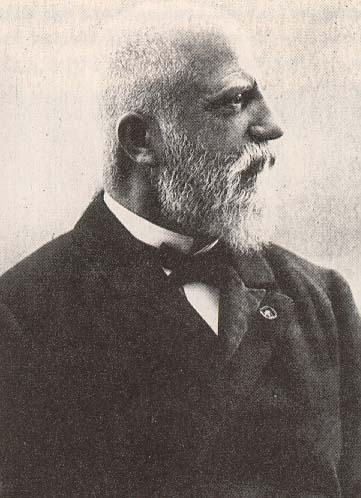
Tuscany under the Habsburgs
In 1737, the Grand Duchy passed to Francis Stephen of Lorraine, the husband of Maria Theresa and later Emperor Francis I, who administered it from Vienna through a regency. His son, Peter Leopold (Grand Duke from 1765, Emperor Leopold II from 1790), fundamentally reformed the economy, administration, and judiciary. On November 30, 1786, under his rule, Tuscany became the first country in the world to abolish the death penalty; November 30 is now a national holiday in Tuscany. He also curtailed the influence of the Church, which met with resistance in conservative circles.

Napoleonic era
In 1799, French troops occupied Tuscany, but a popular uprising ("Viva Maria") temporarily drove them out. From 1801, Napoleon made Tuscany the "Kingdom of Etruria" under the Bourbon-Parma family; in 1807 it was directly annexed to France, and in 1809 Napoleon appointed his sister Elisa Bonaparte Grand Duchess. In 1814, Ferdinand III of Habsburg-Lorraine returned.
The Road to the Kingdom of Italy
In the course of the Franco-Prussian War of 1859, Grand Duke Leopold II left Florence on April 27, 1859; his son Ferdinand IV was unable to assume power and was deposed in August 1859. Following a plebiscite in March 1860, Tuscany joined the Kingdom of Sardinia-Piedmont and in 1861 became part of the newly formed Kingdom of Italy. From 1865 to 1871, Florence served as its capital, until Rome assumed this role.
Die Toskana im 20. Jahrhundert
Bis weit ins 20. Jahrhundert lebten große Teile der Toskana von der Landwirtschaft, oft in der Halbpacht (Mezzadria): Die Pächter gaben einen Teil der Ernte an den Grundbesitzer ab. Neue Halbpachtverträge wurden 1964 verboten, bestehende ab 1982 in normale Pachtverträge umgewandelt. Die sumpfige, malariaverseuchte Maremma wurde über Jahrhunderte trockengelegt, abgeschlossen erst nach dem Zweiten Weltkrieg. Landflucht ließ viele Dörfer schrumpfen; zahlreiche Toskaner wanderten aus oder gingen in die Industriestädte des Nordens.
With the rise of quality wine production – for example in Chianti – and tourism, this changed from the 1960s onwards. Today, Tuscany is one of Italy's most popular travel destinations, but much of it has retained its rural charm. Many dishes of the simple "cucina povera" are reminders of poorer times.
Timeline: History of Tuscany
| Year | Event |
|---|---|
| ab 9./8. Jh. v. Chr. | from the 9th/8th century BC |
| 4.–1. Jh. v. Chr. | The Golden Age of the Etruscans |
| 1115 | 4th–1st century BC |
| 1260 | Roman conquest of Etruria |
| 1434 | Death of Matilda of Tuscany |
| 1555 | Battle of Montaperti: Siena defeats Florence |
| 1569 | Beginning of Medici rule in Florence |
| 1737 | Florence conquers Siena |
| 1786 | Cosimo I becomes Grand Duke of Tuscany |
| 1801–1807 | End of the Medici, beginning of Habsburg-Lorraine |
| 1814 | Abolition of the death penalty |
| 1847 | Kingdom of Etruria |
| 1860 | Return of the Habsburgs |
| 1865–1871 | Lucca joins Tuscany |
Frequently asked questions about the history of Tuscany
Where does the name Tuscany come from?
From the Latin “Tuscia”, the late antique name for the land of the Etruscans (Latin “Tusci”).
Who ruled Tuscany?
After the Etruscans and Romans, city-states shaped the Middle Ages. From 1434, the Medici family dominated, becoming Grand Dukes in 1569. Habsburg-Lorraine ruled from 1737 to 1859, followed by its annexation by Sardinia-Piedmont in 1860 and by Italy in 1861.
When was the death penalty abolished in Tuscany?
On November 30, 1786, under Grand Duke Peter Leopold – as the first state in the world. This day is now a public holiday in the Tuscany region.
Was Florence once the capital of Italy?
Yes, from 1865 to 1871, to Turin and before Rome.
Where can you visit Etruscan sites in Tuscany?
For example in Volterra, in the necropolis of Populonia on the Gulf of Baratti, in Vetulonia, Chiusi and Cortona.