


Pienza unique in the Orcia Valley
Content
Pienza is the quintessential Renaissance town: Pope Pius II commissioned the architect Bernardo Rossellino to redesign his birthplace, Corsignano, starting in 1459, and renamed it after himself in 1462. This small town of around 2.000 inhabitants lies high above the Val d'Orcia in the province of Siena . Its historic center has been a UNESCO World Heritage Site since 1996, and the surrounding Val d'Orcia landscape since 2004.
Pienza at a glance
- Time required: half a day for the city, a full day with a tour through the Val d'Orcia
- Highlights: Piazza Pio II with the cathedral and Palazzo Piccolomini, panoramic walk along the city walls, pecorino shops on the Corso
- Location: approximately 55 km southeast of Siena, about 13 km from Montepulciano
- MarketFriday morning
- Festival: Fiera del Cacio on the first weekend of September
Sights in Pienza
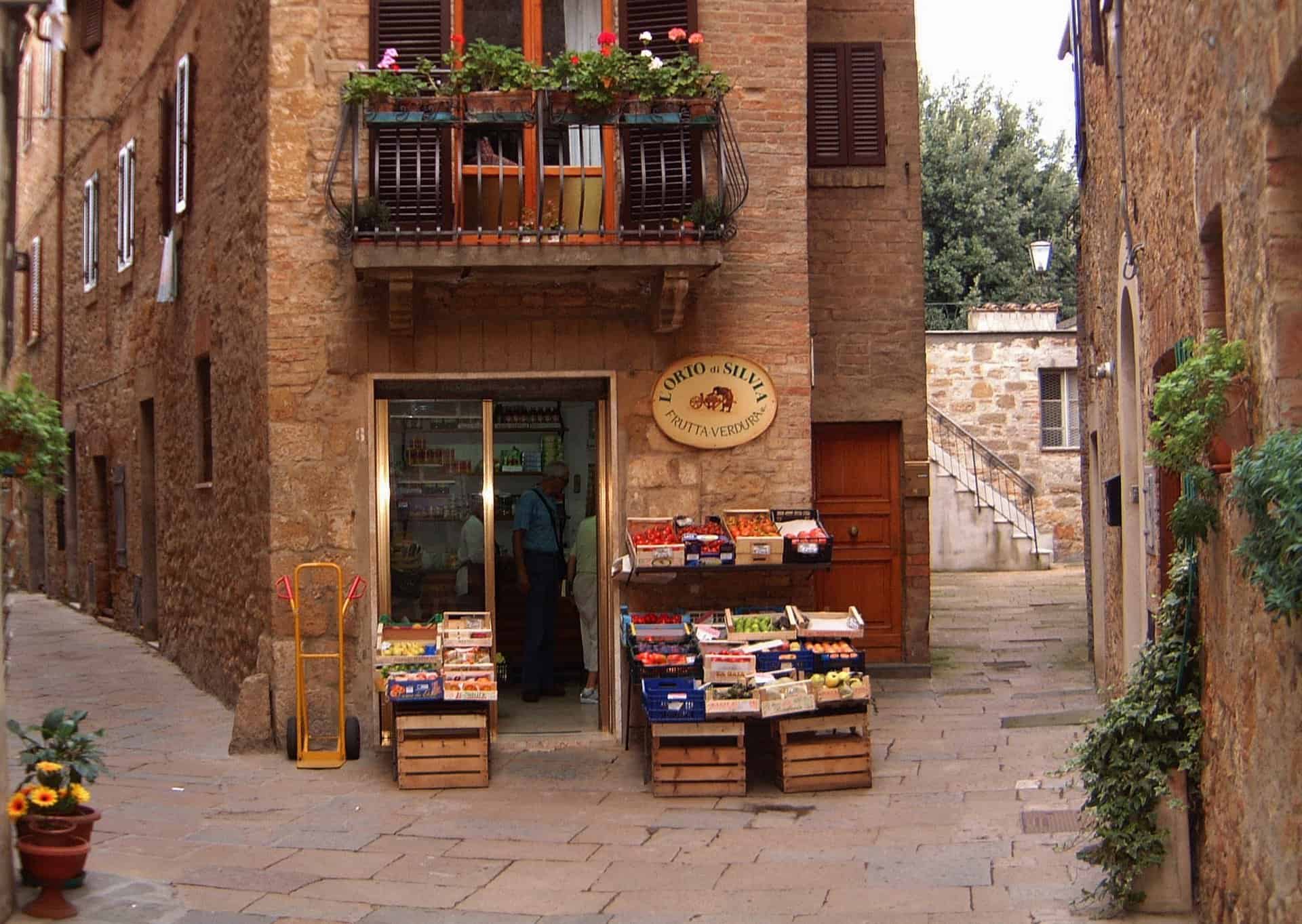
The old town is small: Corso Rossellino leads from Porta al Murello right through the town to the central piazza. Everything is easily accessible on foot.
Piazza Pio II – the heart of the ideal city
Rossellino grouped the most important buildings around the trapezoidal square in just four years of construction: the cathedral, the Palazzo Piccolomini (Papal Palace), the Palazzo Comunale (Town Hall), and the Palazzo Borgia, now home to the Diocesan Museum. This unified plan made Pienza a model for later Renaissance urban planning.
Cathedral of Santa Maria Assunta
The cathedral combines a Renaissance facade with a bright, hall-like interior modeled on German churches that Pius II had encountered on his travels. Inside, altarpieces by important 15th-century Sienese painters adorn the walls.
Palazzo Piccolomini and panoramic views
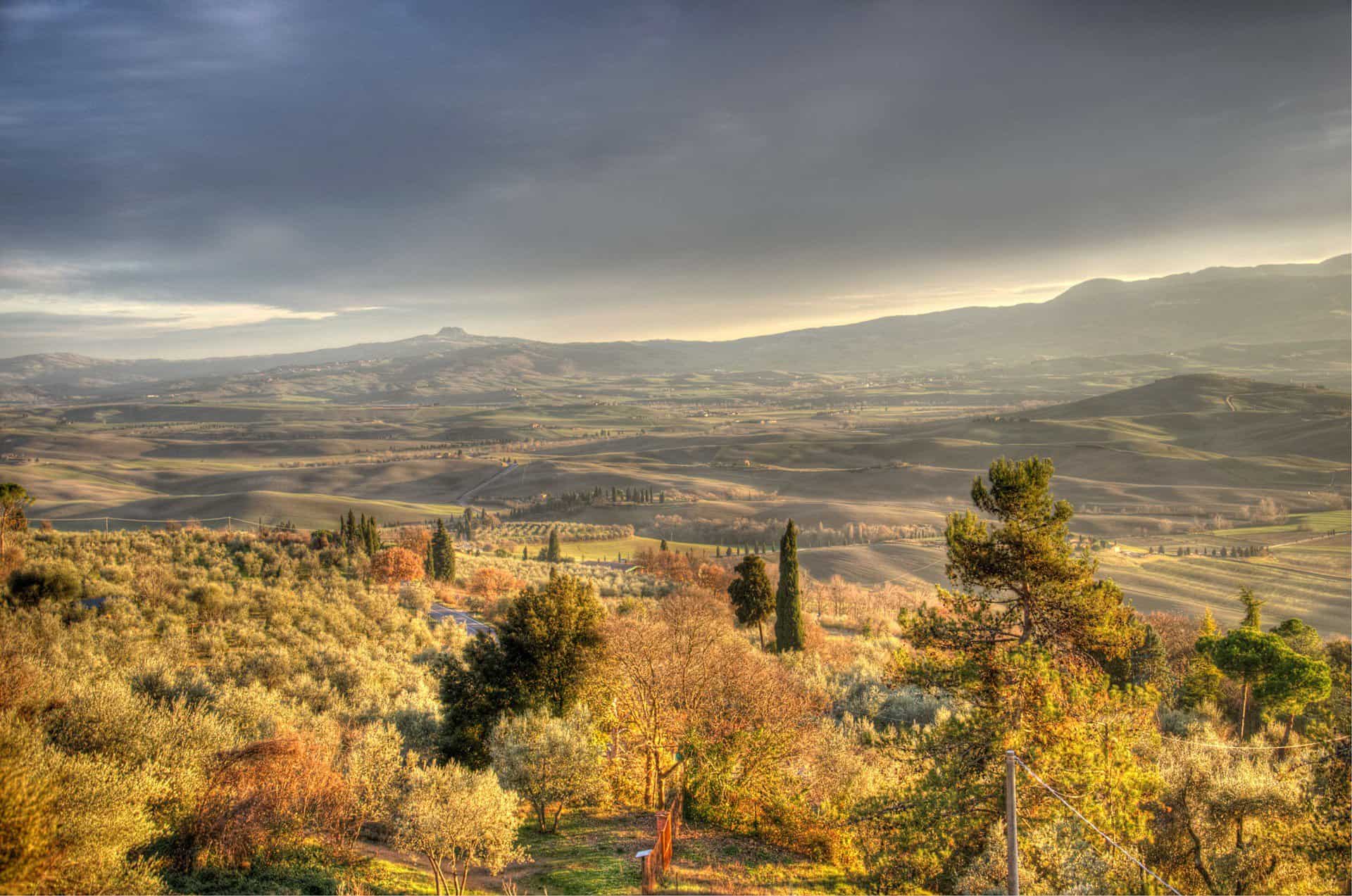
The Papal Palace opens up to the landscape with loggias and a hanging garden – the view across the Val d'Orcia to Monte Amiata is one of the most beautiful in Tuscany. Equally lovely is the walk along the city walls. Small alleyways with names like Via dell'Amore and Via del Bacio invite you to take photographs.
Opening hours and admission to Palazzo Piccolomini and the Diocesan Museum change seasonally – please check the official website or on site beforehand.
The Val d'Orcia and the Pecorino

The area around Pienza is a picture-perfect Tuscan landscape: rolling hills, rows of cypress trees, and scattered farmhouses. The Val d'Orcia has been a UNESCO World Heritage Site since 2004. Depending on the season and time of day, the same view can look completely different – photographers often visit early in the morning or at sunset.

Pienza is considered the capital of Pecorino cheese. After the Second World War, many farmers left the barren land; shepherd families from Sardinia took over farms and brought their sheep with them. Today, numerous shops along the Corso sell Pecorino di Pienza – fresh, aged, stored in ash, hay, or wooden barrels. Almost everywhere you can sample it.
On the first weekend of September, the town celebrates the Fiera del Cacio: the highlight is on Sunday the “Gioco del Cacio al Fuso”, in which the districts roll cheese wheels as close as possible to a spindle on the Piazza Pio II.
Excursions around Pienza

Pienza lies between two famous wine towns: Montepulciano, known for its Vino Nobile, is only about 13 km away, while Montalcino, with its Brunello, is about a half-hour drive. On the way to Montalcino, you'll pass through San Quirico d'Orcia. Read more about Tuscan wine in our wine article.
Nearby are also thermal springs such as Bagno Vignoni (bathing in the historic pool is prohibited) and the freely accessible Bagni San Filippo – more information can be found under Thermal Baths of Tuscany . Siena is also worth a visit for a stroll.
Tours & Accommodation
- Tours and activities in Pienza – including farm visits with Pecorino tasting, wine and olive oil tastings, and cooking classes.
- Tours through the Val d'Orcia – guided day trips including visits to wineries, for example to Montepulciano and Montalcino.
Those wishing to stay overnight in Val d'Orcia can find hotels and agriturismi in and around Pienza at Booking.com.
Find accommodation in Pienza
Practical tips: Arrival, parking and market
- Arrival: From Siena via the Via Cassia (SS2) to San Quirico d'Orcia, then continue on the main road to Pienza; from the A1 via the Valdichiana exit or Chiusi-Chianciano and Montepulciano.
- Parking: The old town is closed to cars (ZTL). Paid parking spaces are located directly on the edge of the old town.
- Markt: The weekly market is on Friday mornings. You can find other markets in the area – e.g., Montepulciano on Thursdays, Montalcino on Fridays – in our overview. Weekly markets in Tuscany.
- More info: Val d'Orcia and Siena on the travel blog Places of Juma.
Frequently asked questions about Pienza
What is there to do in Pienza?
Visit Piazza Pio II with its cathedral and Palazzo Piccolomini, enjoy the view of the Val d'Orcia along the city walls, sample Pecorino cheese, and explore the alleyways like Via dell'Amore. Half a day is enough for the city.
When is the market in Pienza?
The weekly market takes place on Friday mornings.
Why is Pienza a UNESCO World Heritage Site?
Pienza is considered the first city planned according to Renaissance ideals. Pope Pius II commissioned Bernardo Rossellino to redesign it starting in 1459; in 1996, the historic center was declared a UNESCO World Heritage Site.
Where can you park in Pienza?
The old town is closed to cars. Paid parking spaces are located directly on the edge of the center, just a few minutes' walk away.
When is the Fiera del Cacio in Pienza?
The cheese festival takes place on the first weekend of September. On Sunday, the various districts roll cheese wheels across Piazza Pio II during the Gioco del Cacio al Fuso (Cheese Rolling Game).
Image source: ENIT /fotoseca


