Pinocchio the famous wooden doll from Tuscany
Content
Pinocchio, the wooden puppet with the growing nose, originates from Tuscany: He was invented by the Florentine writer Carlo Collodi, who owed his pen name to the small village of Collodi near Pescia. The Parco di Pinocchio is also located there today – a popular destination for families between Lucca and Montecatini Terme.
Pinocchio at a glance
- Author Carlo Collodi, actually Carlo Lorenzini (1826–1890), born and died in Florence
- Initial release: 1881 as a serialized story in “Giornale per i bambini”, as a book in 1883 (“Le avventure di Pinocchio”)
- Place of origin of the name: Collodi, a district of Pescia in the Pistoia Province – Birthplace of Collodi's mother
- Destination: Parco di Pinocchio (opened in 1956) and the historic Giardino Garzoni right next door
Where does Pinocchio come from? Origin and author
Carlo Collodi – the author of Pinocchio
Carlo Lorenzini was born in Florence on November 24, 1826, and died there on October 26, 1890. He worked as a journalist, writer, and prefectural official. He chose his pen name after the village of Collodi, his mother's birthplace and where he spent part of his childhood. He is buried in the Cimitero delle Porte Sante cemetery near San Miniato al Monte in Florence.
The story was first published in installments in the children's magazine "Giornale per i bambini" starting in July 1881, and then as a book in 1883. It only became world-famous after Collodi's death. Today, "The Adventures of Pinocchio" is one of the most translated books in Italian literature. It was first published in German in 1905, later under titles such as "Das politischen Bengele" (The Wooden Boy); since 1948, it has mostly been known as "Die Abenteuer des Pinocchio" (The Adventures of Pinocchio).
Where does the name Pinocchio come from?
The name is usually traced back to the Italian words "pino" (pine) and "occhio" (eye) as well as "pinco" (fool) – essentially meaning "blockhead". Fittingly, Pinocchio is carved from a single piece of wood.
What is Pinocchio about? Plot and characters
The poor woodcarver Geppetto receives a talking log from his neighbor, the carpenter Master Cherry (Mastro Ciliegia), and carves a puppet from it: Pinocchio. No sooner is it finished than it runs away. Instead of going to school, Pinocchio sells his schoolbook for a ticket to the puppet theater, is cheated out of his gold coins by the Fox and the Cat, ends up in "Toyland" and is transformed into a donkey. Finally, he is swallowed by a giant shark, in whose belly he finds Geppetto and rescues him. Because he reforms, works diligently, and cares for his father, Pinocchio eventually becomes a real boy.
The most famous part of the story is Pinocchio's nose, which grows whenever he lies. Behind the fairy tale lie clear lessons: lying and laziness have consequences, while diligence and honesty are rewarded.
The most important characters
- Pinocchio – the living wooden doll
- Geppetto – poor woodcarver and Pinocchio's "father"
- Master Cherry (Mastro Ciliegia) – Carpenter who finds the talking log
- The Talking Cricket – Pinocchio's conscience
- The fairy with the turquoise hair – Pinocchio's protector
- Fox and tomcat – Swindlers who swindle Pinocchio
- Fire Eater (Mangiafuoco) – Puppet theater director
- wick (Lucignolo) – Friend who lures Pinocchio to Toyland
- The shark – swallows Geppetto and Pinocchio (a whale in Disney's version)

Pinocchio in the film
Pinocchio has been filmed many times. The most famous versions are:
- 1911: first silent film by Giulio Antamoro
- 1940: Animated film by Walt Disney
- 1972: Italian TV series by Luigi Comencini
- 1976: Japanese animated series
- 2002: Feature film by and starring Roberto Benigni
- 2019: Live-action film adaptation by Matteo Garrone
- 2022: Disney live-action film by Robert Zemeckis and the stop-motion film by Guillermo del Toro


Visit Collodi: Pinocchio's home in Tuscany
Collodi is a small hamlet belonging to the municipality of Pescia. The old village stretches steeply up the hillside, below which lie the baroque Giardino Garzoni and the Pinocchio Park. A visit can easily be combined with a trip to Lucca or Montecatini Terme.
Pinocchio Park
Opened in 1956, the park is not an amusement park with rides, but rather an art and adventure park: bronze sculptures, mosaics, and structures recount the stages of the story – from the Field of Wonders to Toyland and the Fairy, all the way to the Great Shark. There is also a puppet theater, play areas, a small museum, and a restaurant. You should allow about two hours for the park alone.
Giardino Garzoni and Butterfly House
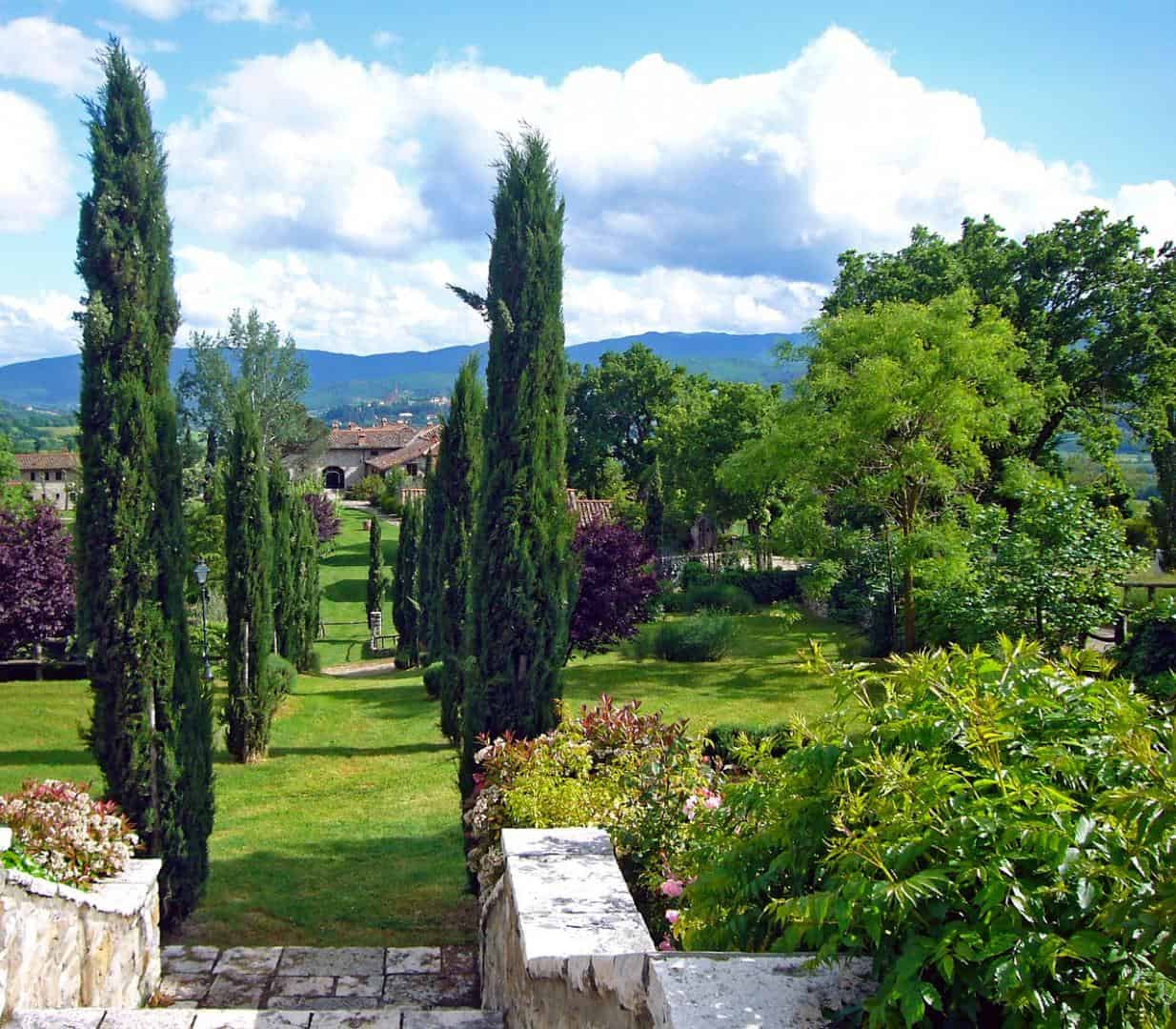
Opposite lies the Storico Giardino Garzoni, a terraced Baroque garden below the Villa Garzoni, featuring water features, staircases, and statues. The garden also includes the Casa delle Farfalle, a butterfly house. Combination tickets are available for the park, garden, and butterfly house.
Opening hours and prices
Der Park ist von etwa März bis Anfang November täglich geöffnet, meist ab 10 Uhr bis 17, 18 oder 19 Uhr je nach Saison; in den Wintermonaten öffnet er nur an Wochenenden und Feiertagen. Stand 2026 kostet das Ticket für Park und Giardino Garzoni für Erwachsene 26 € (Nebensaison 23 €), ermäßigt 23 € (21 €), für Kinder von 3–4 Jahren 21 € (19 €); Kinder unter 3 Jahren sind frei. Die Kasse schließt eine Stunde vor Parkschluss. 2026 feiert der Park sein 70-jähriges Bestehen, und am 24. November 2026 jährt sich Collodis Geburtstag zum 200. Mal. Da sich Zeiten und Preise jährlich ändern, prüfen Sie vor dem Besuch die offizielle Website pinocchio.it.
Directions and parking
Collodi is located about 15 km east of Lucca on the road to Pescia. Free parking is available on Via Pasquinelli, about 50 meters from the park entrance. This excursion is a great addition to a camping holiday with children – you can find tips on camping with children in Tuscany.
Frequently asked questions about Pinocchio
Where does Pinocchio come from?
Pinocchio comes from Tuscany. The author Carlo Collodi (Carlo Lorenzini) lived in Florence; he got his pen name from the village of Collodi near Pescia, where the Parco di Pinocchio stands today.
Who wrote Pinocchio?
Carlo Collodi, whose real name was Carlo Lorenzini (1826–1890). The story was published in installments starting in 1881 and as a book in 1883.
What does the name Pinocchio mean?
It is derived from “pino” (pine), “pinco” (fool) and “occhio” (eye) – roughly meaning “blockhead”.
How long does it take to visit the Parco di Pinocchio?
Allow about two hours for the park alone. Including Giardino Garzoni and the butterfly house, it's worth spending half a day to a full day.
How much does the Pinocchio Park in Collodi cost?
As of 2026, the ticket for the park and Giardino Garzoni costs €26 for adults (€23 in the off-season), €23 for concessions, and free for children under 3. Current prices and combination tickets are available at pinocchio.it.
Why does Pinocchio's nose grow?
In the book, Pinocchio's nose grows when he lies – the most famous motif of the story.
You can find more reading material for your trip in our book recommendations for Tuscany , background information on the region in the history of Tuscany.