Design a garden in the Tuscan style - the best tips
Content
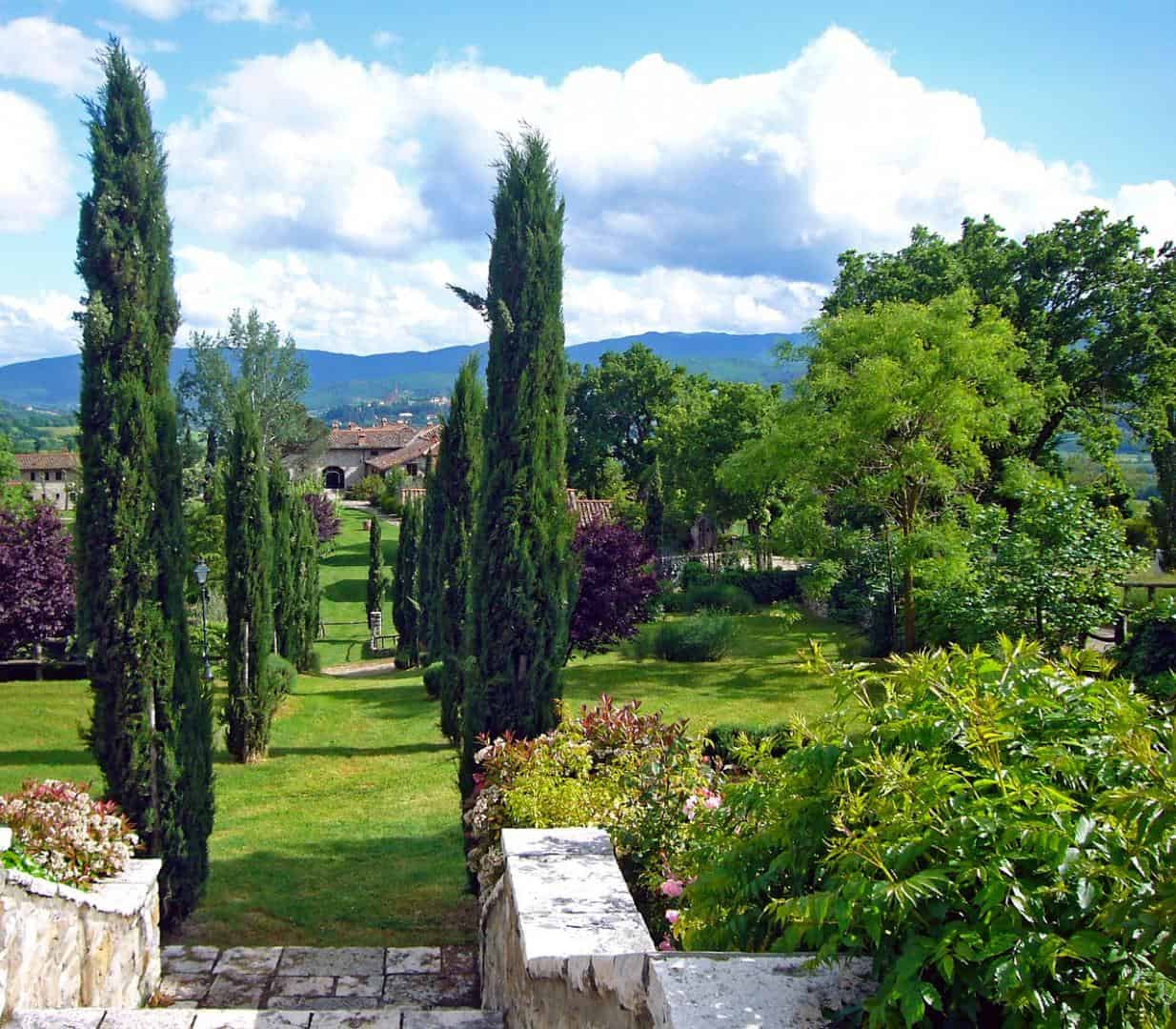
A Tuscan-style garden thrives on cypress and olive trees, terracotta, natural stone, fragrant herbs, and a shady spot under the pergola. The good news: much of this can also be recreated in Germany – provided the location and plant selection are suited to the local climate. The following tips show how to make your dream of a Mediterranean garden a reality.
Short answer: What makes a garden a Tuscan garden?
- Sunny, sheltered location – ideally facing south or southwest
- Typical trees and shrubs: columnar cypress, olive, fig, viburnum; plus citrus in pots.
- Materials: Terracotta, natural stone, gravel and untreated wood
- A shady seating area under a vine-covered pergola, ideally with an outdoor kitchen.
- Herbs and perennials such as lavender, rosemary, sage, mullein and feather grass
- Plan for frost protection: Olives can only tolerate about -10 °C, citrus plants must overwinter frost-free.
Planning the Tuscan garden
Consider the location
Tuscan gardens need plenty of light, warmth, and sun. If your garden is predominantly shady, the style will be difficult to implement. Ideal properties face south or southwest, and flowerbeds should receive sun from morning till evening. Protection from wind, rain, and cold is equally important – for example, from a house wall or a roof. Potted plants will need winter quarters, such as a greenhouse or a bright, cool cellar.
Reconsider the planned use
Before planning, consider who will use the garden and how: Will children play there? Do chickens, cats, or dogs need space to roam? Should there be room for garden parties or for a greenhouse to overwinter Mediterranean potted plants ? Anyone wanting to harvest herbs, vegetables, or fruit should include herb beds, vegetable plots, and espaliered fruit trees in their plans from the outset.

Garden room with hedges
Garden rooms have proven effective in cleverly connecting the different areas. The individual garden rooms can be ideally separated by hedges – a classic design element of Italian gardens. They not only divide the functional areas but also create the typical Mediterranean flair.
Take the care requirements into account
Many hedges also mean a lot of work: To keep them in shape, regular pruning with robust and powerful hedge shears is necessary. This tool is also helpful for shaping shrubs or large lavender bushes. Mediterranean potted plants should be pruned with clean-cutting rose shears. Herb gardens are relatively low-maintenance but require regular pruning and occasional division. Perennial beds need to be cut, fertilized, watered, and protected in winter – plan for this workload honestly before you begin.

Typical elements of the Tuscan garden
Materials: Terracotta, natural stone and wood
The Tuscan garden is a type of Mediterranean cottage garden and generally rather rustic. Characteristic features include natural wood for furniture and pergolas, terracotta pots and ceramics, as well as paths and terraces made of natural stone or gravel. Mediterranean vegetables such as tomatoes, artichokes, and zucchini fit perfectly, as do lemon or orange trees in containers and fig and peach trees trained on trellises.
Shady seating areas under the pergola
Inviting, shady seating areas are a hallmark of the Tuscan garden style: spacious natural stone terraces beneath a pergola covered in climbing plants such as grapevines, wisteria, or climbing roses. Since communal eating and drinking play a significant role in Tuscany , an outdoor kitchen fits perfectly into this concept. Until the climbing plants have completely covered the pergola, a breezy Roman awning provides sun protection.
Paths and surfaces made of gravel
Gravel and crushed stone in warm beige, ochre, or gray tones are the most affordable way to create a Tuscan ambiance. Straight paths with clean edges, made of natural stone, brick, or Corten steel, are typical. A permeable geotextile fabric beneath the gravel layer suppresses weeds without causing rainwater to pool. Important: A Tuscan garden is not simply a gravel garden – plant the gravel areas with lavender, thyme, sage, grasses, and ground cover plants. In some German states and municipalities, purely gravel gardens are now restricted or prohibited; if in doubt, check with your local council.
Natural stone walls and hillside terraces
The hills of Tuscany are characterized by terraces with dry stone walls. In the garden, a low dry stone wall made of limestone or sandstone is suitable as a border for flower beds, as a seating wall by the terrace, or for retaining a slope. Because the stones are stacked without mortar, they retain heat and the joints offer space for thyme, ground cover plants, and lizards. For stability reasons, higher retaining walls should be planned by a specialist company.
Terracotta pots and water as a focal point
Large terracotta pots look more harmonious than many small ones. When buying, make sure to choose pots explicitly labeled as frost-resistant, as simple clay pots absorb water and can crack in winter. Place the pots on feet to allow excess water to drain away. A wall fountain, a stone trough, or a small water basin creates a tranquil focal point and is particularly well-suited to a seating area.
Choosing the right plants
Climate and winter hardiness
How many Mediterranean plants you can plant outdoors depends on the climate: In wine-growing regions with mild winters, the selection is significantly larger than, for example, in the Alpine foothills with severe frosts. Many typical Tuscan plants are only partially winter-hardy.
| Plant | Winter hardiness (planted out) | Important notes |
|---|---|---|
| olive tree | down to about −10 °C, briefly −12 °C | sheltered location, good drainage, winter protection |
| Real fig | Depending on the variety, approximately -12 to -18 °C | Protect young plants in their first few years |
| Lemon, orange, kumquat | not frost-resistant | Overwinter in a frost-free and bright location |
| Fig or olive in a bucket | significantly less frost-resistant | Insulate or place the pot inside |
Hardy alternatives for harsh locations
Those who do not live in a mild wine-growing region can achieve the Tuscan look with robust look-alikes: Columnar conifers replace the cypress, and trees with silvery foliage are reminiscent of olive trees.
| Instead of … | Hardy alternative | Important notes |
|---|---|---|
| Columnar cypress | Columnar yew (Taxus baccata 'Fastigiata') | Hardiness zone 6b (approximately -18 to -20 °C), tolerates pruning; all parts of the plant except the red seed coat are poisonous. |
| Columnar cypress | Blue columnar juniper (Juniperus rockii 'Blue Arrow') | Hardy, slender (approx. 4 m tall, approx. 60 cm wide), grows slowly, tolerates drought |
| olive tree | Narrow-leaved oleaster (Elaeagnus angustifolia) | silvery-grey foliage, very frost-hardy (down to about −30 °C), deciduous |
| olive tree | Willow-leaved pear (Pyrus salicifolia) | narrow, grey-felted leaves, hardiness zone 5, grows to 6–8 m tall |
| Rosemary (in harsh climates) | Real lavender, thyme, hyssop | Lavender, thyme and hyssop can tolerate temperatures of around -17 °C, rosemary usually only -7 to -12 °C. |
Large trees
Plan your planting first with large trees and shrubs, then shrubs, perennials, and finally ground cover and herbs. For example, the following are suitable for a Tuscan garden:
- Mediterranean snowball (Viburnum tinus)
- Italian cypress (Cupressus sempervirens) – only partially winter-hardy in harsh locations
- Olive (Olea europaea)
- Fig (Ficus carica)
- Mulberry (Morus alba or Morus nigra)
- Evergreen magnolia (Magnolia grandiflora)
pot plants
- Lemon trees (Citrus limon)
- Orange trees (Citrus sinensis)
- Lantana camara
- Kumquat (Citrus japonica, syn. Fortunella)
- Oleander (Nerium oleander)
- Angel's Trumpet (Brugmansia suaveolens)
- African lily (Agapanthus africanus)
- Triplet flower (Bougainvillea glabra)
Perennials, grasses and herbs
There is also a wide selection of perennials, grasses, and Mediterranean herbs. Good examples include:
- Lavender
- rosemary
- sage
- Mullein
- Chaste tree
- Catnip
- Milkweed
- Feather grass
- Mugwort, tarragon and wormwood
When choosing plants, seek advice from a nursery experienced in Mediterranean plants, especially regarding location and soil. Plants are a significant expense – in an unsuitable location, they will languish or die. Most Mediterranean species prefer well-drained, rather lean soil and do not tolerate waterlogging.
Tuscan flair for small gardens and terraces
Small garden, balcony and terrace
The style can also be implemented in a small space – with fewer, but larger elements:
- Crust: Use terracotta tiles or natural stone slabs in warm tones, plant the edges with gravel and herbs.
- A few large buckets instead of many small ones – such as a lemon, an olive tree and a pot of lavender as a recurring motif.
- Vertical greening: Vines, climbing roses or wisteria on a trellis, house wall or small pergola create shade without taking up space.
- Columnar trees Columnar juniper or columnar yew trees create accents without taking up much ground space.
- Herbs within easy reach: Rosemary, sage, thyme and basil in pots near the kitchen door or seating area.
Care throughout the year
- Spring: Place potted plants outdoors after the last frosts and gradually acclimate them to the sun; prune lavender and sage back into the wood, but not into the old, bare wood.
- Summer: Water containers regularly – they dry out much faster than garden beds. Mediterranean plants planted in the ground require little water once established. Lightly prune lavender after flowering.
- Autumn: Bring citrus, oleander and other frost-sensitive potted plants indoors in good time before the first frost.
- Winter: Protect planted olive trees, fig trees, and young shrubs with fleece; mulch the root area; place containers that remain outdoors on wood or polystyrene and wrap them up. Water evergreen plants on frost-free days.
Get inspiration in Tuscany
The most beautiful examples can be found right there: the Boboli Gardens behind the Pitti Palace in Florence , the gardens of the Medici villas, which are UNESCO World Heritage Sites, or the Baroque Giardino Garzoni in Collodi, the place after which the author of Pinocchio named himself. A tour of Tuscany's sights, with their cypress avenues and olive groves, will also provide inspiration for your own garden.
Frequently asked questions about the Tuscan-style garden
Which plants belong in a Tuscan garden?
Typical features include columnar cypress trees, olive trees, fig trees and laurel snowball bush, as well as citrus trees in pots, lavender, rosemary, sage and grasses.
Is an olive tree winter-hardy in Germany?
Only to a limited extent. When planted out, it tolerates temperatures of around -10 °C, and briefly down to -12 °C. In harsh climates, it should be kept in a container or well protected.
What can I plant instead of a cypress tree?
More winter-hardy are columnar shrubs such as the columnar yew (Taxus baccata 'Fastigiata') or the blue columnar juniper 'Blue Arrow'. Both create the typical slender silhouette and cope well with German winters.
Which location is suitable for a Mediterranean garden?
A sunny, sheltered spot facing south or southwest with well-drained soil. A house wall provides additional heat storage.
Is it possible to create a Tuscan garden in a small space?
Yes. On a terrace or balcony, terracotta floors, a few large tubs with citrus, olive and lavender, herb pots and a pergola or trellis covered with climbing plants are sufficient.
How do I overwinter lemon trees?
Citrus plants are not frost-hardy. They need a bright, cool, and frost-free winter location, such as a conservatory or greenhouse.