Agricampeggio in Tuscany: Your ultimate guide to camping on a farm
Content
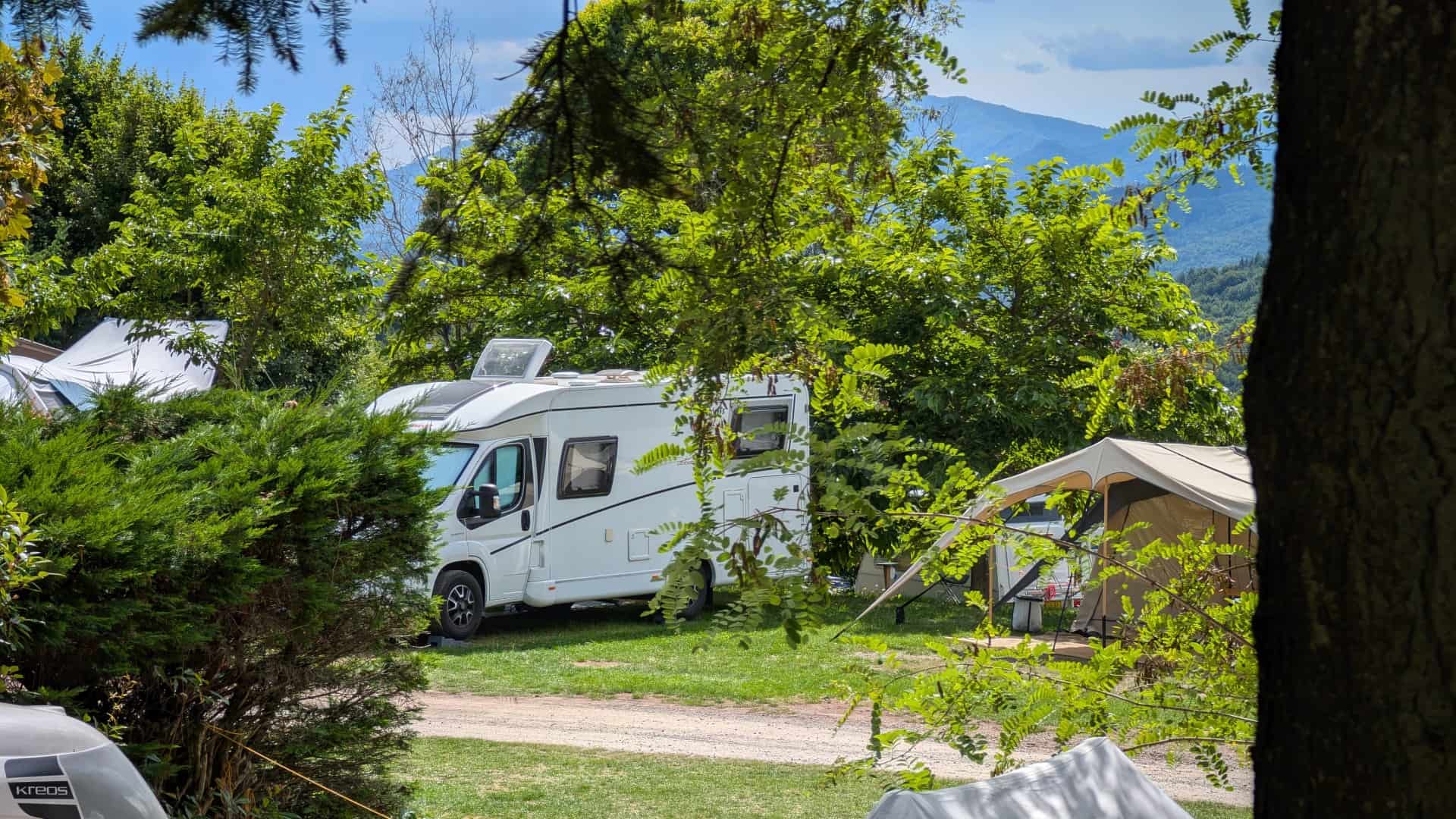
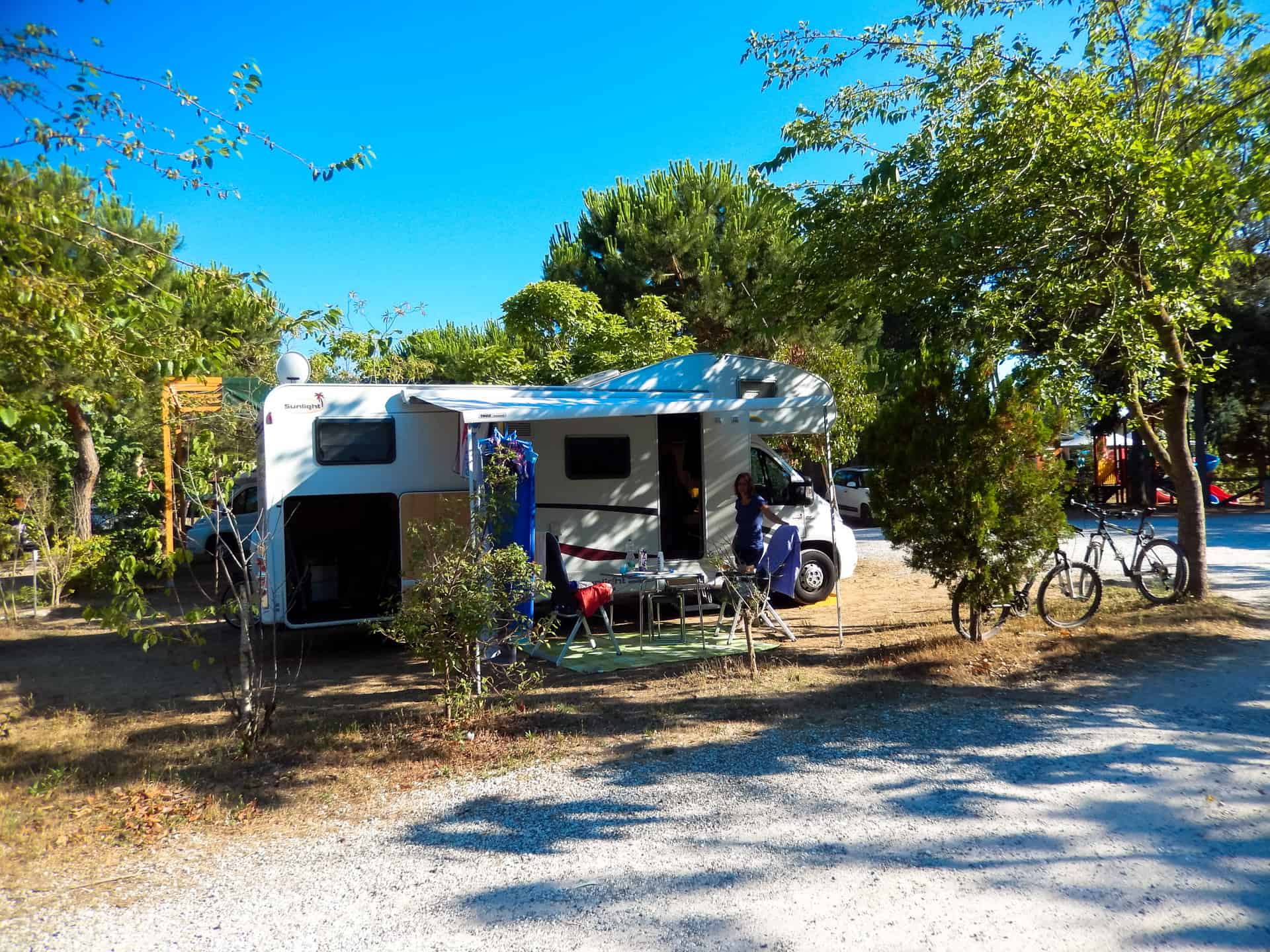
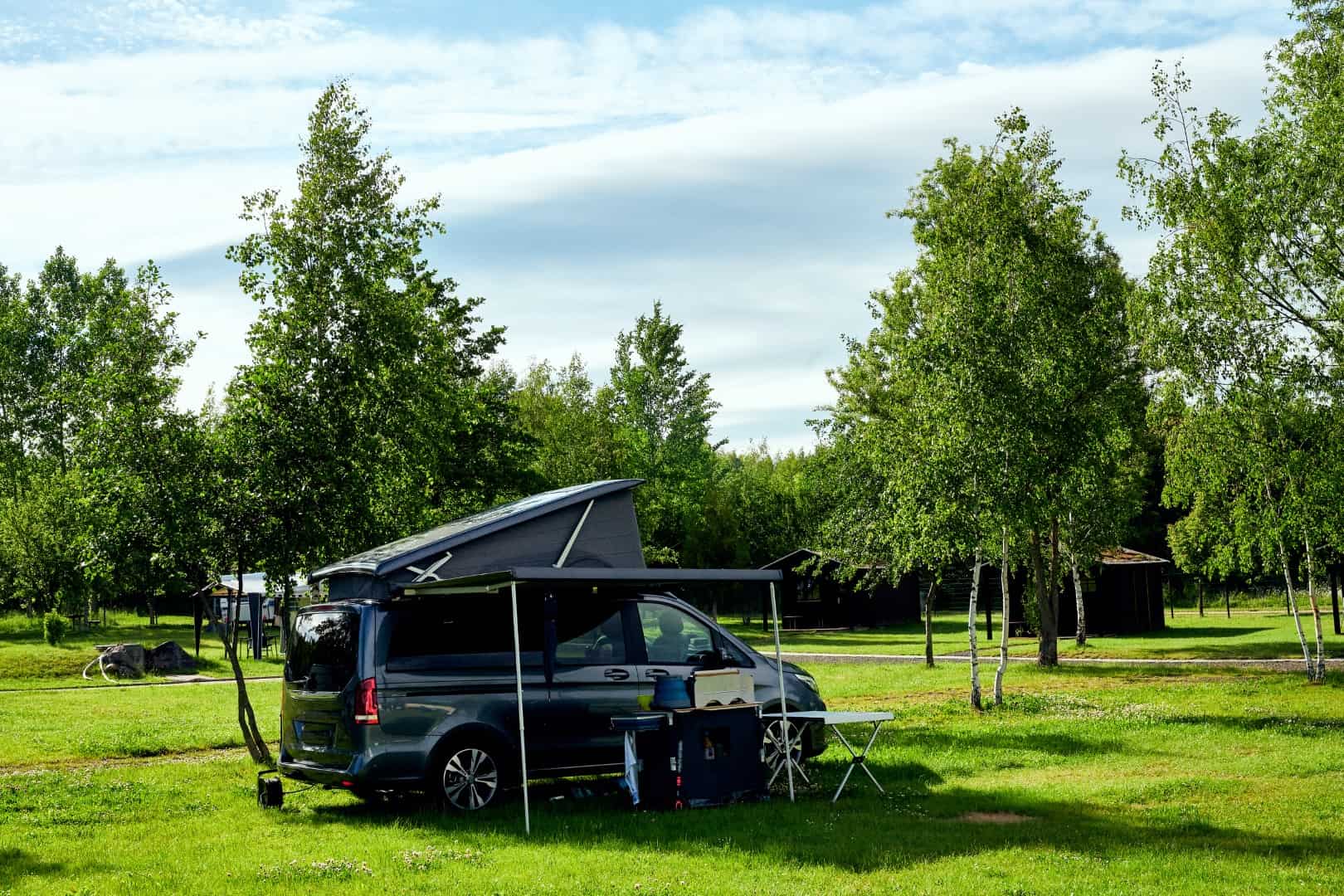
An agricampeggio (also called agricamping) is camping on a working farm: You pitch your tent, caravan, or motorhome on the land of a vineyard, olive grove, or farm – with few neighbors, views of vineyards and hills, and products directly from the producer. In Tuscany, this form of camping is regulated by law. Here you can find out what defines an agricampeggio, what rules apply, and how to find a suitable farm.
Short answer: Agricampeggio in Tuscany
- Campsite on an agriturismo farm; agriculture must remain the main activity of the farm.
- Rules (LR 30/2003, amended 2020): minimum 5 hectares of land, maximum 6 guests per hectare, maximum 90 guests and 35 pitches per farm.
- Tents, caravans and motorhomes allowed – one vehicle or tent per pitch.
- Basic facilities: electricity and sanitary facilities not at every site, often farm shop or restaurant
- Find it on portals like Agriturismo.it or Camping.info, the member network Agricamper Italia, search for "agricampeggio" + location.
What exactly is Agricampeggio?
The word Agricampeggio is a combination of the Italian terms "Agriturismo" (farm stay) and "Campeggio" (camping). It refers to agricultural businesses – be they vineyards, olive groves, or traditional farms – that make part of their land available to campers.
These rules apply in Tuscany.
In Italy, agritourism is regulated by the regions. In Tuscany, the Agriturismo Law (Legge regionale 30/2003, most recently fundamentally amended by Law 80/2020) governs "open-air hospitality" ( ospitalità in spazi aperti ). The most important points are:
- The Agriculture must be the main activity The farm will remain – tourism is only a secondary source of income.
- The company needs at least 5 hectares agricultural land.
- The maximum allowed is... 6 guests per hectare, in total maximum 90 guests and 35 parking spaces per farmyard.
- One tent or one vehicle (caravan, motorhome) is allowed per pitch.
- Only up to 12 parking spaces may be equipped with connections.
- Municipalities can exclude this form of accommodation in certain areas.
For you as a guest, this means: An agricampeggio is always small and quiet, and the facilities are simpler than at a campsite. Mass tourism is prohibited here by law.
The advantages of farm camping
- Absolute peace and quiet: No loud evening entertainment, no overcrowded washrooms.
- Pure nature: You are standing right among vines, fruit trees, or on lush meadows.
- Regional products: You can have wine, olive oilBuy cheese and vegetables directly from the producer – it doesn't get any fresher than that!
- Family connection: Tuscan hospitality is legendary. You will often be welcomed by the farm owners (the Farmers) personally supervised.
- Lots of space: The pitches are usually significantly larger than those on commercial campsites.
Agricampeggio, Agriturismo pitch or Agricamper?
Not every farm with campervans parked in a field is an official agricampeggio. Many agriturismos only offer a simple overnight camping area . There's also the Agricamper Italia network : with a paid annual membership, campers with motorhomes, campervans, or caravans can stay for up to 24 hours free of charge at participating farms – similar to France Passion in France. Services like electricity or waste disposal are usually not available, so you should be self-sufficient. If you prefer to stay in a room or holiday apartment on the farm, you can find tips under " Farm Holidays in Tuscany".
Regular campsite vs. Agricampeggio: A direct comparison
To ensure you know exactly what you're getting into, we've summarized the most important differences for you in a clear table:
| feature | Classic campsite | Agricampeggio (farm) |
|---|---|---|
| Size & Parking Spaces | Often large, not infrequently with several hundred seats | Small: in Tuscany, the legal maximum is 35 pitches and 90 guests. |
| Location | Often directly by the sea or on main roads | Mostly in the idyllic hinterland, hidden in nature |
| Gastronomy | Pizzeria, supermarket, snack bar | Farm-produced products, some of which are used in the restaurant of the agriturismo |
| Animation/Entertainment | Kids' club, shows, loud music | Nature, farm animals, sometimes wine tastings or cooking classes |
| Infrastructure | Large sanitary facilities, often huge pool areas | Basic sanitary facilities; electricity not available at every site, sometimes a pool |
| Costs | Often expensive during peak season; extras cost extra. | It varies depending on the farm, but usually there are fewer additional costs. |
How to find an agricampeggio in Tuscany
- Agriturismo portals: On agriturismo.it You can specifically filter for farms with camping facilities.
- Camping portals: camping.info It also lists many small nature campsites and agricampeggi in the region.
- Agricamper Italia: App and membership card for free 24-hour stops at farms (only for self-sufficient vehicles).
- Map search: Search for “agricampeggio” or “agricamping” plus location or region in Google Maps – this way you can also find farms without a portal entry.
- Ask directly: Many agriturismos respond quickly via email or WhatsApp. Ask about access, electricity, sanitary facilities, and whether dogs are allowed.
Are you looking for a spot by the sea or a place to park for the night? Then check out our overviews of the most beautiful campsites right by the sea and motorhome pitches in Tuscany . Free camping, on the other hand, is strictly regulated – more information can be found under Wild Camping in Italy.
The most beautiful regions for your agricampeggio in Tuscany
Tuscany is vast and incredibly diverse in its landscape. Where you pitch your tent or park your campervan depends entirely on your preferences. Here are our favorites for farm camping:
1. Chianti: For wine lovers and romantics
The Chianti region between Florence and Siena is the quintessential postcard image of Tuscany. Here, countless wineries offer agricampeggio, where you literally camp among the vines. In the evenings, you can participate in a tasting at the winery's cantina (cellar). An absolute must: learn more about world-famous Tuscan wine right where it's grown.
2. Val d'Elsa: The green heart of Tuscany
Around the enchanting Colle di Val d'Elsa you'll find rolling hills, cypress-lined avenues, and charming little farmhouses. The location is strategically perfect: you can quickly reach San Gimignano , Volterra, and Siena, yet retreat to the absolute tranquility of your farmhouse in the evenings.
3. The Maremma: Wild, unspoiled and close to the sea
In the far south of Tuscany lies the Maremma. Once marshland, it's now a paradise for nature lovers. The farms here are more rustic, the fields more expansive. You often have the opportunity to book agricampeggio (farm stays) combined with horseback riding excursions, as the Maremma is home to the Butteri (Tuscan cowboys). And from here, you can quickly reach the sandy beaches of the Maremma.
A typical day on a Tuscan farm
Are you wondering what a typical day off the beaten tourist track looks like?
Your day begins without an alarm clock, awakened by the sun and birdsong. After a breakfast of fresh bread and homemade fig jam, you grab your bike (e-bikes are highly recommended in the Tuscan hills!) and cycle to the nearest village. Perhaps you'll visit one of Tuscany's colorful, bustling markets to pick up some fresh truffles or pecorino cheese for dinner.
Spend the afternoon reading under a fig tree or cooling off in the farm's small pool while the children feed the goats or pet the farm dog. In the evening, you can either fire up your camping stove or – and this is a real insider tip – dine at the agriturismo's restaurant . Many farms cook exclusively for their house and camping guests in the evenings. They serve whatever the garden has yielded that day. Pasta al ragù, wild boar ( cinghiale ), and the delicious house wine. A dream!
Important tips for your Agricampeggio holiday (checklist)
To ensure your camping holiday on a farm is perfect, you should keep a few practical things in mind. Farms aren't high-tech 5-star resorts – and that's a good thing! Nevertheless, some planning is necessary:
- Getting there – caution with large motorhomes: Tuscan farms are often located at the end of kilometers of unpaved gravel roads (the so-called Strade BiancheIf you are arriving with a very large alcove motorhome or a long caravan, be sure to check with your hosts beforehand whether access is possible. Also, familiarize yourself with the local regulations in advance. Italian traffic regulations .
- Electricity and water: Electricity at the campsite isn't a given: In Tuscany, a farm is only allowed to equip a maximum of 12 pitches with hookups. Therefore, ask about it when booking and be aware that the grid in rural areas is less robust – power-hungry air conditioners are a no-go. A suitable adapter should be packed. You can read all the important information in our guide about... Electrical outlets in Italy.
- Self-sufficiency is a plus: Even though there are usually small sanitary facilities, you are at an advantage if your camper has its own toilet and shower.
- Gas supply: If you cook a lot, your gas will run out quickly. Exchanging German gas cylinders can be difficult in rural areas. Find out more about this in advance. Camping gas in Italy, so as not to suddenly have to eat cold pasta.
- Reserve in advance: Since the farms have limited space, they are often booked months in advance during peak season (July/August) and the grape harvest in September. Dropping by spontaneously is usually only possible in spring or late autumn.
Pure culinary delights: From the field directly to your camping table
Perhaps the most important reason to choose agricampeggio is the food. In Tuscany, the love of good food is deeply rooted. When you camp on a farm, you don't shop anonymously at a supermarket (the so-called Zero Chilometric approach – zero kilometers of transport).
Look forward to:
- Extra Virgin Olive Oil: Tuscan olive oil is grass-green, slightly peppery, and world-famous.
- Pomodori & Verdura: Tomatoes that still taste of sunshine, huge zucchini and fresh basil.
- Homemade wine: From simple country wine in a canister to fine wine in a bottle.
- Meat and sausage products: Finocchiona (fennel salami) and prosciutto directly from the farm's own production.
Our Tuscany tour tip: Don't hesitate to ask the farmer ( il contadino ) if you can watch or even help with the olive harvest (in autumn) or the grape harvest. Italians love to share their passion for agriculture with interested visitors!
Frequently asked questions about Agricampeggio in Tuscany
What is the difference between an agricampeggio and a campsite?
An agricampeggio is part of a working farm, and farming remains the primary activity. In Tuscany, a maximum of 35 pitches and 90 guests are permitted per farm. It is therefore significantly smaller, quieter, and more simply equipped than a campsite.
May I bring my dog to the Agricampeggio?
Dogs are welcome on many farms, and often there are farm dogs and other animals living there. However, check this when booking and make sure your dog doesn't chase the farm animals.
Do I need a motorhome for farm camping?
No. Tents, caravans, and motorhomes are permitted in Tuscan agricampeggi. However, networks like Agricamper Italia only allow self-sufficient vehicles.
Is there electricity at the Agricampeggio?
Not necessarily. A campsite is only allowed to have a maximum of 12 pitches with hookups. Inquire before booking if you require electricity.
How much does an agricampeggio cost in Tuscany?
Each farm sets its own prices, which depend on the season, location, and amenities. Compare current prices directly with the farm or on booking portals.
Can I pay there without cash?
Card payments are widely accepted in Italy. However, on small, remote farms, you should still carry some cash for eggs, vegetables, or the farm shop.
Have you now got a hankering for nature, wine, and campfire romance? Pack your campervan and discover Tuscany at its most authentic. We at Toskanatour.de wish you "Buon Viaggio" – a good trip!