



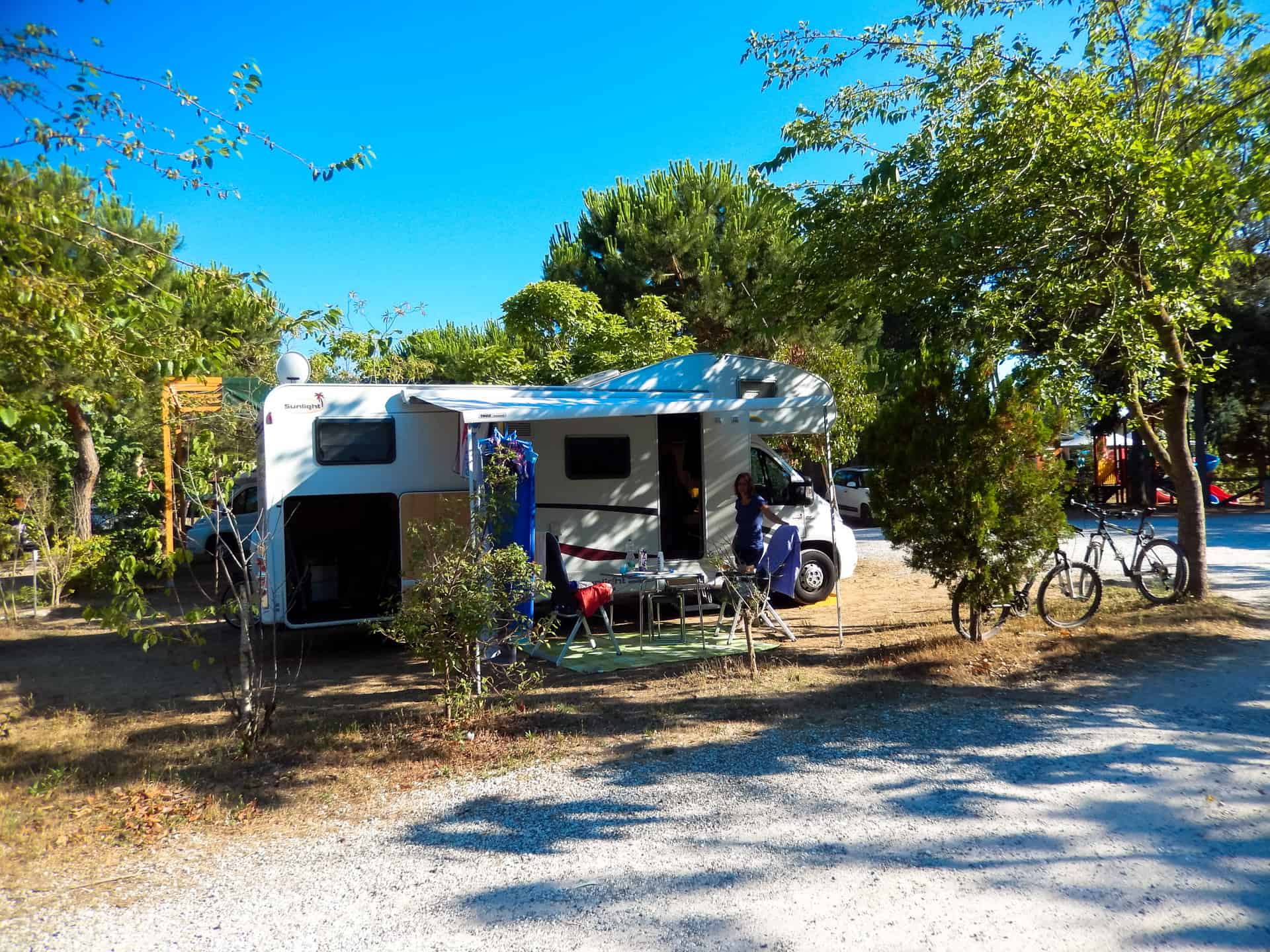
Camping holiday in Tuscany: Your guide for motorhomes, campervans & tents
Content
A camping holiday in Tuscany combines beaches, art cities, and vineyards like almost no other form of travel. From our years of experience on the ground, we know that anyone who opens their campervan door in the morning and gazes upon cypress-lined hills or a pine forest by the sea has instantly arrived on holiday. This page is our central camping overview – with the most important rules, the best regions, and links to all our detailed guides.
Tuscany camping at a glance
- Offer: In Tuscany there are around 210 campsites and over 20 holiday villages (as of 2025) – most of them on the coast between Versilia and Maremma.
- Best travel time: May, June and September. In August (Ferragosto on August 15.8.8th), coastal pitches are expensive and often fully booked.
- Wild camping: Not allowed. Campsites, agricampeggio and official parking areas are legal (rest areas), on which you are allowed to stand for up to 72 hours according to Tuscan tourism law.
- Technique: German gas cylinders are neither exchanged nor refilled in Italy; the blue CEE plug is standard at campsites.
- Tolls & Traffic: Most motorhomes pay Class B tolls on the motorway; old towns are almost always camera-monitored ZTL zones.
All camping guides for Tuscany
We've covered each camping topic in detail in a separate article. Here you'll find all our guides sorted by topic:
Places and regions
- The most beautiful campsites in Tuscany directly by the sea
- Motorhome pitches in Tuscany (aree di sosta)
- Camping near Pisa – between the Leaning Tower and the beach
- Camping in Florence – City camping with pool
- Camping holidays on the island of Elba
- Agricampeggio – Camping on a farm
- Glamping in Tuscany
- Winter camping in Tuscany
With family and dog
Planning, rules and technology
- Find and book a campsite
- Camping etiquette: rules and customs
- Wild camping in Italy: What is allowed
- Camping gas in Italy
- Gas in a motorhome – safety
- Drinking water quality in Italy
- Sockets and adapters
- A motorhome trip through Tuscany
- With the caravan through Tuscany
-

Camping near Pisa: Your ultimate guide to holidays between the Leaning Tower and the sea
-

Camping etiquette for Tuscany: Rules, behavior and pitfalls on an Italian holiday
-

Camping with children in Tuscany: The ultimate guide to the perfect family holiday
-

Motorhome pitches in Tuscany: Your guide to cheap and free pitches (Aree di Sosta)
-
Camping with your dog in Tuscany: Your guide to the perfect holiday for your furry friend.
-
Glamping in Tuscany: Your luxurious camping holiday between vineyards and the sea
-
Camping in Florence: idyllic nature, dolce vita and the perfect city adventure
-

The most beautiful campsites in Tuscany directly by the sea
-
Camping without limits: How to find the perfect battery for your motorhome
-

Find and book the right campsite
-

Drinking water quality in Italy on the campsite
-

With the caravan through Tuscany
-
Camping holidays on the island of Elba
-
Use of camping gas in Italy
-
Gas in your motorhome – Here's what you should know!
-
Wild camping in Italy: rules, penalties and the best legal alternatives
-
Agricampeggio in Tuscany: Your ultimate guide to camping on a farm
-

Camping holiday in Tuscany: Your guide for motorhomes, campervans & tents
-

With the camper in Tuscany







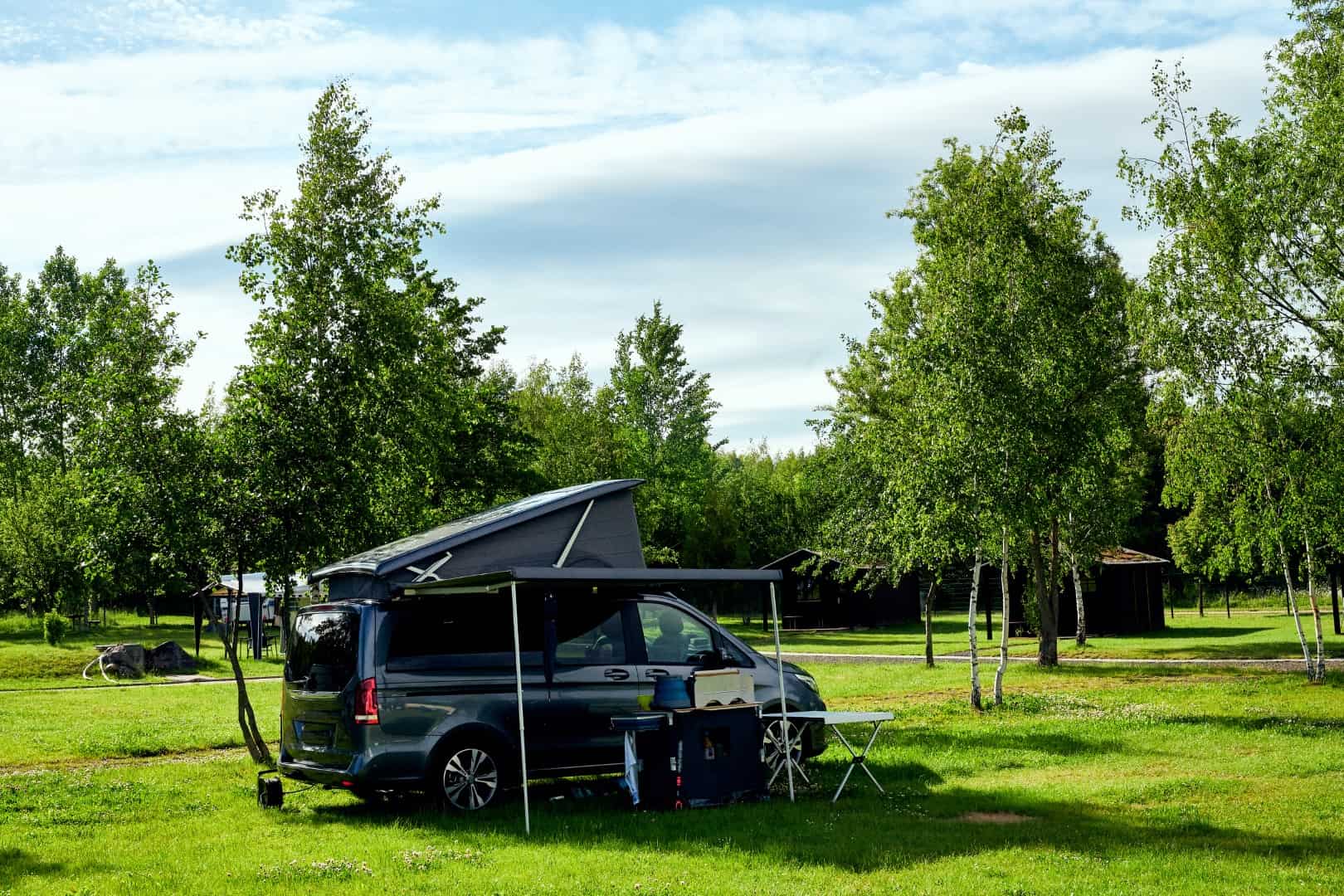

Which type of camping suits you best?
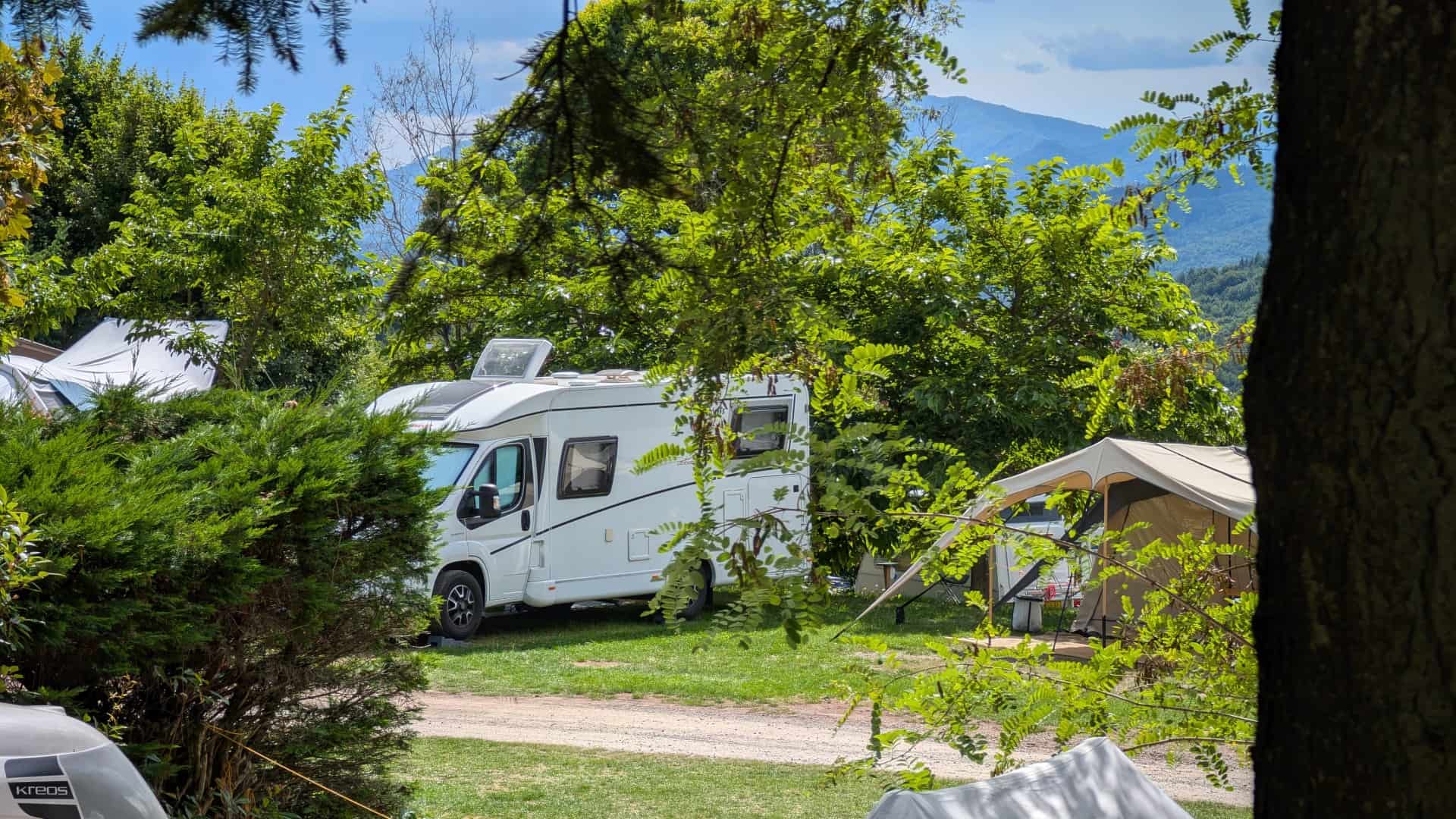
We tested a wide variety of campsite types on our tours. Broadly speaking, there are four main types:
Large campsite or holiday village
The 4- and 5-star resorts on the coast, for example near San Vincenzo , Cecina or Castiglione della Pescaia , have pools, supermarkets, restaurants and children's entertainment during the season. Those arriving without their own vehicle can rent mobile homes or safari tents – more information can be found in the guide " Glamping in Tuscany".
Small, natural setting
Simpler campsites in the hinterland focus on clean sanitary facilities, shade, and quiet. They are usually cheaper than the large coastal resorts and popular with couples and those seeking peace and quiet.
Agricampeggio: Camping on a farm
At an agricampeggio, you stay with your tent, caravan, or motorhome on a vineyard or olive grove – usually with only a few pitches. You buy wine and olive oil directly from the producer. All the important information can be found in our guide to agricampeggio in Tuscany ; it's related to the classic farm holiday.
Motorhome parking area (area di sosta)
Motorhome pitches are inexpensive, often located near cities, and intended for short stays. Parking is permitted, but camping (awning, table, chairs) is usually not. You can find an overview of approved pitches under Motorhome Pitches in Tuscany.
The best regions for camping in Tuscany
Camping by the sea: Versilia, Etruscan Coast and Maremma
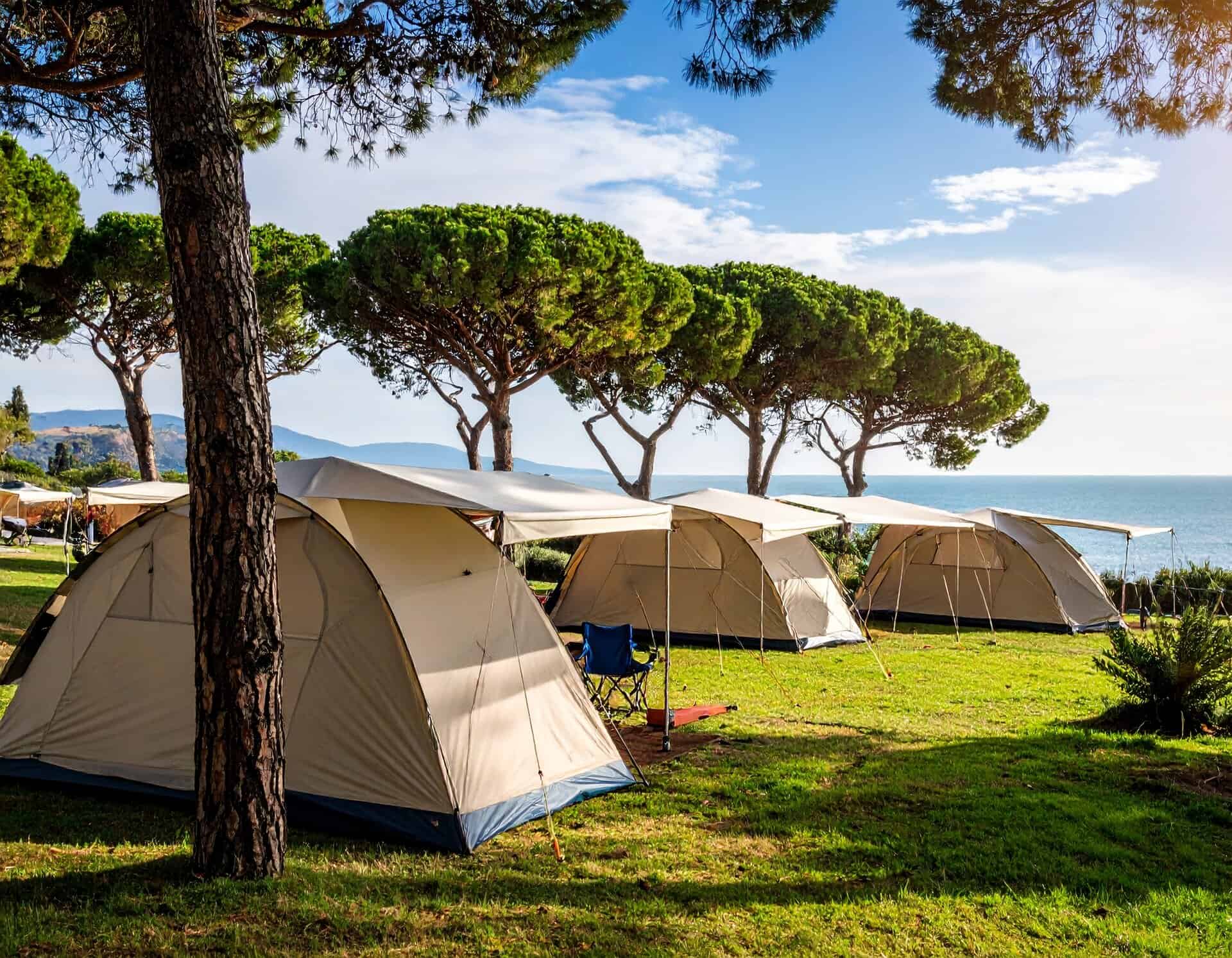
According to the region, Tuscany has approximately 630 kilometers of coastline (including the islands). In the north lie the seaside resorts of Versilia with their wide sandy beaches. Along the Etruscan Coast between Livorno and Piombino , many campsites are situated directly in the shady pine forests behind the beach. Further south in the Maremma , the landscape becomes more unspoiled. Many of these coastal communities will be awarded the Blue Flag for water quality and services in 2026.
👉 Our selection: the most beautiful campsites in Tuscany right by the sea . For an overview of the seaside resorts, see our article about the beaches of Tuscany.
Camping in the interior: Chianti and Val d'Orcia
In Chianti and the Val d'Orcia south of Siena, smaller campsites and agricampeggi are often situated on hills overlooking vineyards. Florence, Siena, and San Gimignano are easily accessible from here. In summer, it's hotter inland than on the coast – a pool is invaluable.
Camping on Elba
Elba is the largest island in the Tuscan Archipelago. The ferry from Piombino to Portoferraio takes about an hour and runs year-round; during the high season, it also goes to Rio Marina and Cavo. For motorhomes, you should book your crossing in advance during the summer. More information can be found in our guide to camping holidays on the island of Elba and under " Getting to Elba".
Rules and practical tips for campers
Wild camping and free camping
Camping outside of designated areas is practically prohibited everywhere in Italy; many coastal municipalities have issued their own bans. Municipalities typically impose fines of €25 to €500 for violations, while illegally discharging wastewater can result in fines of approximately €84 to €335 under traffic regulations. However, simply parking a motorhome is permitted wherever cars are allowed to park. See our guide to wild camping in Italy for details.
Gas, electricity and water
- Gas: German exchangeable gas cylinders are neither accepted for exchange nor refilled at LPG stations in Italy. Solutions: an Italian 10 kg cylinder with a G.12 adapter or a permanently installed refillable cylinder with an 80% fill stop, which can be refilled at LPG stations. More information: Camping gas in Italy.
- Electricity: The blue CEE plug is standard at the power pedestal. For individual sockets (Type L) in the washhouse or on farms, a travel adapter is needed – see [link/reference]. Electrical outlets in Tuscany.
- Water: Pumping stations with the sign drinking water provide drinking water non-potable water It is not suitable for drinking. Background information: Drinking water quality in Italy.
Tolls, ZTL and fire ban
Almost all motorways are subject to tolls. Two-axle vehicles with a front axle height exceeding 1,30 m pay category B – this applies to most motorhomes. Our article on vehicle tolls explains the travel costs . You should never drive into historic centers: ZTL zones are monitored by cameras, and a violation typically costs between €83 and €332. More information can be found in the overview of the Italian traffic regulations.
Because of the risk of forest fires, a ban on open fires applies in Tuscany every year from 1 July (usually until 31 August); grilling is then only permitted at designated spots. Many campsites ban charcoal in the pine forest all year round anyway – ask at reception.
Self-sufficiency: Markets and regional products
A big advantage of camping is having your own kitchen. At the weekly markets, you can buy tomatoes, pecorino cheese, ham, and Tuscan bread directly from the producers – usually in the mornings from about 8 a.m. to 13 p.m. You can find out when and where the markets are in our overview of weekly markets in Tuscany.
You can compare available pitches and prices, for example, at Booking.com: Campsites in Tuscany . Our guide " Finding and Booking a Campsite" explains how to effectively combine online portals and direct booking.
Frequently asked questions about camping holidays in Tuscany
Do I need to reserve campsites in Tuscany in advance?
Yes, for July and August – around Ferragosto (15 August) popular coastal campsites are often fully booked. In the shoulder seasons you can usually find a spot spontaneously, and pitches often cannot be reserved at all.
Is wild camping allowed in Tuscany?
No. Camping is only permitted in designated areas; many municipalities have their own regulations prohibiting it, with fines typically ranging from €25 to €500. Simply parking a motorhome is allowed wherever cars are permitted to park – without awnings, chairs, or extended stabilizers.
How long am I allowed to stay at a motorhome pitch in Tuscany?
The Tuscan Tourism Law (LR 86/2016) stipulates a maximum stay of 72 hours at designated parking areas (aree di sosta). Individual sites may set shorter limits, for example, 24 hours.
Is barbecuing allowed at campsites in Tuscany?
Electric and gas grills are permitted at most campsites. Charcoal is often banned, especially in pine forests, and from 1 July a ban on open fires applies across all of Tuscany, allowing grilling only at designated spots. The campsite rules are what matter.
Is it possible to camp in Tuscany during the winter?
Yes, but many coastal campsites close in autumn and don't reopen until Easter. Some city campsites, such as Firenze Camping in Town in Florence , as well as many other pitches, are open year-round. See the guide "Winter Camping in Tuscany" for tips.
Are dogs allowed on campsites in Tuscany?
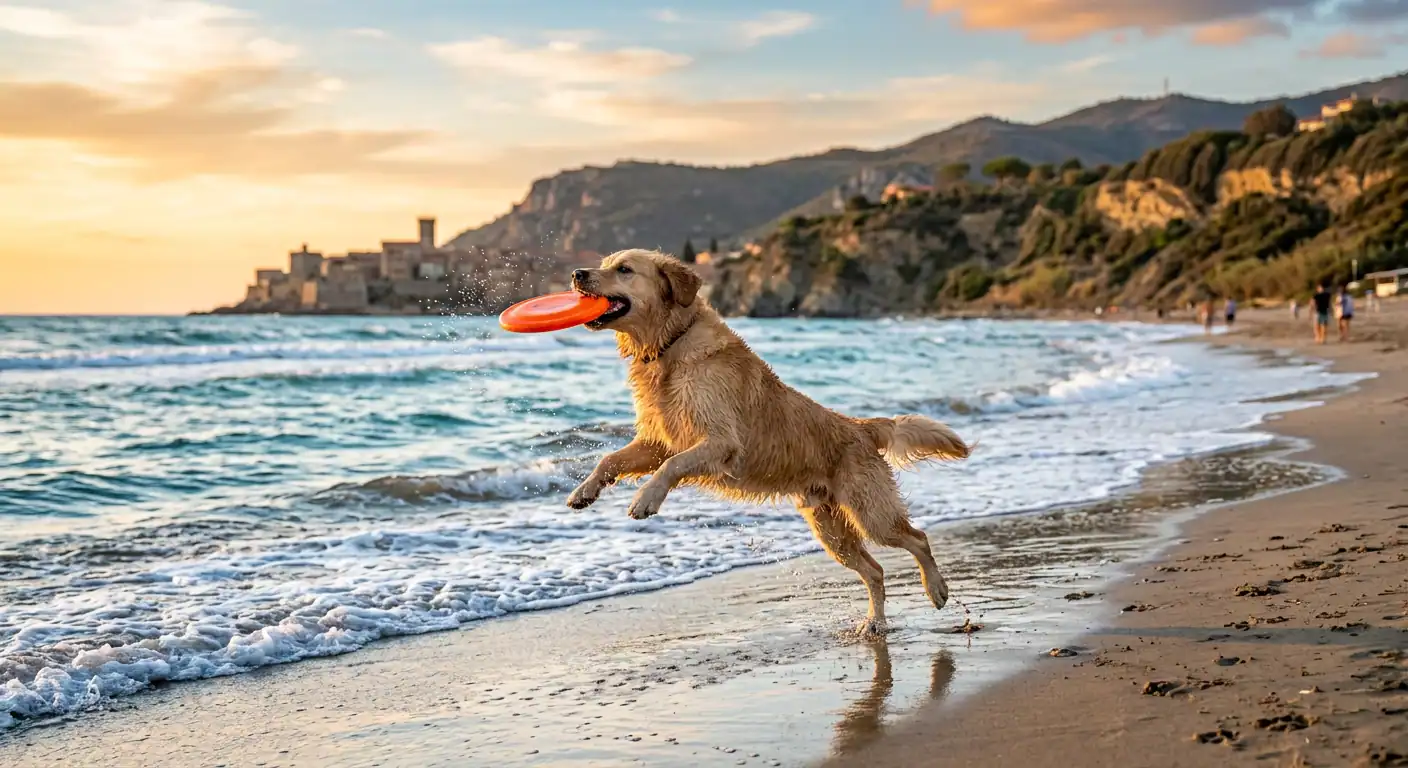
Dogs are allowed at most campsites, often for a fee and on a leash; some campsites only allow dogs in the off-season. Dogs are usually prohibited on regular beaches in the summer, but there are designated dog beaches such as Dog Beach in San Vincenzo.


