


The Tyrrhenian Sea - A fascinating natural wonder
Content
The Tyrrhenian Sea is the part of the Mediterranean Sea that lies between the west coast of Italy and the islands of Corsica, Sardinia, and Sicily. For vacationers in Tuscany, it's practically on their doorstep: its shores are dotted with seaside resorts like Castiglione della Pescaia, Follonica, and San Vincenzo, and nestled within it is the Tuscan Archipelago with Elba, Giglio, and Capraia.
At a glance
- Location: between mainland Italy (Tuscany, Lazio, Campania, Basilicata, Calabria), Corsica, Sardinia and Sicily
- Surface: Depending on the definition, approximately 231.000 to 275.000 km²
- Depth: On average about 2.000 m, at the deepest point around 3.600 to 3.800 m
- Connections: Strait of Bonifacio (between Corsica and Sardinia), Strait of Messina (to the Ionian Sea), open channel between Sardinia and Sicily
- Water temperature: On the Tuscan coast, temperatures average around 14 °C in February/March and 25–26 °C in August.
- Name: from the Tyrrhenians, as the Greeks called the Etruscans
Location, boundaries and size
The Tyrrhenian Sea is a deep basin in the western Mediterranean. To the east, it borders the Italian peninsula from Tuscany to Calabria, to the west Corsica and Sardinia, and to the south Sicily. It is connected to the rest of the Mediterranean via several straits: the Strait of Bonifacio, only about 11 km wide; the Strait of Messina, about 3 km wide, leading to the Ionian Sea; and the wide channel between Sardinia and Sicily. To the north, it merges into the Ligurian Sea.
The figures for area and depth vary depending on the source and definition: Estimates range from approximately 231.000 to 275.000 km² and a maximum depth of about 3.600 to 3.800 meters. The largest ports on the Tyrrhenian Sea include Naples, Palermo, Civitavecchia (the port of Rome), Salerno, Gioia Tauro, and in Tuscany, Livorno and Piombino, the ferry port for Elba.
Is Tuscany located on the Tyrrhenian or the Ligurian Sea?
Beides – je nachdem, wen man fragt. Nach traditioneller italienischer Auffassung gehört praktisch die gesamte toskanische Küste bis zur Magra-Mündung zum Tyrrhenischen Meer. Die Internationale Hydrographische Organisation (IHO) zieht die Grenze dagegen anders; in einer überarbeiteten Fassung verläuft sie etwa entlang des 43. Breitengrads von der toskanischen Küste nach Kap Corse. Danach zählen die Versilia, Pisa und Livorno eher zum Ligurischen Meer, die Küste der Maremma und der Toskanische Archipel zum Tyrrhenischen Meer. Für den Badeurlaub spielt das keine Rolle.
Name and history
The name derives from the Tyrrhenians (Greek: Tyrrhenoí) – the name the Greeks gave to the Etruscans, who settled the adjacent mainland in what is now Tuscany and northern Lazio. "Tyrrhenian Sea" thus roughly translates to "Sea of the Etruscans." Traces of this culture can still be found along the coast today, for example in the Etruscan necropolis on the Gulf of Baratti near Piombino or in Volterra in the hinterland.
Islands in the Tyrrhenian Sea
The Tuscan Archipelago
Off the Tuscan coast lie the seven main islands of the Tuscan Archipelago: Elba , Capraia , Gorgona , Pianosa , Montecristo , Giglio , and Giannutri . They belong to the Tuscan Archipelago National Park, which protects approximately 17.900 hectares of land and 56.800 hectares of marine area. Elba is the largest island and can be reached by ferry from Piombino in about an hour ( Getting to Elba ). Giglio and Giannutri can be reached from Porto Santo Stefano, and Capraia from Livorno. Access to Gorgona, Pianosa, and Montecristo is restricted.
Other islands and island groups
- Corsica, Sardinia and Sicily They form the western and southern edges of the sea; Corsica belongs to France, Sardinia and Sicily to Italy.
- Pontinische Inseln (including Ponza and Ventotene) off the coast of Latium – of volcanic origin.
- Capri and Ischia in the Gulf of Naples.
- Lipari (Aeolian) Islands north of Sicily, including Lipari, Vulcano and the active volcano Stromboli.
- Ustica north of Palermo.
Underwater world: volcanoes, seagrass, whales and dolphins
Deep sea and underwater volcanoes
The Tyrrhenian Sea is geologically young and active. Large underwater volcanoes lie on the seabed, most notably Marsili, which rises some 2.600 meters above the ocean floor and is considered one of the largest volcanoes in Europe. Above water, Stromboli, Vulcano, and Mount Vesuvius in the Gulf of Naples bear witness to the same volcanic activity.
Posidonia seagrass meadows
Near the coast, meadows of Neptune grass (Posidonia oceanica) dominate the seabed. This seagrass is found only in the Mediterranean Sea, serves as a nursery for many fish species, and protects beaches from erosion. The brown "balls" and leaf debris that lie on some beaches in winter come from these meadows – they are not dirt, but a sign of a healthy sea.
Whales and dolphins in the Pelagos Sanctuary
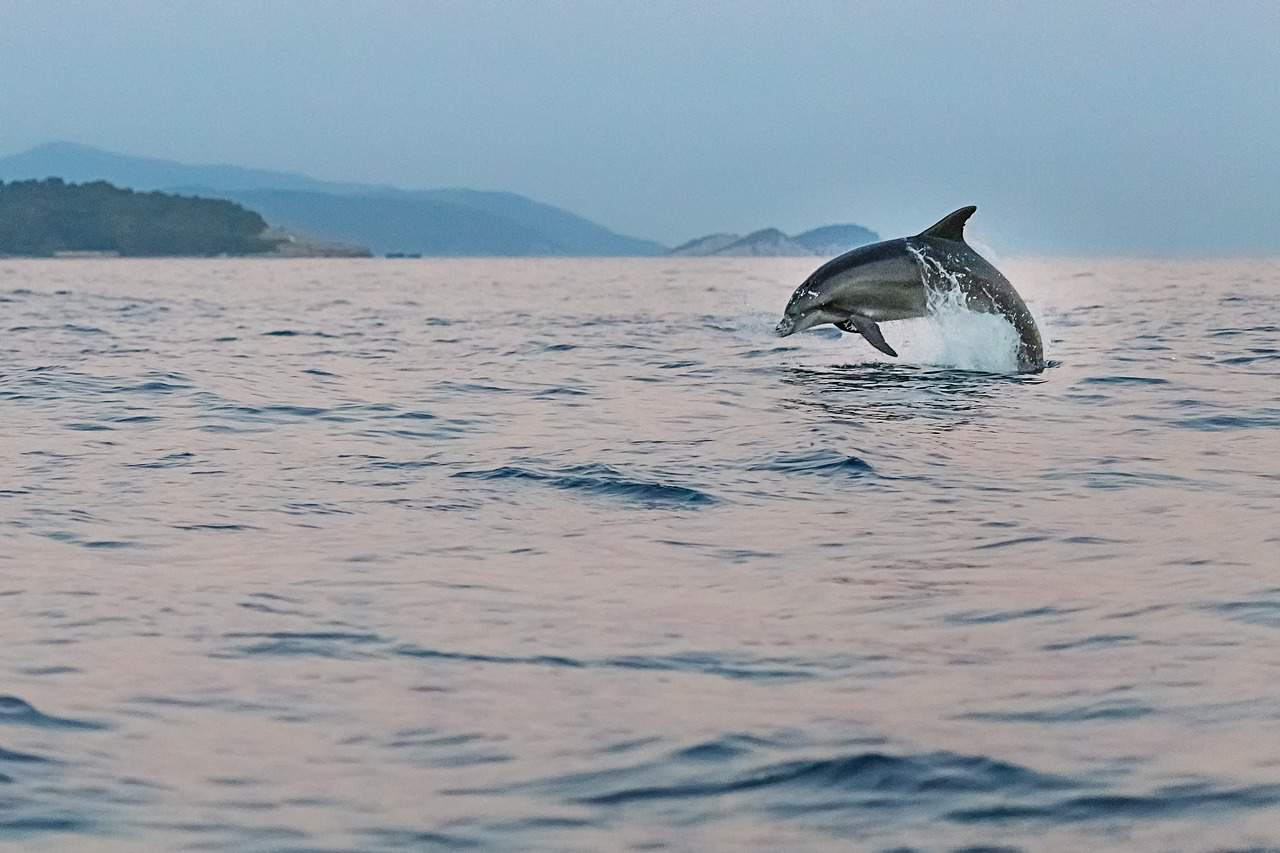
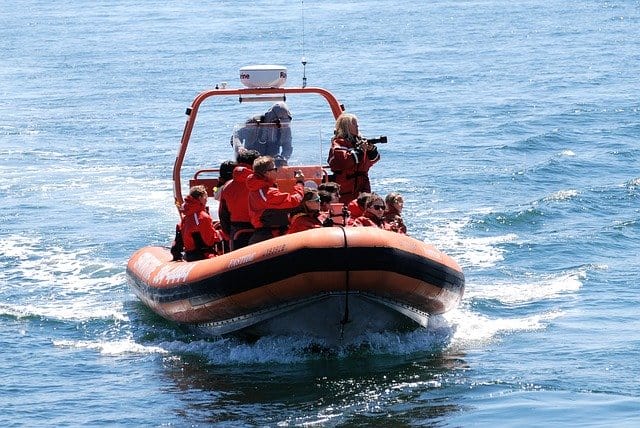
The northern part of the Tyrrhenian Sea belongs to the Pelagos Marine Protected Area, established in 1999 by Italy, France, and Monaco. It encompasses approximately 87.500 km² between Toulon, Sardinia, and the Tuscan coast, extending to the Fosso Chiarone on the border with Lazio – including the waters around Elba and the Tuscan Archipelago. Among the marine life found here are striped dolphins, bottlenose dolphins, Cuvier's beaked whales, and fin whales; the area is considered the most important feeding ground for fin whales in the Mediterranean. Whale watching excursions depart during the season from various locations, including the Tuscan coast – you can find more information on our page " Whales and Dolphins in Tuscany " and on our page "Boat Tours in Tuscany ."
Swimming in the Tyrrhenian Sea on the Tuscan coast
The swimming season on the Tuscan coast generally runs from June to September. In July and August, the average surface water temperature reaches around 25–26 °C, and even higher in hot summers; the coolest months are February and March, with an average temperature of around 14 °C. In May and October, the sea is still chilly, but the beaches are significantly less crowded. For information on the best time to visit Tuscany, see our article on the best time of year to visit.
Water temperature after months
The table shows long-term average surface temperatures off Portoferraio (Elba) – these are typical for the entire southern Tuscan coast. In shallow bays, it is often warmer in summer; after days with Mistral winds, the water can cool down noticeably for a short time.
| Month | Water (Medium) | Month | Water (Medium) |
|---|---|---|---|
| January | approx. 14–15 °C | July | ca 25 ° C |
| February | ca 14 ° C | August | approx. 25–26 °C |
| Mar. | ca 14 ° C | September | approx. 23–24 °C |
| April | ca 15 ° C | October | ca 21 ° C |
| Mai | ca 18 ° C | November | approx. 18–19 °C |
| June | ca 22 ° C | December | approx. 16–17 °C |
For most people, the sea is pleasant for swimming from about 22°C – that is, from mid-June to the end of September. In October, at around 20°C, it is often even warmer than in May.
How clean is the Tyrrhenian Sea?
The water quality along the Tuscan coast is generally very good. The environmental agency ARPAT regularly takes samples at official bathing sites during the bathing season. According to evaluations by SNPA and ISPRA, around 97% of bathing waters in Tuscany are classified as "excellent." Furthermore, in 2026, 20 Tuscan coastal municipalities will be awarded the Blue Flag (Bandiera Blu), including Monte Argentario for the first time.
Temporary swimming bans ("divieto di balneazione") are indicated by signs on the beach. They usually affect short sections near river and canal mouths, for example after heavy rainfall. Brown seaweed remnants on the beach, however, are not a sign of pollution (see above).
| coastal section | Character | Read more |
|---|---|---|
| Versilia (Viareggio, Forte dei Marmi) | wide sandy beaches, many beach resorts | Versilia |
| Etruscan Coast (Cecina to Piombino) | long sandy beaches with pine forest, Gulf of Baratti | San Vincenzo |
| Maremma (Follonica to Argentario) | Natural beaches, Maremma Natural Park, Orbetello Lagoon | sandy beaches of the Maremma |
| Tuscan Archipelago | Bays with clear water, rocky and pebbly beaches | Elba beaches |
An overview of the seaside resorts along the entire coast can be found on our Tuscany: Sea and Beach page , and less crowded sections can be found under Quiet Beaches of Tuscany.
Frequently Asked Questions about the Tyrrhenian Sea
Where is the Tyrrhenian Sea located?
The Tyrrhenian Sea is part of the western Mediterranean Sea between the west coast of Italy (Tuscany to Calabria) and the islands of Corsica, Sardinia and Sicily.
How deep is the Tyrrhenian Sea?
The average depth is around 2.000 meters. Depending on the source, the deepest point is given as being between 3.600 and 3.800 meters.
Why is it called the Tyrrhenian Sea?
The name comes from the Tyrrhenians – that's what the Greeks called the Etruscans, who lived on the coast of present-day Tuscany and Latium. It is therefore the "Sea of the Etruscans".
How warm is the Tyrrhenian Sea?
On the Tuscan coast, the water temperature reaches an average of around 25–26 °C in July and August, about 22 °C in June, and 23–24 °C in September. The coldest months are February and March, with an average temperature of around 14 °C.
Is the Tyrrhenian Sea clean?
Yes, predominantly. In Tuscany, around 97% of bathing waters are classified as "excellent," and 2026 coastal municipalities will have been awarded the Blue Flag in 20. Local bathing bans, for example at river mouths after heavy rain, are signposted on the beach.
Are there whales and dolphins in the Tyrrhenian Sea?
Yes. The northern part belongs to the Pelagos Marine Protected Area. Among other species, striped dolphins, bottlenose dolphins, fin whales, and Cuvier's beaked whales live there. Whale watching excursions are offered from the Tuscan coast during the season.
Is Tuscany located on the Tyrrhenian or the Ligurian Sea?
According to Italian tradition, almost the entire Tuscan coast lies on the Tyrrhenian Sea. However, according to the IHO's definition, the northern part (roughly Versilia to Livorno) belongs more to the Ligurian Sea, while the Maremma and the Tuscan Archipelago belong to the Tyrrhenian Sea.


