



Sights in Tuscany
Content
Tuscany combines world-famous art cities, medieval hilltop towns, vineyards, and a long coastline dotted with islands. Eight sites in the region are listed as UNESCO World Heritage Sites (some jointly with other countries). This overview highlights the most important sights in Tuscany and directs you to our detailed information pages.
Top sights in Tuscany – at a glance
- Florence: Cathedral with Brunelleschi's dome, Uffizi Gallery, Ponte Vecchio
- Pisa: Leaning Tower and Piazza dei Miracoli
- Siena: Piazza del Campo and Cathedral
- San Gimignano: the city of the family towers
- Lucca, Volterra, Pienza, Montepulciano, Arezzo: historic cities away from the major rivers
- Landscape & Nature: Chianti, Val d'Orcia, Elba Island, Saturnia thermal baths, Carrara marble quarries
The 20 most important sights in Tuscany
Our selection ranges from world-famous classics to destinations that many travelers only discover upon closer inspection. The order roughly follows popularity; you'll find a detailed information page for almost every destination.
- Florence Cathedral and dome: The Cathedral of Santa Maria del Fiore is crowned by Brunelleschi's dome, the city's iconic landmark. 463 steps lead to the top – the view over the red rooftops is worth every step. More in our Florence city tour.
- Uffizi Gallery (Florence): One of the world's most important art collections, featuring Botticelli's "Birth of Venus" and works by Leonardo and Michelangelo. Closed on Mondays; timed tickets must be booked in advance. Further museums are listed below. Museums of Tuscany .
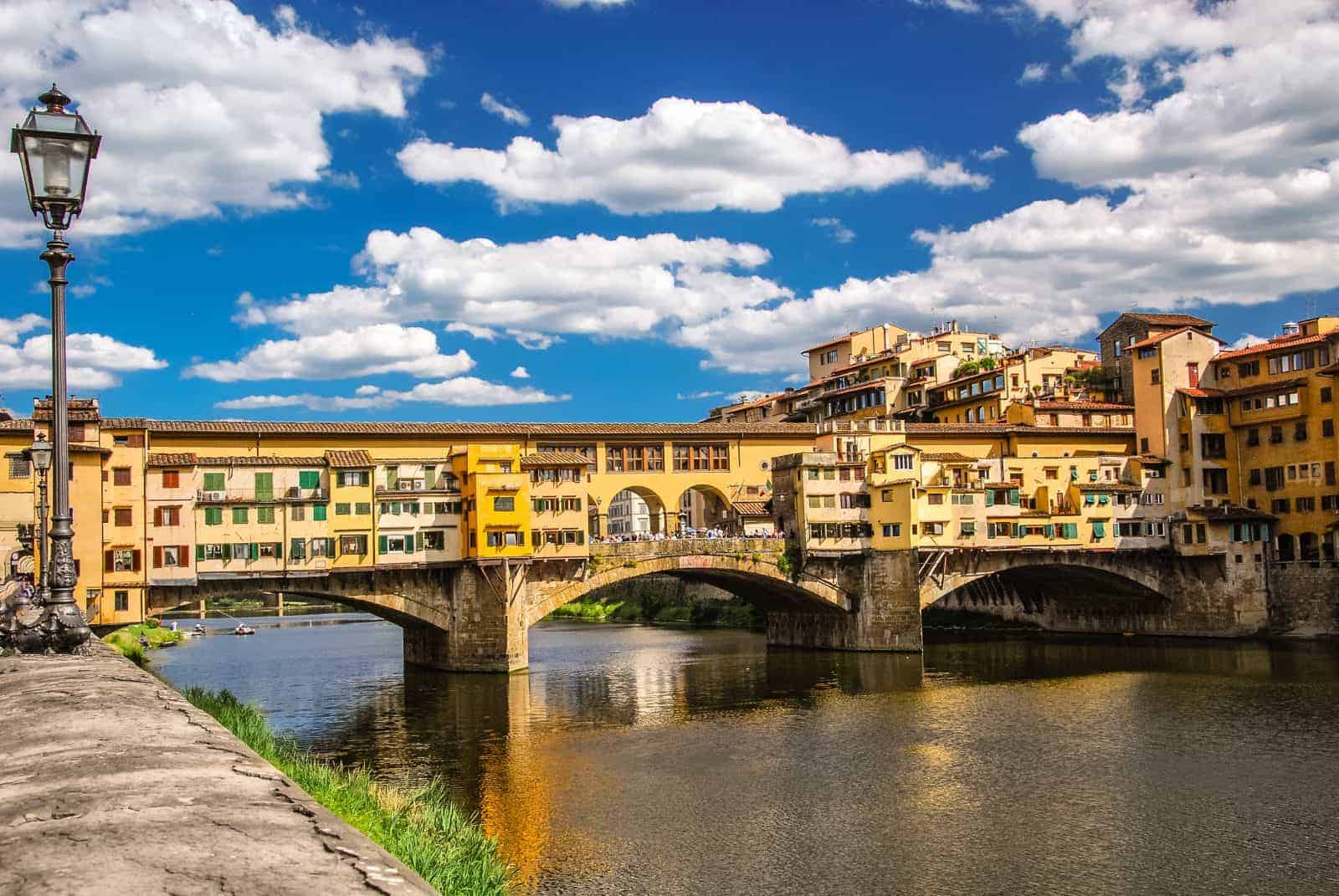
- Ponte Vecchio (Florence): The bridge, with its goldsmiths' shops, dates in its current form from 1345 and was the only Arno bridge in Florence to survive World War II. Details: Ponte Vecchio in Florence.
- Leaning Tower and Piazza dei Miracoli (Pisa): The cathedral, baptistery, Camposanto, and Leaning Tower form a white marble ensemble on green lawns (UNESCO World Heritage Site since 1987). Ascent is only possible with a timed ticket – see [link/reference]. The Leaning Tower of Pisa.
- Piazza del Campo and Cathedral (Siena): The shell-shaped square is the site of the Palio, and the cathedral impresses with its striped marble and inlaid floor. See Sightseeing in Siena.
- San Gimignano: 14 mittelalterliche Geschlechtertürme sind erhalten und prägen die Silhouette des bekanntesten Hügelorts. Früh morgens oder abends ist es am schönsten – unsere Stadttour San Gimignano zeigt die besten Ecken.
- Val d’Orcia: Sanfte Hügel, Zypressenalleen und einzelne Gehöfte – die Landschaft ist seit 2004 UNESCO-Welterbe. Im Ort Bagno Vignoni dampft ein Thermalbecken mitten auf dem Dorfplatz.
- Val d'Orcia: Rolling hills, cypress avenues and scattered farmsteads – the landscape has been a UNESCO World Heritage Site since 15. In the village Bagno Vignoni A thermal pool steams in the middle of the village square.
- Pieza: Pope Pius II had his birthplace transformed into an ideal Renaissance city in the 15th century. Pienza is also known for its Pecorino cheese – see [link/reference]. Pienza city tour.
- Stadtmauer von Lucca: Die vollständig erhaltene Mauer aus dem 16. und 17. Jahrhundert ist heute ein rund 4 km langer Park für Spaziergänger und Radfahrer. Siehe Lucca in der Toskana.
- Montepulciano: The Renaissance town, perched on a hilltop, is home to Vino Nobile. From the Piazza Grande, the view stretches far across the Val di Chiana and Val d'Orcia – more information at Montepulciano.
- Volterra: The Etruscan city high above the Cecina Valley is known for its alabaster, its Roman theater, and the Guarnacci Museum. Learn more at Volterra.
- Monteriggioni: The ring of walls with 14 towers was built by Siena between 1213 and 1219 and was already mentioned by Dante in the "Divine Comedy". Part of the wall is accessible; ideal as a stop between Siena and Florence.
- San Galgano Abbey: The Gothic Cistercian church near Chiusdino no longer has a roof – the sky forms the vault. On the hill above, the "sword in the stone" is embedded in the round church of Montesiepi.
- Arezzo and Cortona: In Arezzo, the fresco cycle by Piero della Francesca is worth seeing; the Etruscan city of Cortona towers above the Val di Chiana. More information at Arezzo.
- Elba Island: The largest island in the archipelago offers sandy and rocky coves, mountain hikes and Napoleon's residences; the ferry from Piombino takes about an hour. See Elba.
- Cascate del Mulino in Saturnia: Rund 37 °C warmes Thermalwasser fließt über Kalksinterterrassen – kostenlos und rund um die Uhr zugänglich. Alle Tipps unter Terme di Saturnia.
- Carrara marble quarries: White marble has been quarried in the Apuan Alps since Roman times; tours take you to the quarries. More information at Carrara and Apuan Alps.
- Montecatini Terme: The spa town with its Art Nouveau thermal baths has been a UNESCO World Heritage Site, part of the "Great Spa Towns of Europe," since 2021. A funicular railway takes you up to... Montecatini Alto. Please refer Montecatini Terme.
- Maremma Nature Park: Founded in 1975, the park near Alberese encompasses the Monti dell'Uccellina, pine forests, and unspoiled beaches; marked trails require a ticket. More information at sandy beaches of the Maremma.
Overview: Sights and tips
| point of interest | Location | Our tip |
|---|---|---|
| Cathedral and dome | Florence | Dome ascent: Book in advance with a fixed time slot |
| Uffizi | Florence | Closed on Mondays; early entry is quietest. |
| Old Bridge | Florence | View from the Ponte Santa Trinita, most beautiful at sunset |
| Leaning Tower | Pisa | Tower ticket with time slot; cathedral entry is free, but time-limited. |
| Piazza del Campo | Palio of Siena | am Palio-Tag (2. Juli, 16. August) sehr voll |
| Very crowded on Palio Day (July 2nd, August 16th). | Gender towers | San Gimignano |
| Val d'Orcia | Val d'Orcia | Pienza, San Quirico, Bagno Vignoni |
| Photo stops in the morning or evening light | city wall | Lucca |
| A complete tour with a rental bike | Wall ring | Monteriggioni |
| short stop on the way to Siena–Florence | Abbey of San Galgano | Chiusdino |
| Mill waterfalls | Mill waterfalls | Saturnia |
| early in the morning, take your bathing shoes | Marble quarries | Carrara |
| guided tour into the ruins | Maremma Nature Park | Alberese |
Cities: from Florence to Cortona
Florence
The capital of Tuscany is the cradle of the Renaissance; its historic center has been a UNESCO World Heritage Site since 1982. Must-sees include the Cathedral of Santa Maria del Fiore with its dome by Filippo Brunelleschi and the campanile by Giotto, the Uffizi Gallery with works by Botticelli, Leonardo da Vinci, and Michelangelo, and the Ponte Vecchio . This bridge, with its goldsmiths' shops, dates back to 1345 in its current form and was the only Florentine bridge over the Arno River that survived the 1944 bombing. Learn more in our Florence city tour ; the Leonardo Interactive Museum is a great option for families with children.
Pisa
The Leaning Tower, built from 1173 onwards as the bell tower of the cathedral, forms the Piazza dei Miracoli together with the cathedral, baptistery, and Camposanto – a UNESCO World Heritage Site since 1987. Ascent is only possible with a timed ticket. You can read all the important information under The Leaning Tower of Pisa and Pisa and its sights.
Palio of Siena
Sienas gotische Altstadt (UNESCO-Welterbe) dreht sich um die muschelförmige Piazza del Campo, auf der am 2. Juli und 16. August der Palio ausgetragen wird. Ebenso sehenswert sind der Dom mit seinem Marmorfußboden und der Palazzo Pubblico mit dem Torre del Mangia – siehe die schönsten Sehenswürdigkeiten in Siena.
Gender towers
The medieval towers make San Gimignano the most famous hilltop town in Tuscany (a UNESCO World Heritage Site since 1990). The town is most beautiful early in the morning or in the evening, after the day-trippers have left – our San Gimignano city tour shows you the best spots.
city wall
Lucca is surrounded by a completely preserved city wall, which you can explore on foot or by bicycle around the old town. Learn more at Lucca in Tuscany.
Volterra
The Etruscan settlement sits high above the Cecina Valley and is known for its alabaster craftsmanship, Roman theater, and the Etruscan artifacts in the Museo Guarnacci. Learn more on our Volterra page.
Pienza, Montepulciano and the Val d'Orcia
Pienza wurde im 15. Jahrhundert von Papst Pius II. zur Idealstadt der Renaissance umgebaut und ist UNESCO-Welterbe, ebenso wie die Landschaft des Val d’Orcia mit ihren Zypressenalleen. Im nahen Montepulciano wird der Vino Nobile gekeltert. Details: Stadttour Pienza.
Arezzo and Cortona
In Arezzo, the fresco cycle by Piero della Francesca in the Basilica di San Francesco is particularly worth seeing. Nearby Cortona is one of the oldest cities in Tuscany and dates back to the Etruscans.
UNESCO World Heritage Site in Tuscany
Eight World Heritage sites are located wholly or partly in Tuscany:
- Historic Center of Florence (1982)
- Piazza del Duomo in Pisa (1987)
- Historic Center of San Gimignano (1990)
- Historic Centre of Siena (1995)
- Historical Center of Pienza (1996)
- Val d'Orcia (2004)
- Medici Villas and Gardens (2013)
- Montecatini Terme as part of the “Great Spa Towns of Europe” (2021)
We present them in detail under UNESCO World Heritage Sites in Tuscany.
Nature, coast, islands and thermal baths
Chianti and Sculpture Park
Between Florence and Siena lies Chianti, with its vineyards, olive groves, and towns like Greve, Panzano, and Castellina – see beautiful places in Chianti . An unusual destination is the Chianti Sculpture Park near Pievasciata, close to Siena: founded in 2004 by Rosalba and Piero Giadrossi, it showcases contemporary installations by artists from five continents in an oak forest. From March 29, 2026, it is open daily from 10 a.m. to 18 p.m.
Coast, beaches and islands
From Versilia to the Maremma, sandy and rocky beaches line the coast – our overview of Tuscan beaches will help you choose. The largest island in the Tuscan Archipelago is Elba , with Napoleon's residences and clear bays.
Thermal baths, mountains and marble
The Cascate del Mulino near Saturnia are freely accessible thermal pools with water around 37°C – more information can be found under Thermal Baths of Tuscany . To the north, the Apuan Alps and the marble quarries of Carrara beckon ; to the south, the extinct volcano Monte Amiata . A curiosity is the submerged village of Fabbriche di Careggine.
Planning your visit: Tickets, ZTL and accommodation
Book tickets in advance
For the Uffizi Gallery, the dome of Florence Cathedral, and the Leaning Tower of Pisa, there are time slots available; during peak season, these are often booked days in advance. Tickets and guided tours can be found, for example, at GetYourGuide: Uffizi Gallery skip-the-line and tickets for the Leaning Tower and Pisa Cathedral.
By car: Caution ZTL
Almost all historic city centers – such as Florence, Pisa, Siena, Lucca, and Arezzo – are restricted traffic zones (ZTL, "Zona a traffico limitato"). Cameras record every license plate; anyone entering without a permit, even tourists, will be fined around €100 per violation. For rental cars, a processing fee is usually added. Park in designated parking areas on the outskirts of the historic center. If your hotel is located in a ZTL, provide the hotel with your license plate number in advance so they can register your vehicle. More information on traffic regulations can be found under " Traffic Code in Italy".
Best time to travel
For city breaks and sightseeing, April to June and September and October are ideal: pleasant temperatures and fewer crowds than in the height of summer. In July and August, Florence, Pisa, and San Gimignano are very busy – it's best to start early in the morning then. More information can be found under Best Time to Travel to Tuscany.
Find accommodation
If you want to see several cities, it's best to stay centrally – for example, in or around Florence or in the Chianti region between Florence and Siena. Accommodation in Florence can be found, for example, at Booking.com (Florence) . Our Tuscany map provides an overview of the locations of the cities ; you can find further destinations under "Most Beautiful Cities in Tuscany" and " UNESCO World Heritage Sites in Tuscany".
Frequently asked questions about tourist attractions in Tuscany
What are the most important sights in Tuscany?
The cathedral with Brunelleschi's dome, the Uffizi Gallery and the Ponte Vecchio in Florence, the Leaning Tower of Pisa, the Piazza del Campo in Siena and the towers of San Gimignano. Also included are Lucca, Pienza and the Val d'Orcia, Chianti, Elba and the thermal baths of Saturnia.
Which places in Tuscany are UNESCO World Heritage sites?
The old towns of Florence, Siena, San Gimignano and Pienza, the Piazza del Duomo in Pisa, the Val d'Orcia, the Medici villas and Montecatini Terme as part of the Great Spa Towns of Europe.
Do you need to book tickets for the Uffizi Gallery and the Leaning Tower in advance?
It's highly recommended. For the Uffizi Gallery, the dome of Florence Cathedral, and the Leaning Tower, there are time slots that are often booked days in advance during peak season.
How many days does one need for Tuscany?
You should plan at least five to seven days for Florence, Pisa, Siena, and San Gimignano. If you also want to see Val d'Orcia, the coast, or Elba, you'll need more like two weeks.
Is it possible to drive into the old towns?
Generally not: Most old towns are ZTL zones with camera surveillance. Park on the outskirts and walk; hotel guests should register their license plate number with the hotel in advance.
Which Tuscan attractions are free?
Among others, the Cascate del Mulino in Saturnia, the city walls of Lucca, the Piazza del Campo in Siena, the Ponte Vecchio and the landscapes of Chianti and Val d'Orcia.


