


Tuscany beaches
Content
Tuscany has around 400 kilometres of mainland coastline: long, gently sloping sandy beaches in Versilia and the Maremma, rocky coves along the Livorno coast and at Monte Argentario, plus the island beaches of Elba and Giglio. 20 coastal municipalities carry 2026 the Blue Flag. Here we present the most beautiful beaches from north to south – with an overview table and practical tips.
Tuscan beaches at a glance
- For families: Lido di Camaiore, San Vincenzo, Marina di Grosseto, Feniglia – fine sand, shallow into the water
- For nature lovers: Maremma Natural Park, Parco della Sterpaia, Lecciona near Viareggio
- For snorkeling: Quercianella, Castiglioncello, Monte Argentario, Giglio Island
- Photo subjects: Cala Violina (reservations required in summer), Gulf of Baratti
- Blue Flag 2026: 20 municipalities of Carrara to Monte Argentario (new addition)
- Quiet and secluded: Insider tips for quiet beaches
Coast and sea of Tuscany
Italy has approximately 7.600 kilometers of coastline ( Wikipedia ). Tuscany contributes 397 kilometers of mainland coastline, which, together with the islands of the Tuscan Archipelago, totals 633 kilometers. Many say that Tuscan beaches are the most beautiful in all of Italy. Everyone should decide that for themselves.
The Tuscan coast is part of the Tyrrhenian Sea, which continues north into the Ligurian Sea. The Tyrrhenian Sea not only borders the Italian coast but also encompasses the large islands of Sardinia and Corsica, as well as the smaller islands of Elba , Giglio , Montecristo , and others of the Tuscan Archipelago.
Below we present the most beautiful beaches from north to south. Those who prefer to explore the coast by car, stage by stage, will find suitable routes in our coastal tour through Tuscany.

An overview of the most beautiful beaches in Tuscany
The table shows the most popular beaches from north to south. Details for each section can be found below.
| Beach | Location / Region | Substrate: | Ideal for |
|---|---|---|---|
| Marina di Carrara, Marina di Massa | Massa-Carrara | Sand | Families, beach resorts |
| Forte dei Marmi | Versilia | Sand, wide | Strolling, beach resorts |
| Lido di Camaiore | Versilia | Sand, very shallow | Small children |
| Viareggio, Lecciona | Versilia | Sand, dunes | Promenade or nature |
| Marina di Pisa | Pisa | Gravel, sheltered bays | Relaxing days at the beach |
| Tirrenia, Calambrone | Pisa | Sand, pine forest | Families |
| Quercianella, Calignaia | Livorno | rock and gravel | snorkeling |
| Castiglioncello | Rosignano Marittimo | Rocky coves, sand | Snorkeling, couples |
| Spiagge Bianche | Rosignano Solvay | white sand | Photo subject (controversial) |
| Marina di Cecina | Cecina | sand and gravel | Families, water sports |
| San Vincenzo, Rimigliano | San Vincenzo | Sand, very shallow | Children, nature |
| Gulf of Baratti | Piombino | dark sand | Beach and Etruscan culture |
| Sterpaia Park | Piombino | Sand, dunes | Free beach, dogs |
| Follonica | Grosseto | Sand | Families, sunset |
| Cala Violin | Scarlino | fine quartz sand | Nature (reservation in summer) |
| Castiglione della Pescaia | Grosseto | Sand | Families, local beach |
| Marina di Grosseto | Grosseto | Sand, pine forest | Families, free beaches |
| Marina of Alberese | guided tour into the ruins | Sand | pure nature |
| Giannella | Orbetello | Sand | Wind and kite surfing |
| feniglia | Orbetello | Sand, pine forest | Families, peace and quiet |
| Monte Argentario | Grosseto | pebble and rocky coves | Boat tours, snorkeling |
| Giglio Island | Grosseto | sand and gravel | Diving, snorkeling |
Versilia and the coast near Pisa
Marina di Carrara, Marina di Massa and Forte dei Marmi
In the north, the Tuscan coast begins with the bright sandy beaches of Versilia . Seaside resorts such as Marina di Carrara, Marina di Massa and Forte dei Marmi are almost seamlessly strung together here, with the marble mountains of the Apuan Alps rising in the background.
Forte dei Marmi, with its pier, boutiques, and cafés, is the most fashionable resort in Versilia and boasts particularly wide beaches. As is typical in Italy, these beaches are managed by bagni – small beach establishments that rent sun loungers and parasols and serve drinks and snacks. Freely accessible sections of beach (spiaggia libera) are relatively rare in Versilia.
Lido di Camaiore
Long sandy beach, one of the very well-kept, paid bathing establishments, only a little public-free beach. The water goes out shallow and far, therefore a real dream for children too. There are enough friends with whom the dwarfs build sandcastles together, so dad and mom have peace and quiet to relax.
From Lido di Camaiore, the beach promenade stretches for about 5 km to Viareggio , an extra-wide pedestrian zone lined with restaurants and ice cream parlors, a meeting place for young and old in the evenings. For many, especially families, this alone is reason enough to spend their holidays there.
Accommodation tip:
View larger map
Viareggio and Torre del Lago
Viareggio, in the southern Versilia region, is known for its seafront promenade, the Passeggiata, with its Art Nouveau facades and the traditional Gran Caffè Margherita, where Giacomo Puccini was a regular. Read more about the city in our Viareggio profile.

South of Viareggio lies the beach of Marina di Torre del Lago. The town of Torre del Lago itself is located a few kilometers inland on the shores of Lake Massaciuccoli and is famous for its open-air Puccini operas, performed since 1930 in honor of the composer, who spent a significant part of his life here. Between Viareggio and Torre del Lago is Lecciona, one of the most beautiful natural beaches in Versilia – more information can be found in our article on the tranquil beaches of Tuscany.
Accommodation tip:
Marina di Pisa

A must-see for every visitor to Tuscany is the Leaning Tower of Pisa . But by no means all visitors know about Pisa's vibrant city center . The university town is young and lively – and from there it's only about 10 km to the sea.

10 km from Pisa lies the seaside resort of Marina di Pisa on the southern side of the Arno estuary. There are small bays with pebbles here, framed by huge natural stone breakwaters. These break the waves, so the bays are pleasantly shallow and very suitable for children. Worth seeing are the patrician houses of the 19th century along the access road from Pisa. Along the Arno there are moorings for guests who want to visit the town by boat.
Accommodation tip:
Tirrenia and Calambrone
Tirrenia lies a few kilometers south of Marina di Pisa. Its wide sandy beaches are nestled behind an extensive pine forest and are significantly less rocky than those in Marina di Pisa – a great choice for anyone wanting a relaxing day at the beach after visiting Pisa.
Livorno and the Etruscan Coast
Livorno and Quercianella
The coast of Livorno is steep and rocky. Driving along the SS1 – Via Aurelia – is a beautiful experience. There are several restaurants perched on the cliffs, offering stunning sea views. While the prices are somewhat high, the unique atmosphere more than compensates.
Quercianella south of Livorno is a small place wedged between the rocks and the sea. There are small bays with gravel between huge boulders. It's interesting on the rocks. There are bulges on the rock surfaces that the ancient Romans hammered into the rocks, so that bathtubs were created. Since these historical times, bathers have laid themselves in these bulges on hot days and let the weak sea waves flow over them - wellness in Livornese.
Accommodation tip:
Castiglioncello and the Spiagge Bianche
South of Livorno, the coastline remains rocky. Small rocky coves like Calignaia, located below a large bridge, are ideal for snorkeling. Castiglioncello (part of the municipality of Rosignano Marittimo) is an elegant seaside resort with small coves nestled among rocks and pine trees; its beach was awarded the Blue Flag in 2026.
A few kilometers further south, near Rosignano Solvay and Vada, lie the "Spiagge Bianche" (White Beaches): roughly 5 km of snow-white sand and turquoise water. The color, however, is not natural – it comes from lime residue that the Solvay chemical plant has been discharging into the sea for decades. The environmental agency ARPAT classifies the water as suitable for swimming (except near the discharge points), but environmental groups criticize the pollution of the seabed.
Marina di Cecina

The province of Livorno stretches for approximately 90 km along the Tuscan coast (www.costadeglietruschi.it ) and boasts a multitude of beautiful seaside resorts. Roughly in the center of the province lies Marina di Cecina , a well-developed resort offering all kinds of water sports and a large marina for holidaymakers arriving by boat.
If you come from the SS1 - Via Aurelia - and drive in the direction of "Marina", you will find a long beach with fine, dark gravel on the right-hand side and sandy areas on the left.

The beaches are mainly public bathing establishments, some of which are planted with pine trees, and are repeatedly interrupted by freely accessible stretches of beach. The best thing to do is park your vehicle and walk around the beaches on a trial basis and find your perfect stretch of beach. Also remember that you may have to bring your own sunbeds and umbrellas on the free stretches of beach. Beach shells are very practical and easy to use. And please leave your berth tidied up so that our beaches receive the “Blue Flag” again in the following year.
Accommodation tip:
San Vincenzo
About 30 kilometers south of Cecina lies the small port town of San Vincenzo . A sandy beach, bordered by a pine forest, begins just south of San Vincenzo. The beach consists of relatively fine sand and slopes very gently into the water, making it particularly suitable for children. Some 20 meters from the shore, there are sandbars where the water is only waist-deep in places.
Although there are lifeguards, you should always supervise your children despite the good conditions. Here, too, the “blue flag” is waving, the water is of good quality. Garbage isn't lying around. There are showers at the entrances to the beach, most of which you can use free of charge.
Parking: Leaving San Vincenzo on Via della Principessa heading south, you will soon reach the parking areas for the first section of the beach. You must park in the designated parking spaces (marked with a blue border) along the road. Parking is subject to a fee during the season.
The beach in Parco di Rimigliano stretches for several kilometers; the central sections are the least crowded on hot summer days (about 2-3 kilometers south of San Vincenzo). Once you've parked, you only need to walk about 50-100 meters along the designated paths through the pine forest to reach the beach.
Accommodation tip:

Gulf of Baratti and Parco della Sterpaia
Between San Vincenzo and Piombino lies the Gulf of Baratti, a wide bay with dark, metallic-shimmering sand – the color comes from iron slag dating back to Etruscan times, when ore from Elba was smelted here. Above the bay lie the medieval town of Populonia and the archaeological park with its Etruscan tombs, making it easy to combine beach and culture. There are free and paid sections of the beach; parking is also subject to a fee, so it's advisable to arrive early in the summer.
South of Piombino, towards Follonica, lies the Parco Naturale della Sterpaia (Blue Flag 2026): approximately 10 km of sandy beach with dunes and shady woodland, mostly freely accessible, with picnic areas and a dog-friendly zone. The water is shallow at Torre Mozza – ideal for children.
Maremma beaches
Follonica
The town of Follonica marks one of the most beautiful and longest bays in the Tyrrhenian Sea. It stretches from Piombino , the ferry port for ships to Elba, to Punta Ala, a sailors' paradise. Follonica lies roughly in the middle of this bay, and long beach walks can be enjoyed on both sides.
The place itself extends to the coast with a cheerful, colorful evening crowd in the pedestrian zone. When you are a few 100 m away from the village, it becomes quieter. The bay impresses with its extensive beach with the finest sand and sunsets, which are a natural spectacle of the extra class almost every day.
Accommodation tip:

Cala Violin
The bay in the Bandite di Scarlino nature reserve between Follonica and Punta Ala is considered one of the most beautiful beaches in Tuscany. It gets its name from the fine quartz sand that "sings" like a violin when you walk on it. From the Val Martina car park it is about 1,8 km on foot. From 1 June to 30 September 2026, access is limited to 700 people per day and is only possible with an online reservation. More on this in our tips for quiet beaches in Tuscany.
Rocket
South of Punta Ala, on the road to Castiglione della Pescaia, you'll see a signpost for Rocchette. Turn onto this road and drive to the end to reach a paid parking lot. From there, it's about a 50-meter walk to the beach.
There is a bathing establishment and an inexpensive family restaurant right on the water, you can eat or drink your coffee as if on a pulpit over the sea. The beach is of fine yellow sand. On the right edge are rock formations, to the left there is unimpeded beach access. Anyone who has ever been here will never forget this beautiful stretch of beach. There is a lot going on here in summer, but autumn and spring are quiet and downright romantic.
Accommodation tip:
Castiglione della Pescaia
This place is rightly called the most beautiful coastal town in Tuscany. It is overlooked by an inhabited castle, immediately below it a large open-air terrace with an enchanting view over the sea and, on a clear day, as far as the offshore islands.
On the approximately one kilometer long beach promenade (only for pedestrians) there is a children's playground, a meeting point for children and parents. In addition, ice cream parlors, bars and bathing establishments, but also enough free free access to the fine sandy beach.
As everywhere in Italy, access to the sea is basically free for everyone, even the paid bathing establishments leave a narrow strip free directly on the water, on which one can walk undisturbed. The extensive beach is interrupted by the influx of the "Bruna", there is also the boat harbor. The fishermen dock here and you can buy freshly caught fish right at the harbor.
Towards Marina di Grosseto (see below) begins the freely accessible pine forest with its very special beach; towards Punta Ala there are further bathing establishments and free beach sections.
Accommodation tip:
Marina di Grosseto
Years ago 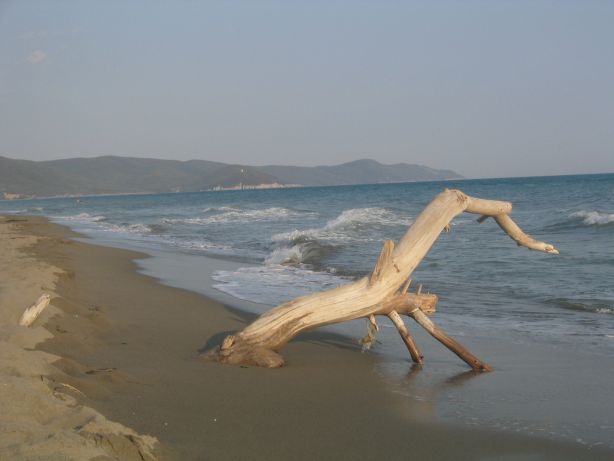 Marina di Grosseto used to be a purely summer resort, but now it's "open" all year round. The lakeside promenade, a pedestrian area over a kilometer long with bathing establishments, restaurants, and ice cream parlors, was recently completed.
The beach has fine sand, the water is shallow far out into the sea, and it's wide and therefore perfect for young and old. It's widely known that spring and autumn are also ideal for a relaxing beach holiday. Marina beach is bordered by kilometers of pine groves, stretching about 5 km to Principina a Mare on one side and about 8 km to Castiglione della Pescaia on the other.
These pine beaches with about 50 m of sandy beach between the sea and the forest are freely accessible, you have to bring everything with you and enjoy the beauty of the summery gentle Mediterranean Sea for free. Since the pine beaches away from Marina di Grosseto are not particularly structured (there are no toilets, showers and no beach guards), the “Blue Flag” does not apply to these long sections, but they should still be mentioned here.
Also worth mentioning is the "Le Marze" campsite, located roughly halfway between Marina and Castiglione. It's nestled among pine trees and offers easy access to the sea. From the campsite and the free parking areas, it's about a 100-meter walk through the woods to the kilometer-long sandy beach, with plenty of space to relax and play. You'll need to bring your own umbrella, sun loungers, and drinks; this isn't ideal on the footpaths, but it's not really a problem.
Accommodation tip:
Maremma Nature Park
The Maremma Regional Park (Parco Regionale della Maremma) lies between Principina a Mare and Talamone. The region is known for its white Maremma cattle and the Butteri, the cowboys of the Maremma. Those seeking unspoiled beaches without resorts will find them here – for example, at Marina di Alberese beach, accessible via the park's access road. In summer, access is limited and parking is subject to a fee, so arriving early is recommended.
Read more about this in our article on the sandy beaches of the Maremma and in our insider tips for quiet beaches in Tuscany.
Monte Argentario, Orbetello and the islands
Monte Argentario

The Monte Argentario is a preferred retreat for the Romans looking for relaxation. The peninsula, about 15 kilometers from the SS 1 - Via Aurelia - is the second home of many distinguished Italian families. The prices in restaurants and ice cream parlors are in the upper range, but the area is really beautiful, well-kept, and a good mix of fishing village and fashionable exclusive boutiques.
The beaches are small bays, sometimes difficult to find and overcrowded in summer. There is something unique and special about renting a boat and walking around the peninsula. Now you can find lonely, sleepy bays that can only be reached by sea. You are suddenly alone with yourself and nature, even though you are in a highly frequented holiday region.
Boats can be rented in the port of Porto Santo Stefano, the main town of Monte Argentario. Some experience with open-sea boating is recommended, or you can hire a captain. It's also possible to take a leisurely boat trip to explore the island from the sea and stop at particularly beautiful beaches.
Giannella and Feniglia at Orbetello
Two headlands (tomboli) connect Monte Argentario to the mainland and enclose the Orbetello Lagoon. Giannella, to the north, is about 8 km long and has fine, golden sand; thanks to good wind conditions, it is a popular spot for windsurfers and kitesurfers. Parking along the road is usually subject to a fee. Feniglia, to the south (about 6–7 km), is car-free and bordered by a protected pine forest – ideal for families seeking a quieter atmosphere.
Giglio Island
Porto Santo Stefano is also the ferry port for ferries to the island of Giglio , with multiple daily connections year-round. The crossing takes about an hour, after which you'll reach this small, enchanting island. A car isn't necessary if you're reasonably fit; the island is small and easy to navigate, and the few roads aren't really suitable for cars.
A climb leads from the port to the medieval castle; it's strenuous in summer, but well worth it for the breathtaking views. The castle seems to be an unaltered relic from the Middle Ages, with narrow alleyways where sunlight barely penetrates, imposing castle walls, and enchanting vistas of the open sea. The picturesque port of Giglio looks as if time has stood still for 200 years. The water around the island is emerald green and exceptionally clear; there are even coral reefs, making the island a paradise for divers.
Giglio's many small beaches consist partly of pebbles and partly of sand ( www.giglioinfo.it ). Many of them are best reached by water or via footpaths.
Accommodation tip:

Elba-Island
Elba has so many bays that we've dedicated a whole page to them: the most beautiful beaches of Elba . The ferry from Piombino takes about an hour – everything you need to know about getting to Elba.
Water quality and Blue Flag 2026
The water quality of the Tyrrhenian Sea is continuously monitored both at sea and along the coastal sections. Since 1987, the environmental label "Blue Flag" of the FEE (Foundation for Environmental Education) has been awarded annually to especially clean bathing beaches. This award is a good guide for knowing you are swimming in clean seawater.
All in all, the Tyrrhenian Sea can be given a good reference, the bathing bays of Tuscany  Beaches and marinas have received positive reviews for years. To qualify through FEE, a beach or marina must meet a comprehensive set of criteria. The award is reviewed and re-awarded annually – meaning a beach can lose it.
In 2026, 20 coastal municipalities in Tuscany were awarded the Blue Flag, running continuously from north to south: from Carrara and Massa via Versilia, Pisa and the Etruscan Coast to Castiglione della Pescaia, Grosseto, Orbetello and Monte Argentario (all awarded beaches HERE at Blue Flag beaches in Italy ).
- Massa-Carrara: Carrara (Marina di Carrara), Massa (Marina di Massa)
- Versilia (Lucca): Marble Fort, Pietrasanta, Camaiore (Lido di Camaiore), Viareggio
- Pisa: Marina di Pisa, Tirrenia, Calambrone
- Livorno: Livorno (Quercianella), Rosignano Marittimo (Castiglioncello), Cecina, Bibbona, Castagneto Carducci, San Vincenzo, Piombino (Parco della Sterpaia), Marciana Marina (Elba)
- Grosseto: Follonica, Castiglione della Pescaia, Grosseto (Marina di Grosseto), Orbetello, Monte Argentario (new 2026)
In addition to water quality, the cleanliness of the beach and the sanitary facilities are also assessed. Particularly noteworthy beaches will be highlighted here. Almost all of the seaside resorts presented here are among the award-winning municipalities (as of 2026), meaning they stand for impeccable water quality and well-maintained beaches. This is due, on the one hand, to the fact that there is hardly any industry on the Tuscan coast , and on the other hand, to regular monitoring: The environmental agency ARPAT officially monitors the bathing waters, and, in addition, the environmental organization " Legambiente " inspects the coasts every summer with its "Goletta Verde" campaign.
This is one of the reasons why there are whales and dolphins in the Tyrrhenian Sea , which can be spotted with a bit of luck from excursion boats departing from Livorno.

Tips for a beach holiday in Tuscany
- Beach resort or public beach: Most beach resorts are managed by beach clubs (bagni) that rent out sun loungers and parasols for a fee. In between are free sections (spiaggia libera) where you bring your own equipment.
- Best time: June and September are pleasantly warm and much quieter. In August, especially around Ferragosto (15 August), almost all beaches are crowded.
- With children: Gently sloping sandy beaches like Lido di Camaiore, San Vincenzo, Marina di Grosseto or Feniglia are ideal – tips for families below Camping with children.
- With dog: Dogs are prohibited on many beaches during the summer; however, there are designated dog beaches, for example in Sterpaia. More information at Camping with a dog in Tuscany.
- Overnight stay by the sea: You can find spots right on the beach at the most beautiful campsites by the sea.
Are you looking for solitude rather than beach resort comfort? Then read our insider tips for quiet beaches in Tuscany – from Lecciona to Cala del Gesso.
Frequently asked questions about the beaches of Tuscany
Where are the most beautiful beaches in Tuscany?
Among the most famous are Cala Violina near Scarlino, the Gulf of Baratti, the beaches of Castiglione della Pescaia and Marina di Grosseto, Feniglia near Orbetello, and the rocky coves on Monte Argentario and on Elba and Giglio.
Does Tuscany have sandy beaches?
Yes, most of the mainland coast is sandy, especially in Versilia, around San Vincenzo, and in the Maremma. The coast south of Livorno, on Monte Argentario, and on the islands is rocky and pebbly.
Which beaches in Tuscany will have the Blue Flag in 2026?
In 2026, 20 Tuscan coastal communities are recognized, including Forte dei Marmi, Viareggio, Pisa, Castiglioncello, Cecina, San Vincenzo, Follonica, Castiglione della Pescaia, Orbetello and now Monte Argentario.
Which beach in Tuscany is good for children?
Gently sloping sandy beaches such as Lido di Camaiore, San Vincenzo, Marina di Grosseto, the Sterpaia near Torre Mozza or the Feniglia near Orbetello.
Are the beaches in Tuscany free?
Access to the sea is free, and there are many free sections (spiaggia libera). Sun loungers and parasols at the beach clubs cost extra, while at natural beaches you usually only pay for parking. Cala Violina requires reservations during the summer.
When is the best time for a beach holiday in Tuscany?
June and September offer warm water and fewer crowds. July and August are the busiest, especially around Ferragosto on 15 August.


